
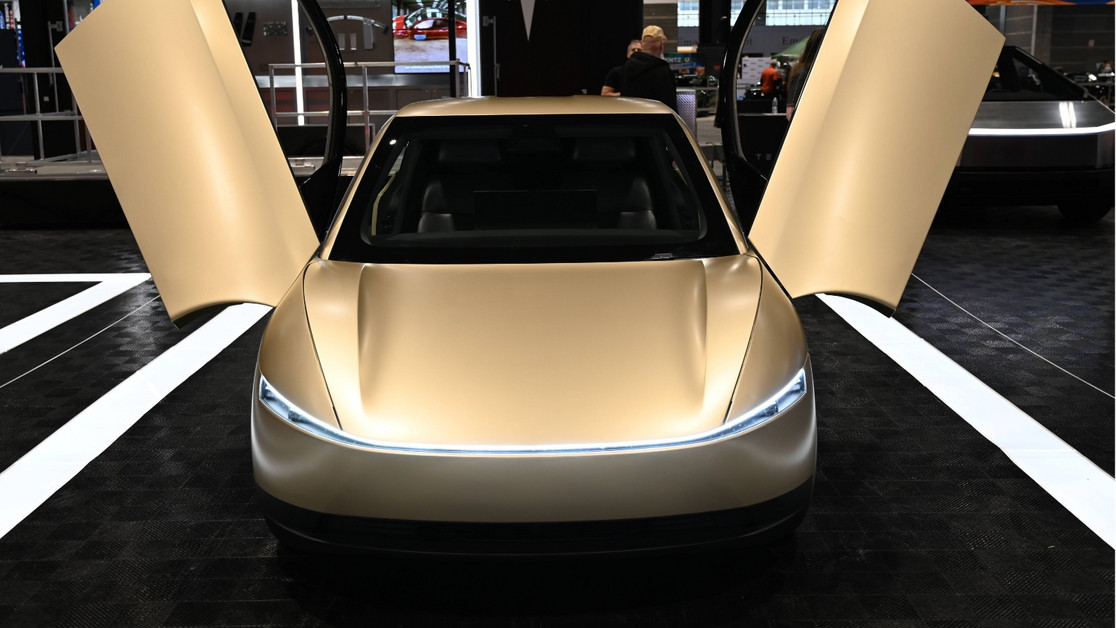
Tesla has begun testing its purpose-built autonomous vehicle, the Cybercab, on public roads in Austin, Texas, while Volkswagen and Bosch have officially concluded their long-standing partnership focused on automated parking technology. These developments mark a significant shift in the global automotive sector, as manufacturers pivot their strategies toward vehicle autonomy and integrated software development.
The movement toward driverless transportation remains a central focus for Tesla. Recent sightings in Austin have confirmed the presence of the Cybercab, a vehicle characterized by the absence of traditional steering wheels and pedals. According to company disclosures, this design reflects Tesla’s commitment to a fully autonomous future, relying on the company’s proprietary Full Self-Driving (FSD) technology. The vehicle, first unveiled at the “We, Robot” event in October 2024, is intended to operate as a ride-hailing service, signaling a transition from personal vehicle ownership to a service-oriented model for the automaker, as reported by Reuters.
Strategic Shifts in Autonomous Development
While Tesla continues its pursuit of autonomous ride-hailing, Volkswagen is restructuring its approach to automated driving. The German automotive giant confirmed the dissolution of its joint development partnership with Bosch regarding automated parking systems. This decision follows a broader industry trend where major manufacturers are reassessing the cost-efficiency of collaborative software ventures in favor of internalizing development processes.

The collaboration, which aimed to advance Automated Valet Parking (AVP) technology, was intended to allow vehicles to navigate parking structures without human intervention. According to reports from Bloomberg, the decision to end the alliance reflects a tightening of budgets and a shift in R&D priorities as Volkswagen streamlines its software division, Cariad. This move is part of a larger effort to address software delays that have historically hindered the company’s rollout of next-generation vehicle features.
Industry Implications and Competitive Landscapes
The divergence between Tesla’s aggressive testing of the Cybercab and the strategic realignment at Volkswagen highlights two distinct philosophies in the race for autonomous driving. Tesla’s strategy centers on rapid, iterative testing of hardware specifically designed for autonomy, effectively bypassing the need for manual controls. In contrast, legacy manufacturers like Volkswagen are navigating the complexities of integrating high-level automation into existing vehicle architectures while managing the high costs associated with software development.
The shift in the Volkswagen-Bosch partnership also underscores the volatility of the automotive tech sector. As companies like Tesla push toward “unsupervised” autonomy, traditional automakers are increasingly cautious, focusing on systems that provide driver assistance rather than full replacement of the human operator. According to industry analysis from The Financial Times, the pressure to demonstrate profitability in software divisions is forcing many firms to terminate speculative partnerships that do not show immediate paths to commercialization.
What Happens Next
Tesla is expected to provide further updates regarding the regulatory hurdles facing the Cybercab during its next quarterly earnings call, as the company seeks approval from the National Highway Traffic Safety Administration (NHTSA) for vehicles lacking traditional manual controls. Meanwhile, Volkswagen has stated that it will continue to develop automated parking features independently or through alternative procurement methods as it seeks to meet internal production deadlines for its upcoming electric vehicle platforms.

Industry observers continue to monitor these developments as they represent the broader transition of the automotive industry toward a software-defined future. As these companies adapt to evolving regulatory environments and economic pressures, the path to widespread autonomous adoption remains characterized by both bold innovation and tactical consolidation.
We encourage our readers to share their perspectives on these developments in the comments section below. For ongoing updates regarding regulatory filings and official company statements, please consult the official investor relations portals of Tesla and Volkswagen.