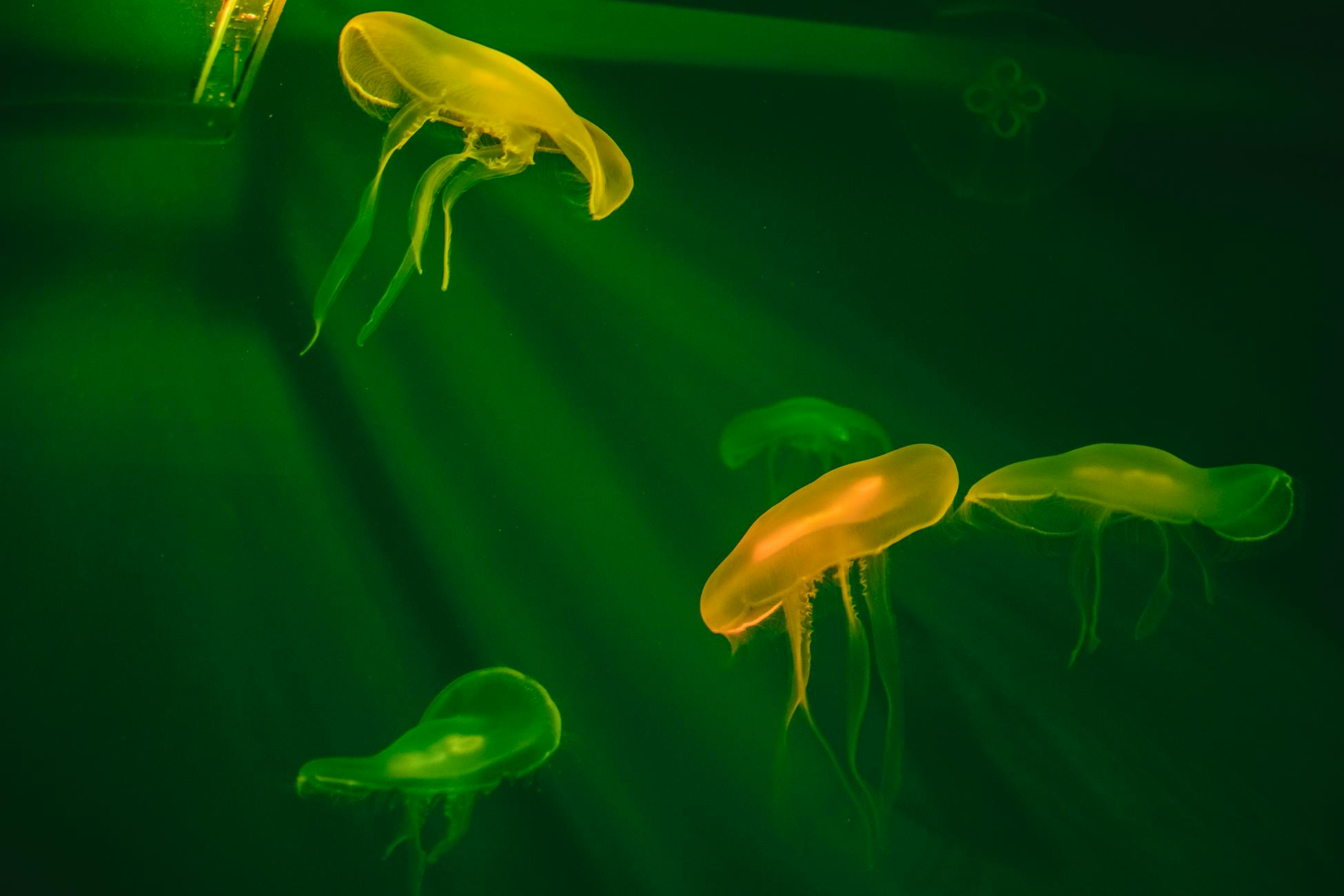
The jellyfish species Turritopsis dohrnii can reorganise its adult cells back into a juvenile polyp when stressed, restarting its life cycle indefinitely. Biologists have observed more than ten reversals in a single animal and have yet to find any limit.
Found primarily in temperate to tropical waters globally, Turritopsis dohrnii is a hydrozoan that transitions from a larval planula to a sessile polyp colony before developing into a free-swimming medusa. Unlike most jellyfish, which die after reaching sexual maturity and spawning, this species can undergo a structural transformation when threatened by starvation, sudden temperature shifts, or physical damage. According to research published by the American Museum of Natural History, the jellyfish resorbs its tentacles and bell, eventually settling onto a substrate to form a new polyp colony, which then buds off genetically identical medusae.
The Mechanics of Biological Reversal
At the cellular level, Turritopsis dohrnii exhibits a rare form of cellular plasticity. During the transformation, the adult medusa cells—which are specialized for functions like movement or digestion—undergo a process of dedifferentiation. These cells essentially “reset” their genetic expression to become undifferentiated cells, which then reorganize into the tissues required for the polyp stage. This phenomenon is distinct from typical regeneration, where an animal regrows a lost limb, because the entire organism undergoes a systemic shift in its developmental state.

Studies conducted by marine biologists have confirmed that this cycle can repeat indefinitely under controlled laboratory conditions. As noted by the Smithsonian National Museum of Natural History, the ability to bypass the natural end-of-life stage makes Turritopsis dohrnii a primary subject for research into cellular aging and tissue repair. While the species is not immune to predation or disease, its internal “reset button” provides a survival advantage that few other multicellular organisms possess.
Scientific Observations and Limitations
Biologists have observed the reversal process in laboratory settings for decades. Researchers have documented instances where single specimens have reverted to the polyp state more than ten times, with no observable degradation in the genetic integrity of the resulting offspring. Because the new medusae are clones of the original adult, the lineage can theoretically persist without the intervention of sexual reproduction, though the species does retain the ability to reproduce sexually to facilitate dispersal across different oceanic regions.
Despite the label of “immortal,” the species remains subject to the same ecological pressures as other marine life. According to the journal Scientific Reports, the transition is primarily a survival response to stress rather than a constant, voluntary process. If a specimen is consumed by a predator or suffers a fatal infection, it cannot trigger the transformation. Therefore, while the individual cells possess a mechanism for indefinite renewal, the organism as a whole remains vulnerable to external environmental factors.
Why Cellular Plasticity Matters
The study of Turritopsis dohrnii offers significant insights into the field of regenerative medicine and developmental biology. By understanding how these jellyfish manage to switch off mature cell identities and revert to a stem-cell-like state, researchers hope to better understand the mechanisms of cellular reprogramming in other animals. The process involves a complex coordination of gene expression that, if decoded, could theoretically inform human therapeutic approaches to tissue damage and age-related cellular decline.
Current research efforts are focused on mapping the specific genome of Turritopsis dohrnii to identify the exact pathways that regulate this transformation. Because the species is found in oceans worldwide, its population is not considered endangered, allowing for continued study by marine institutes. Future findings regarding the molecular triggers of transdifferentiation are expected to be published in upcoming peer-reviewed journals, providing further clarity on the limits—or lack thereof—of this biological phenomenon.
We encourage readers to share their thoughts on the implications of biological immortality in the comments section below.