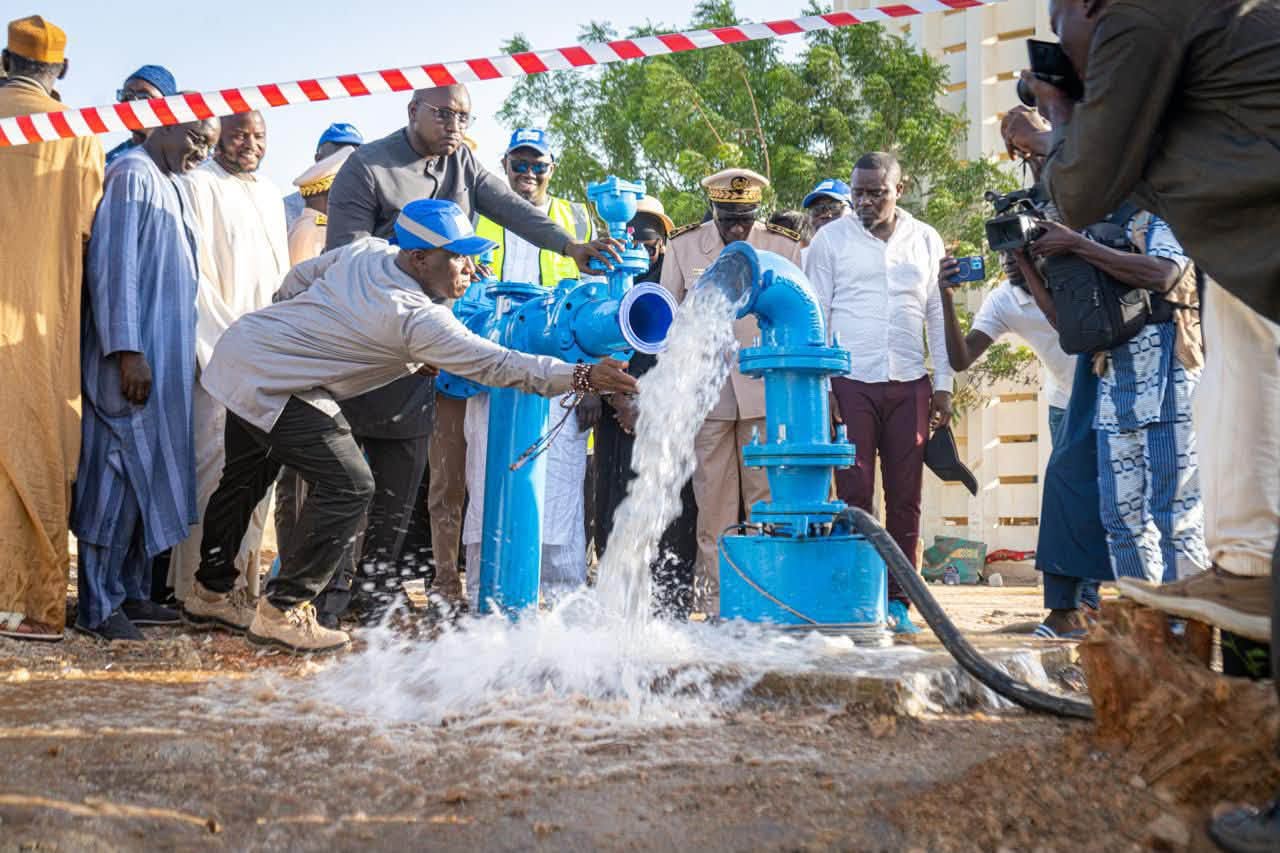
Three new boreholes have been commissioned in the Ndindy, Guédé, and Darou Khoudoss neighborhoods of Touba, Senegal, to expand access to potable water. According to Radio Télévision Sénégalaise (RTS), the infrastructure is designed to reinforce the city’s water network and reduce chronic shortages in these specific residential zones.
The project targets areas that have historically struggled with water insecurity, integrating new hydraulic installations into the existing municipal grid. Local officials stated that the commissioning of these boreholes is part of a broader strategy to stabilize the water supply for Touba’s growing population, which experiences extreme demand spikes during the annual Grand Magal pilgrimage.
The expansion of water infrastructure in Touba is a response to systemic shortages that have forced residents in various neighborhoods to rely on expensive private water vendors or distant community pumps. By placing boreholes directly within Ndindy, Guédé, and Darou Khoudoss, the government aims to lower the cost of water access and improve sanitary conditions for thousands of households.
How do the new boreholes impact Touba’s water supply?
The installation of these three boreholes provides a direct source of groundwater to neighborhoods that previously faced frequent outages. According to reports from RTS and La Vie Sénégalaise, the new infrastructure reduces the pressure on the city’s primary water mains, allowing for more consistent flow to residential taps.
Water scarcity in Touba is often tied to the city’s rapid urban expansion and its unique geological positioning. The new boreholes in Ndindy, Guédé, and Darou Khoudoss function as localized reinforcement points, ensuring that water remains available even when the main network suffers from pressure drops. This decentralized approach to water management is intended to prevent the total outages that often characterize the dry season in the region.
For residents, the immediate effect is a reduction in the time spent queuing for water. In many Touba neighborhoods, women and children traditionally bear the burden of water collection. The integration of these new points into the local infrastructure is expected to shift more households toward direct tap connections, thereby improving overall public health and productivity.
What other hydraulic projects are underway in the region?
The projects in Ndindy, Guédé, and Darou Khoudoss are part of a wider wave of hydraulic interventions across Touba’s various districts. Recent reports indicate that other neighborhoods are receiving similar upgrades to eliminate “water deserts” within the city.
In the Fass Gossas neighborhood, new hydraulic works were recently inaugurated to end a long period of water shortages, as reported by EnquetePlus. This project followed a similar model to the Ndindy installations, focusing on the creation of sustainable extraction points to feed local distribution networks.
The impact of these projects has led to cultural shifts in how neighborhoods identify themselves. In Fass Beurigo, the arrival of consistent water access prompted local leader Cheikh Tidiane Dièye to symbolically rename the area “Fass Robinet” (Fass Tap). According to Senego, the name change reflects the transition from a neighborhood defined by water scarcity to one defined by the presence of functioning faucets.
These cumulative efforts—spanning Ndindy, Guédé, Darou Khoudoss, Fass Gossas, and Fass Beurigo—indicate a systemic push by Senegalese authorities to modernize Touba’s water architecture. The strategy focuses on increasing the number of extraction points to match the city’s demographic growth.
Why does Touba face persistent water scarcity?
Touba is the second-largest city in Senegal and serves as the spiritual center of the Mouride brotherhood. Its population grows rapidly, but infrastructure development has historically lagged behind this expansion. The city’s water needs are further complicated by the massive influx of millions of pilgrims during the Grand Magal, which puts an unsustainable strain on the hydraulic network.
According to data from the Agence Nationale de la Statistique et de la Démographie (ANSD), urban growth in Senegal’s interior regions often outpaces the installation of basic utilities. In Touba, the reliance on groundwater is high, and the uneven distribution of boreholes has created pockets of extreme scarcity despite the availability of aquifers.
The challenge is not only the volume of water available but the distribution efficiency. Many older pipes in Touba are prone to leaks or are undersized for current demand. The recent focus on adding new boreholes in neighborhoods like Darou Khoudoss and Guédé is a tactical move to bypass failing central lines and provide direct access to the water table.
Furthermore, the cost of water has been a point of contention. Residents in underserved areas often pay higher rates to private resellers than those connected to the official network. By expanding the official infrastructure, the state aims to standardize pricing and eliminate the “water mafia” that profits from scarcity.
What happens next for Touba’s infrastructure?
The commissioning of the Ndindy, Guédé, and Darou Khoudoss boreholes is viewed as a milestone, but officials indicate that further expansion is necessary to achieve full coverage. The next phase of development is expected to focus on the maintenance of existing boreholes and the expansion of the pipe network to ensure that water from new boreholes reaches every household.
Local authorities are also expected to monitor the impact of these new installations on the local water table. Over-extraction from boreholes can lead to a drop in the aquifer level, making it necessary to balance the number of new wells with sustainable management practices.
Future updates on Touba’s hydraulic projects are typically announced through the Government of Senegal’s official portals and the RTS news service. Residents and stakeholders are encouraged to follow these channels for information on upcoming connection deadlines and infrastructure maintenance schedules.
Share this report to keep others informed about urban development in Senegal, and leave a comment below regarding water accessibility in your region.