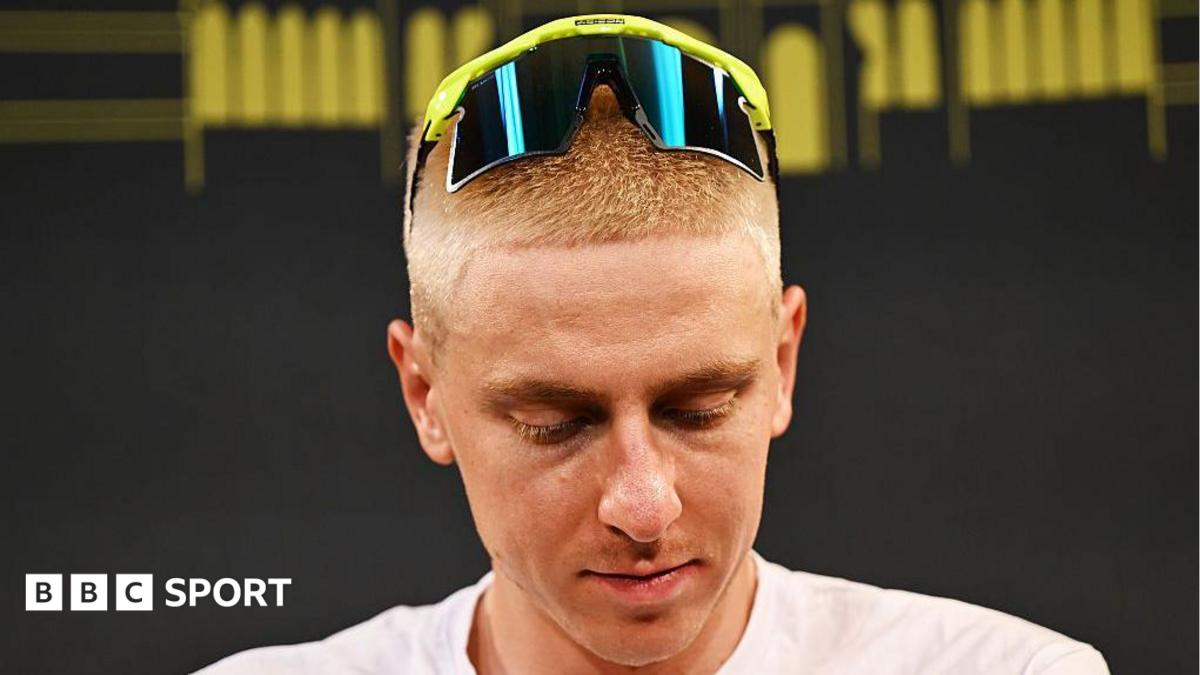
Tadej Pogacar enters the 2025 Tour de France as the heavy favorite to secure his fourth career title, with the race beginning its Grand Départ in Barcelona. The UAE Team Emirates rider follows a historic 2024 season where he achieved the rare Giro d’Italia and Tour de France double, cementing his position as the dominant force in professional cycling.
The 2025 route marks a significant shift in the race’s opening geography, starting in Spain before heading into France. Pogacar, who has won the Tour in 2020, 2021, and 2024, faces a field of rivals led by three-time winner Jonas Vingegaard and Belgian star Remco Evenepoel, both of whom seek to disrupt the Slovenian’s momentum.
Cycling analysts and team directors point to Pogacar’s versatility across all terrains—time trials and high-altitude climbs—as the primary obstacle for his competitors. His 2024 campaign, which included a dominant victory in the Tour de France, demonstrated a level of endurance that has left rivals searching for a tactical weakness.
Can Jonas Vingegaard and Remco Evenepoel Bridge the Gap?
The primary challenge to Pogacar’s dominance comes from Jonas Vingegaard of Visma-Lease a Bike. Vingegaard, who won the Tour de France in 2022 and 2023, possesses a specialized climbing capacity that has historically pushed Pogacar to his limits. According to race data from previous encounters, Vingegaard’s strength in the high mountains remains the most viable path to reclaiming the yellow jersey.

Remco Evenepoel, representing Soudal Quick-Step, provides a different threat. As a world-class time trialist and the current World Champion, Evenepoel is expected to challenge for early leads during the flat and rolling stages of the Barcelona start. His ability to maintain high speeds over long distances could force UAE Team Emirates to expend energy defending the lead long before the race reaches the Alps or Pyrenees.
While Pogacar has shown he can match Evenepoel in time trials and outclimb Vingegaard in various conditions, the 2025 route’s specific profile will determine if a combined effort from the two rivals can isolate the Slovenian leader.
The Impact of the Barcelona Grand Départ
The decision to start the 2025 Tour de France in Barcelona introduces a unique set of variables. The Spanish start allows teams to acclimate to Mediterranean heat and coastal winds before entering the heart of France. This phase of the race often favors riders with strong tactical support from their teammates to avoid splits in the peloton caused by crosswinds.

Pogacar’s current form is bolstered by a refined approach to peak performance. After completing the Giro-Tour double in 2024, a feat not achieved since 1998, the UAE Team Emirates rider has focused on maintaining a baseline of fitness that allows him to compete at the highest level for a larger portion of the calendar year.
Observers have also noted a shift in Pogacar’s public image and confidence, with the rider appearing more relaxed and experimental in his approach to the pre-race build-up. This psychological edge often plays a role in the high-pressure environment of a three-week Grand Tour.
Analyzing the Technical Challenge of the 2025 Route
To deny Pogacar a fourth title, rivals must exploit specific sections of the route where his dominance is less absolute. Historically, the most successful strategies against Pogacar have involved aggressive attacks on steep, irregular gradients or utilizing team strength to isolate him in the final 20 kilometers of a mountain stage.
The 2025 race will test three critical areas:
- The Barcelona Transition: Whether the early Spanish stages create time gaps that force Pogacar into an early, energy-consuming defense.
- High-Altitude Recovery: The ability of Vingegaard to sustain power on the longest climbs, where he has previously held an advantage.
- Time Trial Precision: The battle between Evenepoel and Pogacar for seconds in the race-against-the-clock stages.
According to Union Cycliste Internationale (UCI) rankings, Pogacar remains the top-ranked rider, a position that grants him significant psychological leverage. However, the unpredictability of the Tour de France—including crashes, mechanical failures, and illness—remains the only constant that can derail a favorite.
The Legacy of the “Double” and Future Ambitions
Pogacar’s victory in both the Giro d’Italia and the Tour de France in 2024 placed him in an elite group of cyclists. This achievement shifted the narrative from whether he could win individual races to whether he could rewrite the record books of the sport. A fourth Tour title in 2025 would move him closer to the historic marks set by legends like Eddy Merckx and Bernard Hinault.

For the rivals, the stakes are as much about legacy as they are about the 2025 trophy. For Vingegaard, a win would prove that his 2024 struggles were an anomaly. For Evenepoel, a podium finish or a win would validate his transition from a one-day specialist to a Grand Tour contender.
The tactical battle is expected to be more conservative in the early stages, with teams focusing on rider safety and positioning. The real conflict will likely ignite during the first major mountain pass, where the “slim hopes” of the challengers will be tested against Pogacar’s current peak.
The next official checkpoint for the 2025 Tour de France is the detailed stage-by-stage route reveal and the official team rosters, which will confirm the support riders accompanying the main contenders.
Do you believe Vingegaard or Evenepoel have the strategy to stop Pogacar this year? Share your analysis in the comments below.