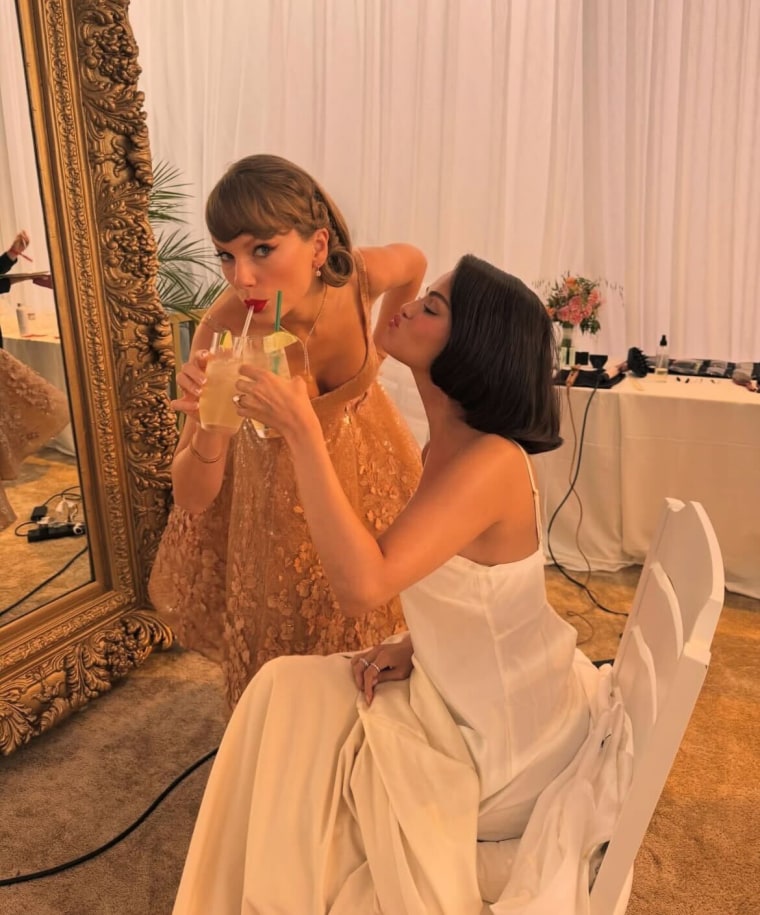
Taylor Swift has not officially announced a wedding or an engagement, despite widespread social media speculation and tabloid reports suggesting a high-profile ceremony in New York City. No official representatives for the singer or her partner, Travis Kelce, have confirmed plans for a marriage ceremony, and no verified guest lists or venue contracts have been made public.
The rumors, which frequently compare the scale of a potential event to the Met Gala, have circulated primarily through unverified “insider” accounts on platforms like X and TikTok. These reports often cite “top-secret” guest lists and strict “no cell phone” policies, though these claims lack primary source verification or corroboration from reputable news agencies.
As a global cultural phenomenon, Swift’s personal life often triggers economic and media surges similar to major institutional events. The current wave of speculation reflects a broader trend where the movements of high-net-worth celebrities are tracked as market-moving events, impacting everything from luxury fashion sales to local hospitality sectors in cities like New York.
Why the Taylor Swift Wedding Rumors Persist
The speculation surrounding a wedding between Taylor Swift and Kansas City Chiefs tight end Travis Kelce stems from a combination of high-visibility public appearances and a series of unverified reports from celebrity gossip outlets. Since their relationship became public in 2023, the pair has been photographed at numerous high-profile events, including NFL games and the 2024 Met Gala, fueling a narrative of an impending marriage.

According to reporting from People, Swift and Kelce have maintained a high level of public synergy, but the couple has not issued any statement regarding a change in their marital status. The “wedding” narrative is often amplified by fan-led digital communities that synthesize small clues—such as jewelry choices or travel patterns—into comprehensive theories about a secret ceremony.
This cycle of speculation is a hallmark of the “attention economy,” where the anticipation of an event generates as much engagement as the event itself. For the entertainment industry, the mere possibility of a “Swift Wedding” creates a surge in search traffic and ad revenue for outlets reporting on the rumors, regardless of the factual basis of those claims.
Comparing Celebrity Clusters: The Met Gala vs. The ‘Swift Effect’
The comparison between a hypothetical Swift wedding and the Met Gala is based on the concept of “celebrity clustering.” The Met Gala is a curated annual fundraising event for the Metropolitan Museum of Art’s Costume Institute, characterized by an invite-only guest list of the world’s most influential figures in fashion, art, and entertainment.

A wedding for a figure of Swift’s stature would likely mirror this structure, involving a high concentration of A-list talent and strict non-disclosure agreements (NDAs). In the business of luxury events, the “no cell phone” policy mentioned in rumors is a standard industry practice used to maintain exclusivity and protect the privacy of high-profile guests, a tactic frequently employed at the Met Gala and other elite gatherings.
However, the Met Gala is a professional industry event with a clear corporate and philanthropic objective. A private wedding, while potentially matching the guest list’s prestige, operates on a different economic model, shifting from brand promotion to personal wealth expenditure. The “rivalry” between the two is not one of official competition, but of cultural saturation; both events command the global digital gaze and dictate fashion trends for the following season.
The Economics of Celebrity Speculation
From a financial perspective, the speculation surrounding Swift’s personal life serves as a catalyst for specific luxury market segments. When rumors of a “big fashion moment” or a lavish wedding arise, there is a documented increase in consumer interest in “bridal-core” aesthetics and high-end designers associated with the artist.
The “Swift Effect” has already proven its capability to impact macro-economic indicators. For example, the Federal Reserve noted in a “Beige Book” report that the Eras Tour significantly boosted tourism and local spending in cities where Swift performed, citing a surge in hotel revenues and restaurant traffic according to the Federal Reserve.
The transition of this economic power from a professional tour to a personal event—like a wedding—would likely result in a similar spike for the New York City hospitality and luxury service sectors. The mention of “S.U.V.s galore” in rumor mills points to the massive logistical infrastructure required for such events, which involves private security firms, luxury transport fleets, and high-end catering operations, all of which contribute to the local economy.
Verifying the Facts: What is Confirmed?
To distinguish between tabloid narrative and verified fact, the following table outlines the current status of the claims circulating online:
| Claim | Status | Verification Source |
|---|---|---|
| Official Wedding Announcement | Unconfirmed | No statement from Swift or Kelce |
| Verified Guest List | Unconfirmed | No official records available |
| Relationship Status | Confirmed | Public appearances/Media reports |
| New York City Venue | Unconfirmed | No venue bookings verified |
The insistence on “top-secret” details is often a rhetorical device used by gossip sources to explain the absence of photographic evidence. In the modern era of smartphone ubiquity and paparazzi surveillance, a large-scale event in New York City—especially one involving a fleet of SUVs and celebrity guests—would be nearly impossible to keep entirely hidden from the public eye.
The Role of Digital Echo Chambers in Celebrity News
The speed at which these wedding rumors travel is a result of algorithmic amplification. When a specific phrase, such as “Taylor Swift wedding,” begins to trend, social media algorithms prioritize similar content, creating an echo chamber where unverified claims are repeated until they are perceived as common knowledge.
This phenomenon is particularly potent with Swift’s fanbase, where deep-dive analysis of her lyrics and public behavior is a primary form of engagement. This “detective work” often transforms coincidental events—such as a celebrity sighting in New York—into “evidence” of a secret wedding. This process illustrates the shift in how news is consumed: the narrative often precedes the fact, and the “feeling” of a story’s truth becomes more important to the audience than official confirmation.
For professional journalists, this environment requires a rigorous adherence to primary sourcing. Without a marriage license filing, an official statement, or verified photography, reports of a wedding remain in the realm of speculation rather than news.
The next confirmed checkpoint for Taylor Swift involves her ongoing professional commitments and scheduled public appearances. Any official change in her marital status would likely be communicated through her verified social media channels or a formal press release from her management team.
We invite readers to share their thoughts on the cultural impact of celebrity speculation in the comments below.