Ford Motor Company’s 2017 model year lineup represented a strategic intersection of high-volume utility and niche performance engineering, marking a period before the company’s aggressive pivot away from sedans and hatchbacks in North America. The 2017 catalog featured a diverse range of vehicles that balanced the brand’s traditional strength in trucks with a renewed focus on “halo” performance cars and fuel-efficient hybrids.
Industry data and technical specifications from 2017 indicate that this year was pivotal for the integration of the 10-speed automatic transmission across multiple platforms and the peak of the Ford Performance brand’s influence on consumer models. While the company has since shifted toward electric vehicles and SUVs, the 2017 roster remains a benchmark for versatility in the Ford portfolio.
The 2017 lineup is characterized by the coexistence of the ultra-exclusive Ford GT and the mass-market F-150, illustrating a brand capable of competing at both the Le Mans endurance racing level and the commercial job site. According to historical sales data, the F-Series continued its streak as the best-selling truck in the U.S., while the Mustang and Focus RS solidified Ford’s standing among automotive enthusiasts.
Why was the 2017 Ford F-150 a technical milestone?
The 2017 Ford F-150 stood as a cornerstone of the brand’s 2017 success due to the wider rollout of the 10-speed automatic transmission. This transmission, developed in collaboration with General Motors, allowed for more precise gear ratios and improved fuel efficiency across various engine options. According to Ford’s official specifications, the 10-speed automatic was designed to keep the engine in its optimal power band more consistently than previous 6-speed iterations.

The 2017 model year also emphasized the EcoBoost engine family, which utilized twin-turbocharging to provide V8-like torque with the efficiency of a smaller displacement engine. The 3.5L V6 EcoBoost provided the heavy-towing capability required by commercial users while maintaining a competitive footprint. This combination of aluminum-alloy body construction—introduced in 2015—and refined drivetrain technology made the 2017 F-150 a leader in the light-duty truck segment.
Beyond the standard trims, 2017 saw the F-150 maintain its dominance through diverse configurations, including the Raptor, which targeted the high-performance off-road market. The Raptor’s use of a high-output 3.5L V6 and specialized Fox Racing Shox demonstrated Ford’s ability to merge consumer utility with professional-grade off-road hardware.
How did the 2017 Ford Mustang address driver demands?
For the 2017 model year, the Ford Mustang resolved a significant point of contention for buyers: the availability of the V8 engine with an automatic transmission. In the 2015 and 2016 models, the 5.0-liter V8 was exclusively paired with a manual gearbox. According to reviews from Car and Driver, the return of the V8 automatic in 2017 expanded the Mustang’s appeal to a broader demographic of drivers who desired high horsepower without the requirement of manual shifting.

The 2017 Mustang GT utilized the 5.0L “Coyote” V8, producing 435 horsepower. This power was complemented by a chassis that had been refined for better handling and steering response compared to the early S550 generation models. The integration of the automatic transmission did not significantly degrade the performance metrics, allowing the GT to remain competitive against rivals like the Chevrolet Camaro SS.
Additionally, the 2017 lineup included the EcoBoost four-cylinder variant, which provided an entry point for buyers seeking a sporty aesthetic and respectable performance with lower operating costs. This tiered approach—offering everything from the fuel-efficient EcoBoost to the raw power of the V8—ensured the Mustang captured multiple segments of the pony car market.
What made the 2017 Ford GT a “halo” vehicle?
The 2017 Ford GT served as the ultimate expression of Ford’s engineering capabilities, designed specifically to commemorate the company’s 1966-1967 Le Mans victories. Unlike mass-produced models, the GT was a limited-production supercar with a rigorous application process for buyers. According to MotorTrend, the vehicle was engineered with a focus on aerodynamics and weight reduction, utilizing a carbon-fiber tub and active aerodynamics.
The heart of the 2017 GT was a 3.5-liter twin-turbocharged EcoBoost V6. While purists often preferred large-displacement V8s or V12s in supercars, Ford’s choice of a V6 was driven by the need for a compact engine package to optimize the car’s center of gravity and airflow. The engine produced 647 horsepower, enabling the GT to reach speeds exceeding 200 mph.
The GT’s significance extended beyond its speed; it functioned as a laboratory for technology that would eventually trickle down to consumer vehicles. The use of advanced composite materials and sophisticated thermal management systems in the GT provided data that informed the development of future Ford Performance products. Its presence in 2017 signaled to the global market that Ford remained a serious contender in high-end automotive engineering.
Why is the 2017 Ford Focus RS highly valued by enthusiasts?
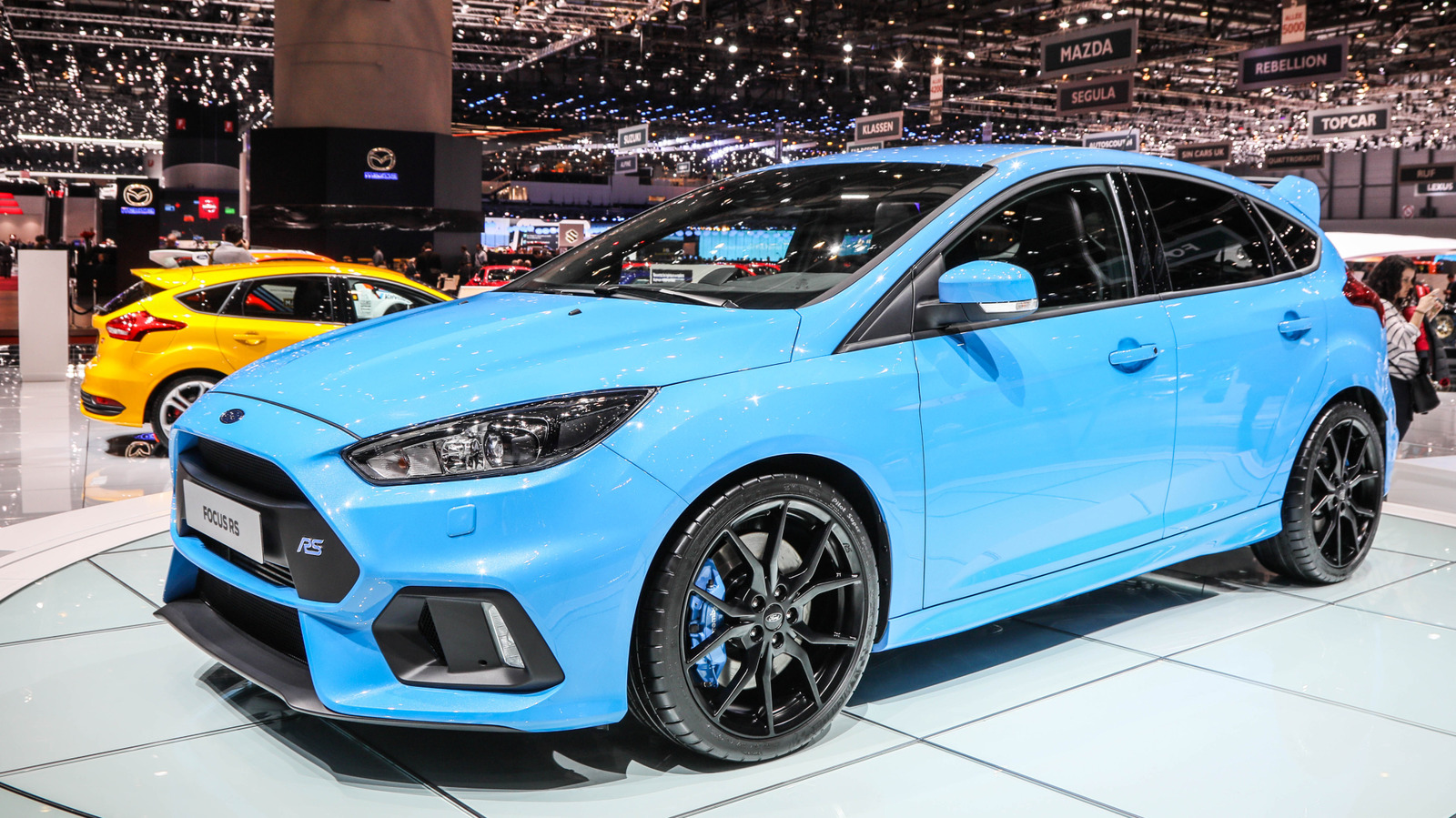
The 2017 Ford Focus RS represented the peak of the “hot hatch” era for Ford in North America. This model was distinguished by its sophisticated All-Wheel Drive (AWD) system, which included a “Drift Mode.” According to technical reviews, this system allowed the driver to distribute torque to the rear wheels, a rarity for front-wheel-drive-based hatchbacks of the time.
Equipped with a 2.3-liter EcoBoost engine producing 350 horsepower, the Focus RS offered acceleration and cornering capabilities that rivaled dedicated sports cars. The 2017 model was praised for its rigidity and the precision of its manual transmission, making it a favorite for track-day enthusiasts and daily commuters who required practicality.
The Focus RS is particularly notable in retrospect because it was one of the last high-performance small cars Ford sold in the U.S. market. As the company shifted its focus toward the Bronco and Maverick, the Focus RS became a collector’s item, representing a time when Ford invested heavily in the enthusiast-driven compact segment.
How did the 2017 Ford Fusion balance efficiency and utility?
While performance cars captured headlines, the 2017 Ford Fusion provided the essential volume and reliability that sustained the company’s market share in the mid-size sedan category. The 2017 Fusion was recognized for its interior quality and a wide array of powertrain options, including the Hybrid and Energi (plug-in hybrid) variants.

According to EPA fuel economy ratings from that era, the Fusion Hybrid offered a compelling alternative to the Toyota Camry Hybrid, providing a balance of fuel efficiency and cabin space. The Energi model allowed for short-distance electric commuting, which was a significant selling point as plug-in technology became more mainstream.
The Fusion’s 2017 iteration also featured the SYNC 3 infotainment system, which was a substantial upgrade over the previous SYNC versions. The inclusion of Apple CarPlay and Android Auto made the vehicle more competitive in an era where smartphone integration became a primary requirement for car buyers. The Fusion’s success in 2017 demonstrated that Ford could produce a sophisticated, tech-forward sedan that appealed to both corporate fleets and families.
The following table compares the primary performance metrics of the five highlighted 2017 Ford models:
| Model | Engine Type | Key Feature | Primary Market |
|---|---|---|---|
| F-150 | 3.5L V6 EcoBoost | 10-Speed Automatic | Commercial/Utility |
| Mustang GT | 5.0L V8 | V8 Auto Return | Performance/Sport |
| Ford GT | 3.5L V6 Twin-Turbo | Carbon Fiber Tub | Ultra-Luxury/Racing |
| Focus RS | 2.3L I4 EcoBoost | Dynamic AWD/Drift Mode | Enthusiast/Hatch |
| Fusion Hybrid | 2.0L I4 Hybrid | High MPG/SYNC 3 | Commuter/Family |
The 2017 model year serves as a snapshot of a company at a crossroads. It managed to dominate the truck market, revive a supercar legend, and cater to the “hot hatch” community, all while maintaining a competitive sedan presence. This diversity is why 2017 is often cited as a high-water mark for the brand’s internal combustion portfolio.
As Ford continues to transition toward its “Ford+” plan, focusing on electric vehicles (EVs) and software-defined services, these 2017 models remain influential in the secondary market. The longevity of the F-150’s aluminum body and the enduring demand for the Focus RS and Mustang GT illustrate the lasting impact of the engineering decisions made during this period.
The next major milestone for Ford’s current strategy involves the continued rollout of its next-generation electric truck platforms and the expansion of the BlueOval City manufacturing hub in Tennessee. Updates on these production timelines are typically released during Ford’s quarterly earnings calls and annual investor days.
Do you own one of these 2017 models, or do you believe another year was better for Ford? Share your experiences and thoughts in the comments below.