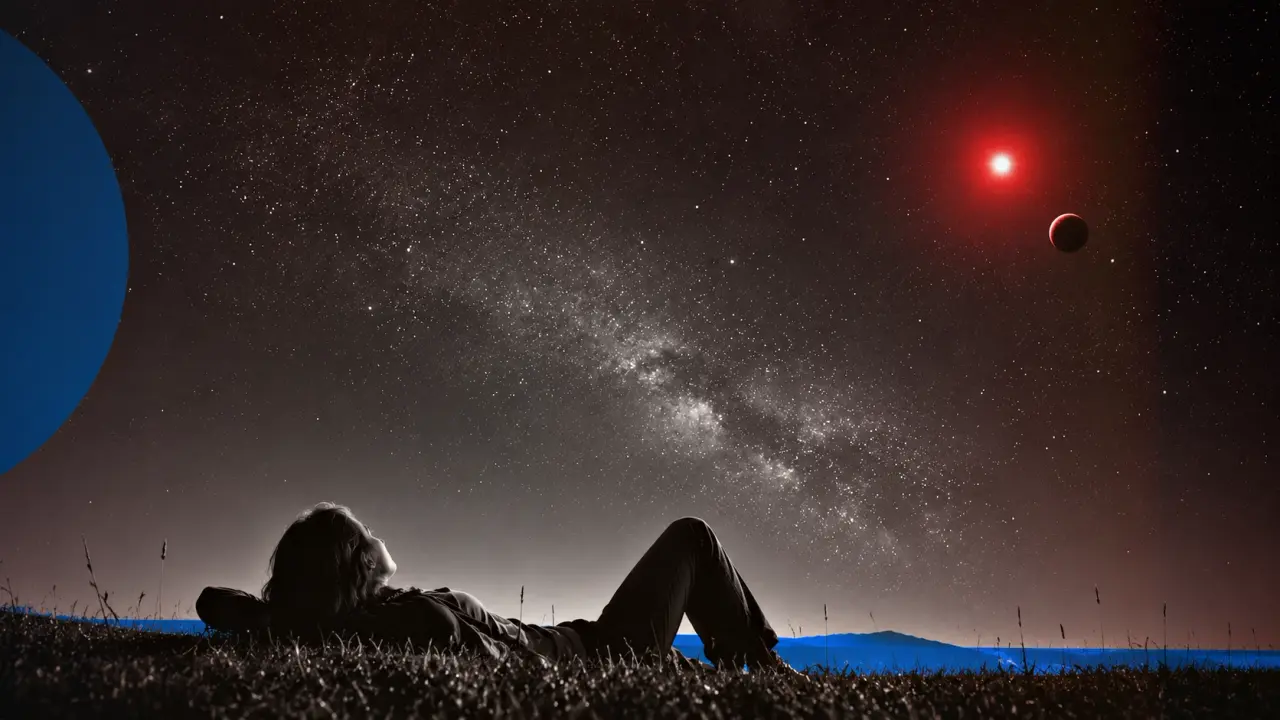
Twenty-five years ago, the landscape of modern astronomy shifted permanently when researchers confirmed the existence of 51 Pegasi b, the first exoplanet discovered orbiting a sun-like star. This detection, made by Michel Mayor and Didier Queloz, fundamentally challenged existing planetary formation models and ignited the ongoing global search for habitable worlds beyond our solar system. According to the NASA Exoplanet Archive, there are now more than 5,700 confirmed exoplanets, a figure that continues to grow as new space-based observatories come online.
The discovery of 51 Pegasi b in 1995 provided the first empirical evidence that planets existed outside our own neighborhood. Before this, the scientific community relied primarily on theoretical models derived from the architecture of our solar system. The planet, a “Hot Jupiter,” orbits its host star in just four days, a proximity that defied previous expectations of where gas giants could form. The Nobel Prize in Physics 2019 was awarded to Mayor and Queloz for this breakthrough, acknowledging the paradigm shift they initiated in astrophysics.
How Exoplanet Detection Evolved
The method used to identify 51 Pegasi b—the radial velocity technique—remains a cornerstone of exoplanet research today. By measuring the “wobble” of a star caused by the gravitational pull of an orbiting planet, astronomers can determine the mass and orbital period of distant bodies. This approach requires extreme precision, as the gravitational influence of a planet on its host star is minuscule. The European Southern Observatory’s Very Large Telescope (VLT) complex in Chile continues to refine these measurements, enabling researchers to detect increasingly smaller, Earth-sized worlds.

Following the success of radial velocity, the transit method—monitoring the slight dip in a star’s brightness as a planet passes in front of it—became the primary driver of discovery. Missions like the Kepler Space Telescope and the Transiting Exoplanet Survey Satellite (TESS) have scanned hundreds of thousands of stars, revealing that planetary systems are common throughout the Milky Way. These data points have allowed scientists to estimate that most stars host at least one planet, expanding the potential for environments that could support liquid water.
The Search for Habitable Environments
The current frontier in exoplanetary science is the characterization of planetary atmospheres. While the initial goal was simply to find planets, contemporary research focuses on “biosignatures”—chemical indicators such as oxygen, methane, or carbon dioxide that could suggest biological activity. The James Webb Space Telescope (JWST), launched in December 2021, represents the current peak of this capability. By analyzing the light filtering through the atmospheres of distant planets, the JWST provides unprecedented spectral data regarding the composition of these alien worlds.
Determining habitability involves identifying planets within the “Goldilocks zone,” or the circumstellar habitable zone, where temperatures allow for the existence of liquid water. However, the presence of water is not a guarantee of life. Scientists must also account for stellar activity, such as intense radiation from M-dwarf stars, which can strip an atmosphere away over time. Research published by the Nature journal highlights the complexity of these interactions, noting that the habitability of a planet is as much about its star’s behavior as it is about its own geology and distance.
What Happens Next in Deep Space Exploration
The next major milestone for the field will be the deployment of dedicated high-contrast imaging missions. While current technology struggles to separate the light of a planet from the glare of its host star, future instruments—such as the Extremely Large Telescope (ELT) currently under construction in Chile—aim to capture direct images of Earth-like planets. According to the ESO’s project timeline, the ELT is scheduled to see “first light” in 2028, marking the next chapter in our attempt to resolve the question of whether we are alone in the universe.

Public interest in these discoveries continues to grow, with space agencies releasing regular updates on new candidate worlds and atmospheric analysis results. For those following the progress of these missions, official status reports are available through the NASA Exoplanet Exploration portal. As research continues to refine our understanding of planetary formation, the focus will remain on the intersection of chemistry, physics, and biology to identify worlds that mirror our own. We encourage readers to share their thoughts on the search for life beyond our solar system in the comments section below.