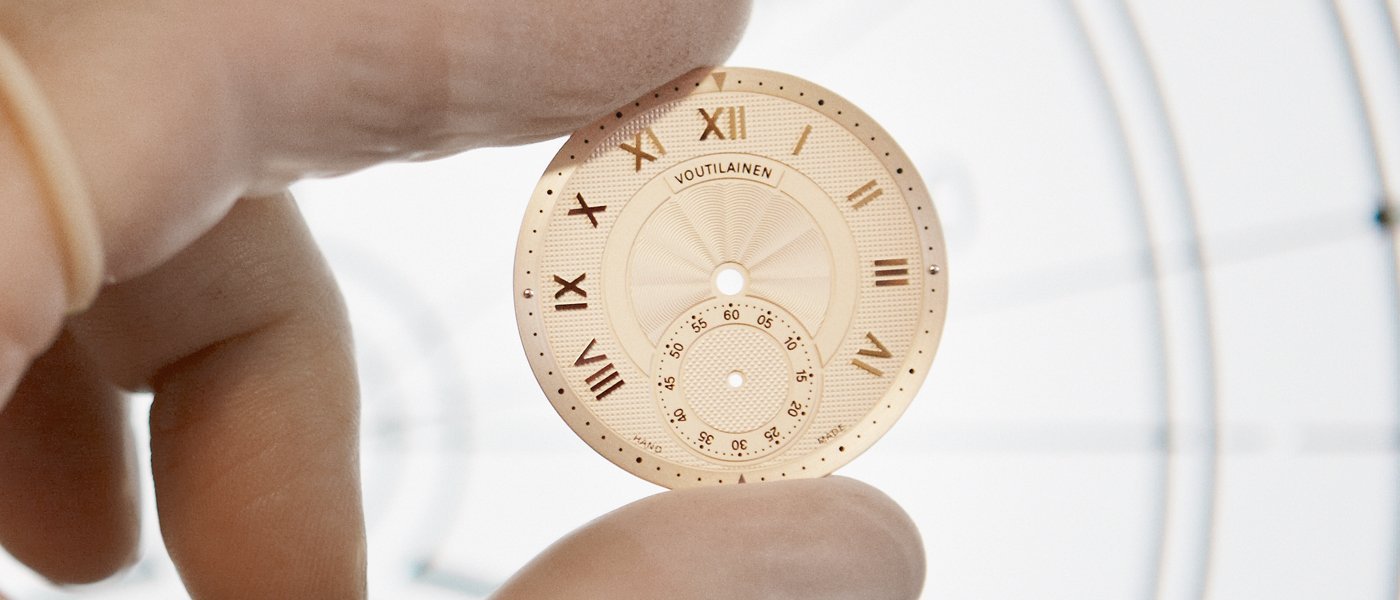
Kari Voutilainen has developed the Calibre 28, a manual-wind movement that serves as the fundamental architectural base for his independent watchmaking production. According to Voutilainen, this movement focuses on traditional craftsmanship and precision, utilizing a 21,600 vibrations per hour frequency and a power reserve of approximately 45 hours.
The Calibre 28 represents a shift toward standardization for the watchmaker, allowing him to maintain a consistent level of quality across different complications. By establishing a reliable “socle” or foundation, Voutilainen can focus on the high-level finishing and specific modifications that define his haute horlogerie pieces. This approach balances the individuality of bespoke watchmaking with the technical stability of a recurring movement architecture.
The movement is characterized by its adherence to classical proportions and the use of traditional materials. Voutilainen employs hand-finishing techniques, including anglage and polishing, which are performed in his workshop. The Calibre 28 is designed to be modular, facilitating the integration of various functions while ensuring that the core timekeeping remains stable and serviceable.
How the Calibre 28 defines Voutilainen’s technical approach
The Calibre 28 is not merely a movement but a strategic tool for production efficiency in an independent atelier. By utilizing a consistent base, Voutilainen reduces the time spent on initial engineering for every new project, shifting the focus toward the aesthetic and mechanical refinements of each individual timepiece. According to technical specifications from Voutilainen, the movement maintains a diameter and thickness optimized for the brand’s signature case designs.
Key technical elements of the Calibre 28 include:
- Frequency: 3 Hz (21,600 vph), a choice that reduces wear on components and reflects traditional watchmaking standards.
- Winding: Manual, utilizing a crown-wound system that allows for a thinner profile compared to automatic counterparts.
- Finishing: Extensive hand-chamfering (anglage) on the bridges and plates, ensuring that every surface is polished to a mirror finish.
This movement allows Voutilainen to implement his specific philosophy of “simplicity through perfection.” Rather than chasing extreme power reserves or high frequencies, the Calibre 28 prioritizes the longevity of the movement and the visual harmony of the mechanical layout.
The role of traditional finishing in the Calibre 28
The value of the Calibre 28 lies largely in its execution. Voutilainen applies rigorous standards of finishing that are often omitted in mass-produced movements. This includes the use of black polishing on steel components and meticulously brushed surfaces on the baseplates. According to industry standards for haute horlogerie, these techniques are not just decorative but serve to highlight the precision of the assembly.

The integration of the Calibre 28 into the wider collection allows for a cohesive design language. Whether the movement is housed in a classic three-hand watch or a more complex piece, the underlying architecture remains recognizable. This consistency ensures that collectors and technicians can identify the “DNA” of a Voutilainen piece through the layout of the gear train and the placement of the jewels.
Why the “socle” strategy matters for independent watchmaking
For an independent watchmaker, the risk of creating a completely new movement for every single watch is high, both in terms of cost and potential failure. By building the Calibre 28 as a foundation, Voutilainen mitigates these risks. This strategy is similar to how larger Maisons use “ebauches” or base movements, but at a much smaller, more artisanal scale.
The Calibre 28 provides a predictable platform for experimentation. When Voutilainen decides to add a complication or modify the escapement, he does so on a platform whose timing characteristics are already known and verified. This ensures that the final product meets the strict chronometric standards required for high-end luxury watches.
The impact of this approach is visible in the delivery timelines and the consistency of the pieces. By streamlining the core movement production, the atelier can dedicate more time to the “finissage”—the final polishing and adjusting—which is where the true value of a Voutilainen watch is realized.
Future updates regarding the evolution of the Calibre 28 or new iterations of the movement will be released through official Voutilainen workshop announcements. Readers can follow these developments on the brand’s official website.
Do you believe the move toward standardized base movements in independent watchmaking helps or hinders the art of horology? Share your thoughts in the comments below.