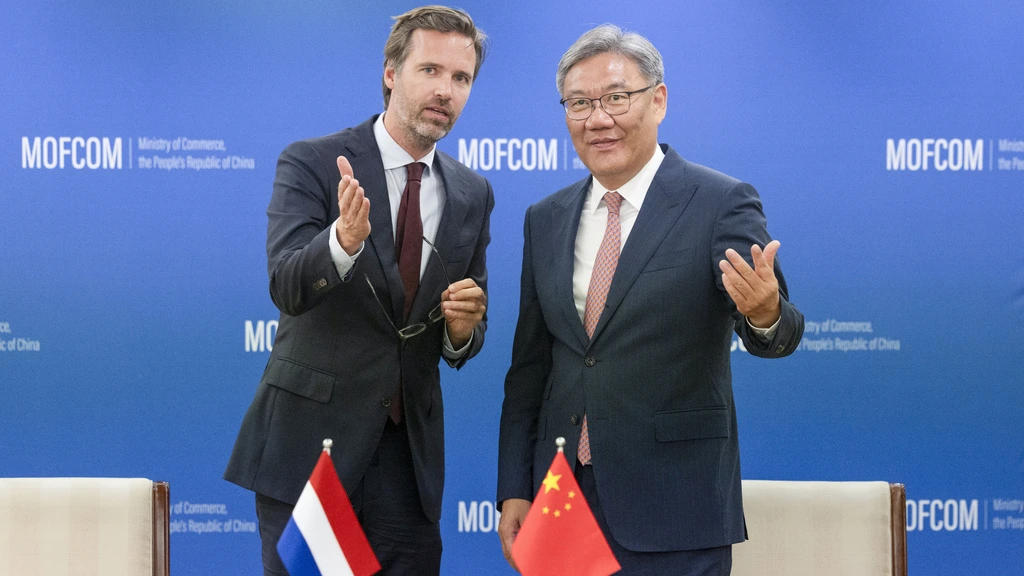
This visit comes at a time of heightened global tension surrounding the semiconductor industry, with the Dutch government attempting to balance its strategic alliance with the United States against its significant economic interests in the Chinese market.
The discussions in Beijing are set against the backdrop of recent export controls on advanced chip-making equipment, a move spearheaded by the Dutch government under pressure from Washington. These restrictions, which specifically target the technology of Dutch firm ASML, have created friction in bilateral relations.
The Strategic Importance of the Semiconductor Sector
At the center of the diplomatic tension is the semiconductor supply chain. The Netherlands is home to ASML, the world’s sole producer of extreme ultraviolet (EUV) lithography machines, which are essential for manufacturing the most advanced microchips.

For the Dutch government, the challenge remains twofold: maintaining compliance with international security frameworks while preventing a complete decoupling from the Chinese market. Trade remains a cornerstone of the Dutch economy, and officials have emphasized that they are seeking to maintain an “open but secure” trade environment. This approach involves careful vetting of sensitive technology exports, a process that has become increasingly politicized, particularly following the government’s scrutiny of Chinese investments in Dutch technology firms, such as the Nexperia case, which prompted a formal review of national security risks in the semiconductor sector.
Trade Relations and Diplomatic Friction
The visit marks a transition in the Dutch approach to Beijing. After years of limited high-level interaction, the current government is attempting to “repair” and clarify the terms of the relationship. This diplomatic “polishing” of ties is intended to prevent further deterioration of trade conditions, which have been strained by the aforementioned export restrictions and broader geopolitical maneuvering.
The Netherlands, as a major hub for European trade, finds itself in a pivotal role. The government’s current strategy focuses on diversifying supply chains and engaging in dialogue to ensure that, despite the restrictions on advanced chips, there remains space for non-sensitive commercial cooperation.
Challenges to Future Bilateral Cooperation
Despite the diplomatic efforts, significant hurdles remain. The Chinese government has expressed frustration over the export restrictions, viewing them as an impediment to free trade and technological development.

For Dutch businesses operating in China, the primary concern is the potential for retaliatory measures. The uncertainty surrounding the regulatory environment has led to a cautious approach among many firms, who are now balancing the necessity of a presence in the Chinese market against the rising risks of geopolitical fallout. The Dutch government continues to monitor these developments through its embassy and trade offices, providing ongoing guidance to businesses navigating the changing landscape of international export law.
The next major checkpoint for these relations will likely be the outcome of upcoming EU-China summits, where member states will coordinate their collective position on trade, security, and market access. Observers expect that while individual nations like the Netherlands will maintain their own bilateral channels, the broader policy will increasingly be dictated by European-wide consensus on critical technology protection.
We invite our readers to share their perspectives on the evolving trade landscape between Europe and China in the comments section below. For ongoing updates regarding Dutch trade policy and international economic mandates, please refer to the official portal of the Government of the Netherlands.