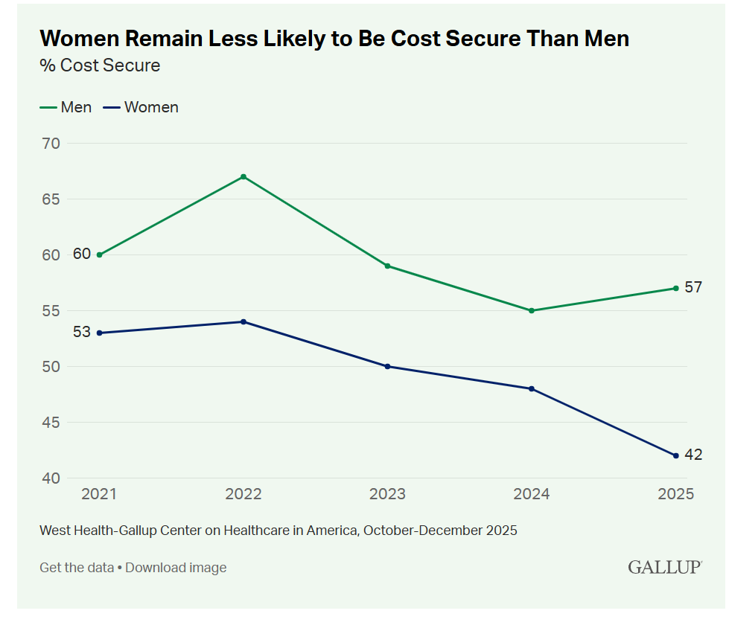
Healthcare cost insecurity in the United States has reached a five-year low, with only 49% of adults reporting they are “cost secure” as of late 2025. According to data from the Gallup and West Health Affordability Index, which polled 5,660 adults between October and December 2025, 41% of U.S. adults are now considered cost insecure and 10% are classified as cost desperate.
The Affordability Index defines “cost secure” individuals as those with access to quality, affordable care who can pay for both necessary medical services and prescription drugs. Conversely, “cost insecure” adults lack access to affordable quality care or have recently struggled to pay for medications or services, while “cost desperate” individuals face both barriers simultaneously.
Demographic data reveals that women, younger adults, and those managing chronic respiratory or mental health conditions are disproportionately affected. While men’s cost security remained relatively stable, dropping only 3 percentage points from 60% in 2021 to 57% in 2025, women saw an 11 percentage point decline, falling from 53% to 42% in the same period.
Age and Gender Disparities in Medical Affordability
The burden of healthcare costs falls most heavily on the youngest Americans. According to the Gallup and West Health research, only one in three adults aged 18 to 29 felt cost secure in late 2025. Security levels rose slightly with age, with 44% of those aged 30 to 39 and 47% of those aged 40 to 49 reporting they could afford their care.
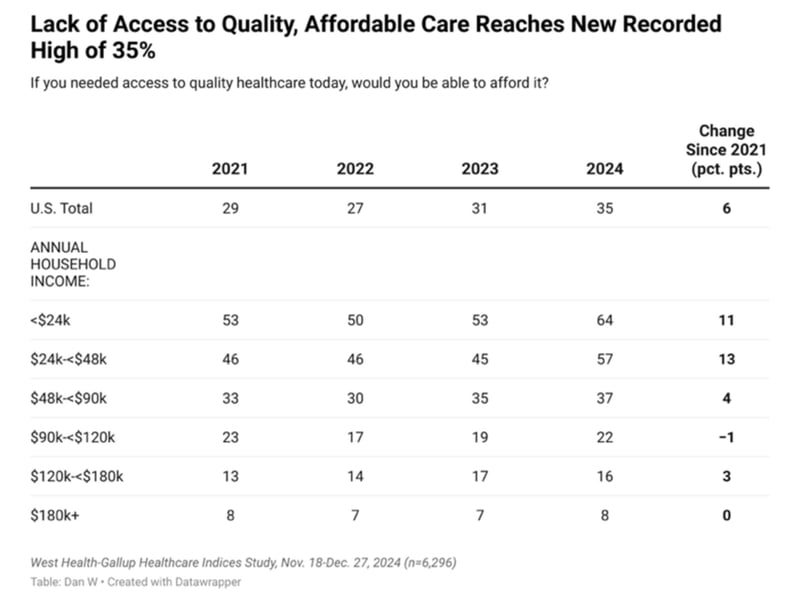
The decline in affordability is not limited to the working-age population. The index noted a drop in health cost security among Americans aged 65 and older, despite the protections provided by Medicare.
Chronic Illness as a Driver of Financial Instability
Managing a long-term health condition significantly increases the likelihood of becoming cost insecure. The Affordability Index identified specific conditions where a low percentage of patients felt their healthcare was affordable. Only 34% of adults with Chronic Obstructive Pulmonary Disease (COPD) reported feeling cost secure, while 37% of those dealing with depression and 38% of those with asthma or compromised immune systems felt secure.
Mental health challenges also correlate with higher financial strain. Those reporting anxiety saw a cost security rate of 39%.
Impact on High-Income Earners and the Workforce
Healthcare cost insecurity is not confined to low-income households. The research indicates that affordability is a pressing issue even for affluent Americans. By the end of 2025, one in three adults earning between $120K and $179,999K and one in five earning $180K or more reported facing healthcare cost insecurity.

This trend extends into the broader workforce’s daily survival. A survey by the American Heart Association found that 50% of employees reported that healthcare costs made it difficult to afford basic necessities, including food, rent, and childcare. The financial pressure is also impacting long-term savings, as 47% of workers said they were reducing or stopping their retirement contributions to cover medical burdens.
Economic pressures are further compounded by household inflation.
As these financial pressures persist, consumers are increasingly seeking alternative healthcare ecosystems that provide better value. Patients are now more likely to shop for care and curate their own health networks to balance quality with affordability.
We invite readers to share their experiences with healthcare affordability in the comments section below.