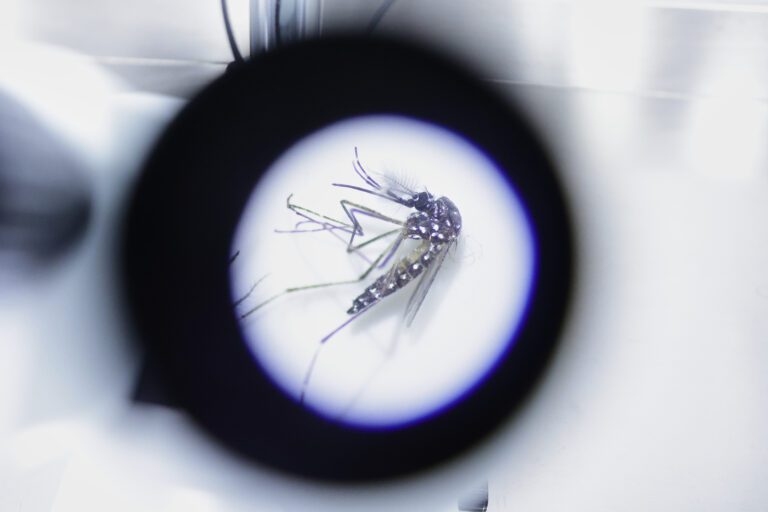
Sacramento County health officials have released more than 2 million sterile male Aedes albopictus mosquitoes to curb the spread of invasive species and prevent the transmission of viruses such as Zika and dengue fever. This biological control strategy, implemented by the Sacramento County Mosquito and Vector Control District (MVCD), aims to crash the local population of the Asian tiger mosquito by ensuring that females mate with males incapable of producing offspring.
The Aedes albopictus, commonly known as the Asian tiger mosquito, is an invasive species that differs from native mosquitoes due to its aggressive daytime biting habits and its ability to thrive in small containers of water in urban environments. According to the Sacramento County Mosquito and Vector Control District, the release of sterile insects is a targeted effort to reduce the prevalence of these mosquitoes before they can establish a permanent, high-density foothold in the region.
This method, known as the Sterile Insect Technique (SIT), involves irradiating male mosquitoes to make them sterile. When these males mate with wild females, no viable eggs are produced. Because female mosquitoes only mate once or very few times in their lifecycle, this process effectively lowers the birth rate of the next generation without introducing chemical pesticides into the environment.
The Threat of Aedes albopictus in Northern California
The Asian tiger mosquito is a primary vector for several significant public health threats. While native mosquitoes in California carry West Nile virus, Aedes albopictus is specifically linked to the transmission of the Zika virus, dengue, and chikungunya. These diseases are often associated with tropical climates, but the invasive nature of this species allows it to adapt to temperate zones like the Sacramento Valley.

Public health data from the Centers for Disease Control and Prevention (CDC) indicates that Aedes albopictus is highly efficient at spreading viruses because it is an “opportunistic” feeder, biting both humans and animals. This flexibility allows the virus to move quickly through different biological hosts, increasing the risk of a local outbreak if the population is not managed.
The Sacramento County MVCD identifies the risk as particularly high in residential areas where “micro-habitats”—such as flowerpot saucers, discarded tires, and birdbaths—provide ideal breeding grounds. Unlike native species that may prefer larger bodies of water, the Asian tiger mosquito can complete its larval cycle in a few milliliters of water.
How the Sterile Insect Technique (SIT) Operates
The release of 2 million sterile males is not a one-time event but part of a calculated suppression program. The process begins in a laboratory where thousands of mosquitoes are bred. Only the males are selected for release because male mosquitoes do not bite; only females possess the proboscis required to pierce skin and feed on blood.

The males undergo a precise dose of ionizing radiation. According to technical specifications for SIT, this radiation disrupts the sperm without killing the insect or affecting its ability to seek out and mate with females. Once released into the wild, these sterile males compete with wild males for mates. When a wild female mates with a sterile male, her eggs fail to hatch, leading to a population decline over successive generations.
This approach provides a critical advantage over traditional fogging or spraying. Chemical insecticides often face challenges with “resistance,” where mosquito populations evolve to survive the toxins. SIT bypasses this biological defense by targeting the reproductive cycle rather than the nervous system of the insect.
Environmental and Public Health Impact
By focusing exclusively on Aedes albopictus, the MVCD minimizes the impact on non-target insects, such as bees and butterflies, which are often harmed by broad-spectrum pesticide applications. The use of sterile males is a species-specific intervention, meaning it does not affect the broader ecosystem’s biodiversity.
From a medical perspective, reducing the density of these mosquitoes is the most effective way to prevent the “autochthonous” (local) transmission of Zika. While most Zika cases in the U.S. are imported by travelers, a high population of competent vectors like the Asian tiger mosquito creates the necessary infrastructure for a virus to jump from a traveler to the local population and then spread through the community.
Health officials emphasize that while the sterile mosquito program is a powerful tool, it is not a total solution. The MVCD continues to urge residents to “Tip and Toss”—emptying any standing water around the home—to remove the breeding sites that allow the invasive species to persist.
Comparison of Control Methods
To understand why Sacramento County is deploying millions of sterile insects, it is helpful to compare SIT with traditional vector control methods used in the United States.

| Method | Target | Environmental Impact | Primary Weakness |
|---|---|---|---|
| Chemical Spraying | Broad (Many insects) | High (Affects pollinators) | Insecticide resistance |
| Larviciding | Larvae in water | Low (Localized) | Hard to find all sites |
| Sterile Insect Technique | Species-specific | Very Low | Requires high release volume |
Next Steps for Sacramento County
The MVCD will continue to monitor mosquito trap data to determine the effectiveness of the 2-million-insect release. The success of the program is measured by the “sterile-to-wild ratio”—the proportion of sterile males found in traps compared to naturally occurring wild males. If the ratio remains high and the overall population of females drops, the program is considered successful.
Residents can track current mosquito activity and report sightings of unusual mosquito behavior through the official Sacramento County MVCD reporting portal. Future releases may be scaled based on the seasonal surge of the invasive population and the results of current trapping cycles.
For the latest updates on vector control and public health advisories in Northern California, visit the official Sacramento County health department website. We encourage readers to share this report to help neighbors understand why they may see an increase in male mosquitoes in their areas during release windows.