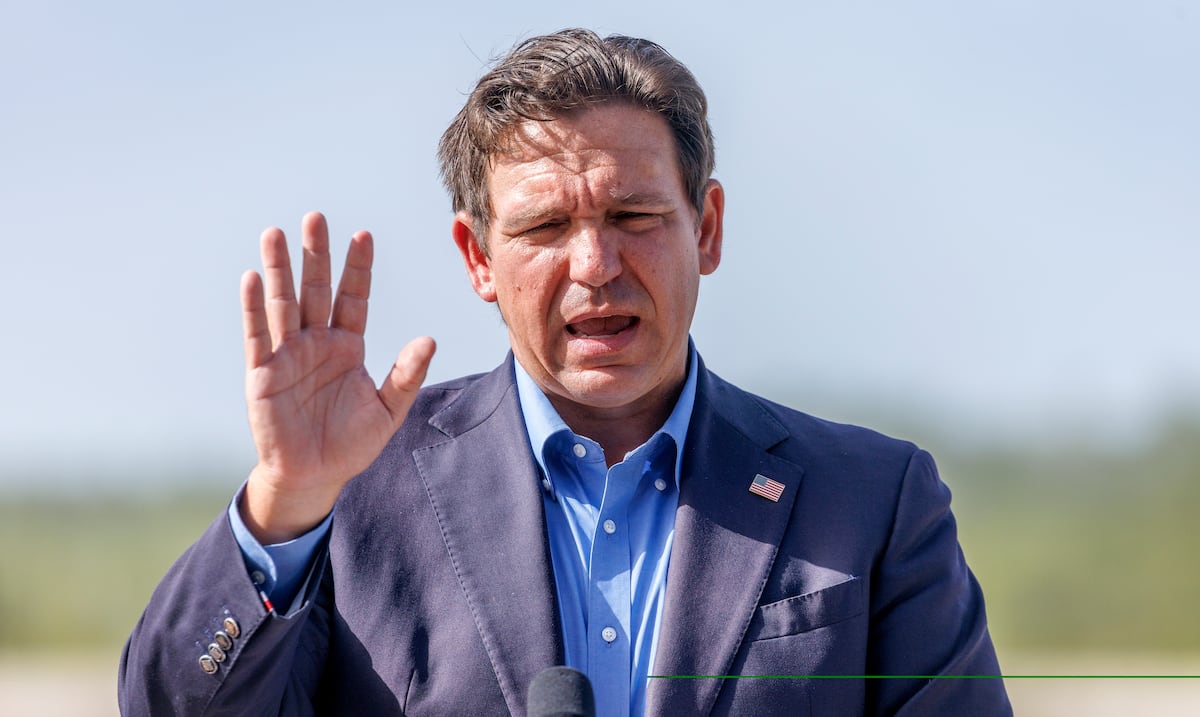
A federal appeals court has ruled that key provisions of Florida’s “Stop W.O.K.E.” Act are unconstitutional as applied to public university classrooms. The U.S. Court of Appeals for the Eleventh Circuit determined that the state law, which restricted how professors could discuss certain topics related to race and gender, violates the First Amendment. This decision marks a significant legal setback for the state’s efforts to regulate university-level instruction regarding concepts categorized by the law as “woke” ideology.
The ruling specifically targets the “Individual Freedom Act,” signed by Governor Ron DeSantis in 2022. According to the court’s opinion, the state failed to demonstrate that the restrictions on classroom speech were narrowly tailored to serve a compelling government interest, effectively affirming a lower court’s preliminary injunction against the enforcement of the policy in higher education settings. The decision centers on the principle that the government may not dictate the ideological content of discourse within public university classrooms, as reported by the Reuters news agency.
Legal Challenges to the Individual Freedom Act
The legislation, officially titled the Individual Freedom Act, sought to prohibit instruction that suggests individuals are inherently racist, sexist, or oppressive, whether consciously or unconsciously, based on their race or sex. While proponents argued the law was necessary to prevent discriminatory indoctrination, academic groups and civil liberties organizations challenged the statute shortly after its enactment. The American Civil Liberties Union (ACLU), which represented the plaintiffs, argued that the law functioned as a tool for viewpoint discrimination.
In its decision, the Eleventh Circuit panel emphasized that the state’s interest in preventing discrimination does not grant it the authority to restrict the pedagogical freedom of faculty members. The court noted that because the law targeted specific viewpoints, it triggered “strict scrutiny,” a high legal threshold that the state was unable to satisfy. This ruling aligns with broader judicial trends concerning academic freedom and the limits of state control over public higher education curricula, as detailed in the official court records maintained by the U.S. Courts.
Impact on Academic Freedom and Classroom Discourse
The practical implications of this decision are concentrated within Florida’s state university system. For faculty members, the ruling provides immediate legal protection against enforcement actions that could have resulted from discussing sensitive topics—such as systemic racism or implicit bias—during lectures or class discussions. The law’s language had previously created an environment of uncertainty, with many educators expressing concern that non-compliance could lead to professional repercussions or institutional funding cuts.

Educational institutions in Florida are now tasked with reconciling their internal policies with this appellate confirmation. The court’s rejection of the state’s position reinforces the role of universities as “marketplaces of ideas,” a concept that has historically protected faculty speech from government interference. While the state may seek further legal avenues, including potential appeals or petitions for a rehearing en banc, the current status quo remains governed by this appellate mandate, according to analyses provided by the Chronicle of Higher Education.
Context of the “Stop W.O.K.E.” Legislation
The “Stop W.O.K.E.” Act was part of a broader legislative push in Florida to reshape educational standards. It is important to distinguish that this court ruling is specific to higher education. The application of the law in K-12 settings remains subject to different legal considerations and ongoing litigation. The distinction between the two educational levels is critical, as the Supreme Court has historically afforded different levels of deference to state legislatures regarding the curricula of public schools versus the academic freedom of university professors.

As the legal landscape shifts, stakeholders—including university administrators, faculty unions, and state officials—are expected to monitor how this precedent influences future policy debates. The next checkpoint for this case involves the potential filing of a petition for a writ of certiorari to the U.S. Supreme Court by the state of Florida. For now, the injunction against the enforcement of the act in higher education remains in effect, ensuring that the challenged provisions cannot be applied to university faculty.
We welcome your perspectives on how this ruling may influence the future of academic discourse. Please share your thoughts in the comments section below.