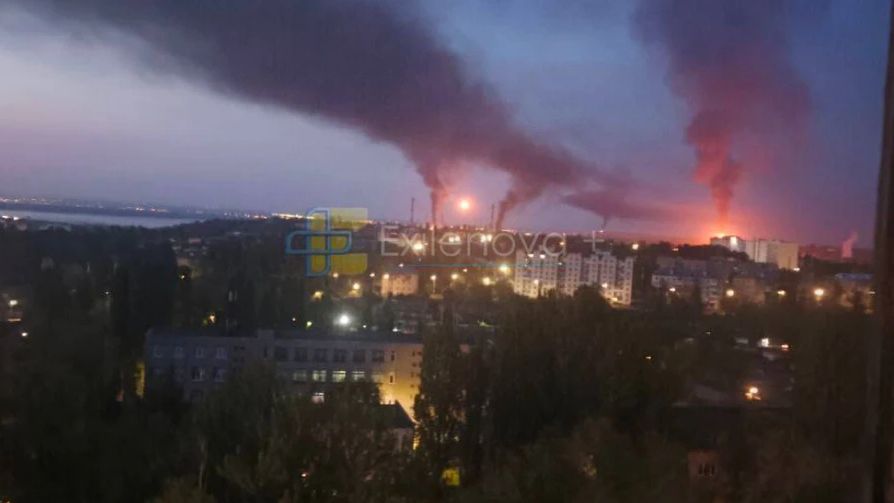
Ukraine has intensified its long-range strike campaign against Russian energy and military assets, targeting a major Rosneft refinery in Siberia and airfields housing Su-series fighter jets. These operations aim to disrupt Russian fuel supplies and degrade the Russian Aerospace Forces’ (VKS) ability to launch aircraft from deep within its own territory.
The strikes represent a strategic shift toward "deep-strike" capabilities, with some drones reaching targets more than 2,500 kilometers from the Ukrainian border.
Russia has responded with its own strikes on Ukrainian energy infrastructure and fuel depots, while officials in Moscow claim to have intercepted hundreds of drones attempting to enter the capital’s airspace. The escalation highlights a growing trend of asymmetric warfare where both nations target the industrial capacity of the other to sustain frontline operations.
Siberian Oil Infrastructure and Rosneft Targets
Ukrainian forces have successfully struck a critical Rosneft oil refinery located in Siberia, an operation that marks one of the longest-range drone strikes of the conflict. The target was situated approximately 2,500 kilometers from the Ukrainian border, according to data tracked by open-source intelligence and regional reports. By hitting refineries deep in the Russian interior, Ukraine seeks to reduce the volume of refined petroleum products available for the Russian military and lower the state’s export revenues.

The focus on Rosneft facilities is part of a broader pattern of targeting the Russian petroleum sector. The Siberian strike demonstrates that no single region of Russia is currently immune to Ukrainian long-range unmanned aerial vehicles (UAVs).
Airfield Strikes and the Su-Series Fighter Threat
Beyond energy targets, Ukraine has focused on Russian airbases, specifically those housing Sukhoi (Su) fighter jets. These aircraft are essential for providing air cover for Russian ground troops and conducting glide-bomb raids on Ukrainian cities. Recent reports indicate that Ukrainian strikes have hit runways and hangars, aiming to ground these jets or force them to relocate to more distant airfields, thereby increasing their flight time and reducing their operational efficiency.
The targeting of the Su-series aircraft is a direct attempt to neutralize Russia's qualitative edge in the air. By damaging the infrastructure required to maintain and launch these jets, Ukraine limits the frequency of sorties over the Donbas and Kharkiv regions.
Moscow Drone Swarms and Russian Defenses
The Mayor of Moscow has reported a surge in drone activity, claiming that over 400 drones were launched toward the capital in a single coordinated wave. Russian officials state that the vast majority of these drones were intercepted by electronic warfare (EW) systems and traditional air defense batteries.

In retaliation, Russian forces have targeted Ukrainian fuel stations and energy grids.
Strategic Impact of Deep-Strike Operations
The shift toward targeting infrastructure 2,500 kilometers away changes the calculus of the war in three primary ways:
- Economic Attrition: By hitting refineries, Ukraine targets the primary source of funding for the Russian state budget.
- Logistical Strain: Forcing the Russian military to move aircraft and fuel reserves further inland slows down the tempo of their offensive operations.
- Psychological Pressure: Bringing the war to the Russian interior, particularly in Siberia and Moscow, challenges the Kremlin’s narrative that the conflict is confined to a small border region.
These operations are often carried out using domestically produced long-range drones, which Ukraine has rapidly iterated to improve range and payload. The ability to hit a Rosneft facility in Siberia suggests a level of intelligence and technical capability that exceeds previous estimates of Ukrainian UAV range.
Do you believe deep-strike operations will force a change in Russian military strategy? Share your thoughts in the comments below and share this report with your network.