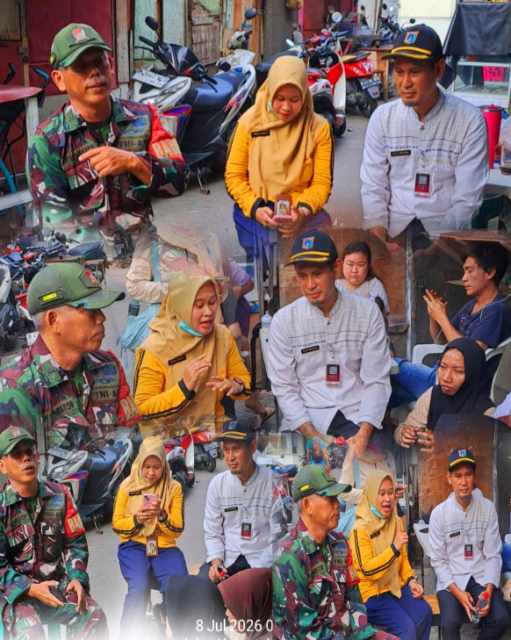
In the Maphar region of West Jakarta, local military personnel and community leaders have intensified efforts to curb the spread of Dengue Hemorrhagic Fever (DHF) through proactive larval monitoring and public health outreach. As part of a collaborative “Tiga Pilar” (Three Pillars) initiative, personnel from the Koramil 01/Taman Sari military command are conducting door-to-door inspections to eliminate mosquito breeding grounds, emphasizing the importance of community-led environmental sanitation in preventing viral transmission.
Dengue fever remains a significant public health challenge in tropical urban environments, where standing water provides an ideal habitat for the Aedes aegypti mosquito. According to the World Health Organization (WHO), dengue is a viral infection transmitted to humans through the bite of infected mosquitoes. In Indonesia, the Ministry of Health consistently promotes the “3M Plus” strategy—draining water containers, closing them tightly, and recycling or burying waste—as the primary defense against localized outbreaks, as outlined in their official public health guidance.
Collaborative Preventive Measures in Maphar
The recent health campaign in Maphar involves a coordinated effort between the Indonesian National Armed Forces (TNI), represented by Babinsa (Village Supervisory Non-Commissioned Officers), local police, and neighborhood administrative officials. These inspections focus specifically on household water storage, flower pots, and gutters, which frequently serve as reservoirs for mosquito larvae. By engaging directly with residents through Komsos (social communication), officials aim to raise awareness about the clinical symptoms of dengue, such as high fever, rash, and muscle pain, and the necessity of immediate medical intervention if these signs appear.

Public health experts emphasize that environmental management is the most effective way to control vector-borne diseases. Data from the Centers for Disease Control and Prevention (CDC) confirms that reducing the number of water-filled containers around homes is critical because it disrupts the mosquito life cycle at the larval stage, preventing the emergence of adult vectors capable of transmitting the virus.
The Role of Community Engagement in Disease Control
Effective disease prevention in densely populated areas like Taman Sari requires high levels of community participation. The “Tiga Pilar” approach leverages local knowledge and existing social structures to ensure that health messages reach every household. This strategy is essential because dengue transmission often occurs in domestic settings. By performing routine “Jumantik” (larval monitor) activities, local authorities can identify high-risk areas before an outbreak occurs.
According to the World Health Organization, there is no specific antiviral treatment for dengue, making prevention through vector control the cornerstone of public health policy. The integration of military and civil administrative support in Maphar reflects a broader national strategy in Indonesia to decentralize health surveillance and empower neighborhood-level monitoring to mitigate the burden on hospital systems.
Best Practices for Dengue Prevention
For residents concerned about the risk of infection, health authorities recommend the following standard precautions to maintain a mosquito-free environment:
- Drain and Clean: Regularly empty and scrub containers that hold water, such as buckets, birdbaths, and pet water bowls.
- Cover Containers: Use tight-fitting lids on water storage tanks to prevent mosquitoes from laying eggs.
- Clear Gutters: Ensure roof gutters are free of debris to prevent water accumulation during the rainy season.
- Personal Protection: Use insect repellent, wear long-sleeved clothing, and install window screens to reduce exposure to mosquito bites.
- Seek Early Treatment: Consult a healthcare provider immediately if experiencing sudden high fever or severe headaches, especially in areas where dengue is prevalent.
Residents are encouraged to coordinate with their local Puskesmas (Community Health Center) if they identify clusters of illness in their neighborhood. For official health updates and guidance on vector control, the public can visit the Indonesian Ministry of Health portal, which provides ongoing information regarding local disease trends and preventive measures.
As the rainy season continues to influence vector activity in West Jakarta, the military and local government units plan to maintain these monitoring cycles. Further updates on regional health initiatives will be provided as local authorities share progress reports on larval eradication efforts across the district.
Have you observed similar community health efforts in your area? Share your experiences or questions regarding local vector control in the comments section below.