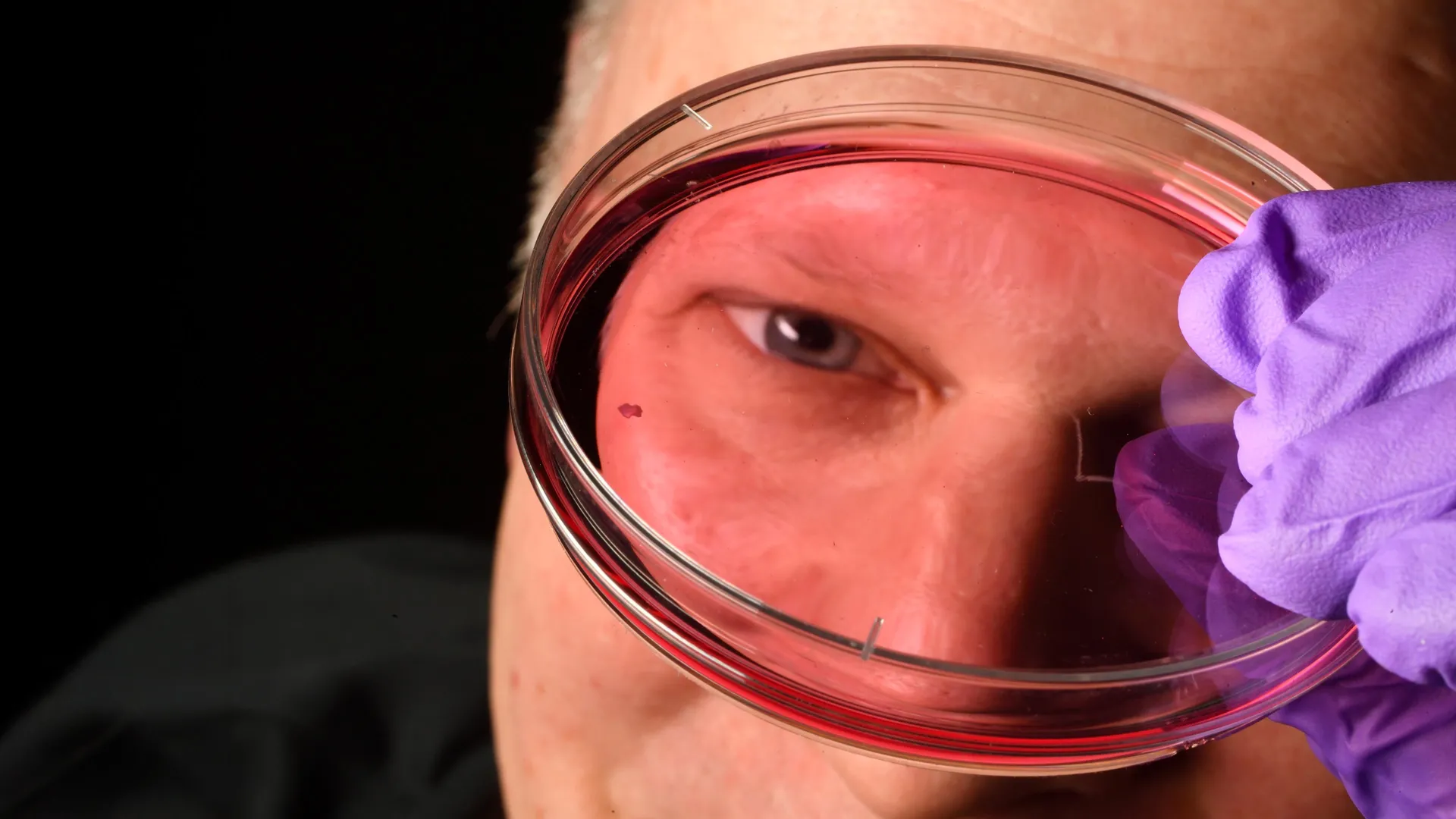
Contrary to previous models, which suggested that blue-sensitive cone cells physically migrate away from the center of the retina, the study reveals that these cells instead undergo a transformative process, chemically switching their identity to become red or green cone cells. This discovery, published in the journal Science, highlights the critical role of vitamin A-related signaling and thyroid hormones in human ocular development.
For decades, the prevailing view in developmental biology was that the fovea—the small, specialized area of the retina responsible for sharp, detailed central vision—formed through the mechanical migration of photoreceptor cells.
The Role of Thyroid Hormones and Vitamin A in Retinal Development
The study found that during the development of the retina, precursor cells are initially sensitive to blue light. As the eye matures, a specific hormonal cascade forces these blue-sensitive cones to transition into red or green-sensitive cones, a process essential for the high-acuity color vision humans possess. The research team, led by Kiara Eldred and her colleagues, observed that the absence of these specific thyroid hormone signals resulted in a failure of this transition, leading to a retina dominated by blue-cone cells, which does not support the high-resolution vision typical of the healthy human fovea.
This finding is significant because it shifts the focus from structural migration to molecular instruction. By understanding that these cells are “reprogrammed” rather than moved, researchers can better understand the developmental origins of various retinal disorders. The study also underscores the essential nutritional requirements for fetal development; because retinoic acid is synthesized from vitamin A, the authors note that maternal nutritional status may have direct implications for the proper maturation of the fetal retina during critical windows of development.
Implications for Regenerative Medicine and Lab-Grown Tissue
Beyond its developmental insights, this discovery provides a roadmap for improving lab-grown retinal organoids. Scientists have long struggled to produce retinal tissues that accurately mirror the complexity of the human eye, particularly the foveal region. By manipulating the levels of thyroid hormones and vitamin A-related signals in controlled laboratory environments, researchers believe they can now guide stem cells more effectively toward becoming the specific red and green cones required for sharp central vision.
This development is a foundational step for future cell-based therapies aimed at treating age-related macular degeneration (AMD) and other degenerative eye diseases. AMD is a leading cause of vision loss worldwide, affecting millions by damaging the macula, the center of the retina. According to the National Eye Institute, restoring the function of this precise area remains one of the most significant challenges in ophthalmology. While clinical application remains in the future, the ability to generate the correct types of cone cells from human stem cells is a necessary prerequisite for replacing damaged tissue in patients.
Addressing Future Research and Clinical Challenges
The research team has emphasized that while the mechanisms identified in the study provide a clear path forward, translating these results into human treatments will require extensive further study. Current efforts are focused on refining the protocols for organoid cultivation to ensure that these “switched” cells can successfully integrate into existing retinal structures. The scientific community is now looking toward how these findings might explain variations in human color vision and whether similar hormonal pathways could be targeted to mitigate the impact of hereditary cone-cell deficiencies.
As the field of regenerative medicine continues to evolve, the integration of developmental biology and stem cell technology remains a priority for academic and clinical research centers. Future updates regarding the transition of these lab-grown retinal models into potential preclinical trials will be monitored through official publications from the American Association for the Advancement of Science. For those interested in the ongoing progress of retinal research, the National Eye Institute provides comprehensive resources and updates on clinical trials related to vision restoration and stem cell therapies.
Have questions about how this research might impact current understanding of retinal health? Please share your thoughts and join the discussion below.