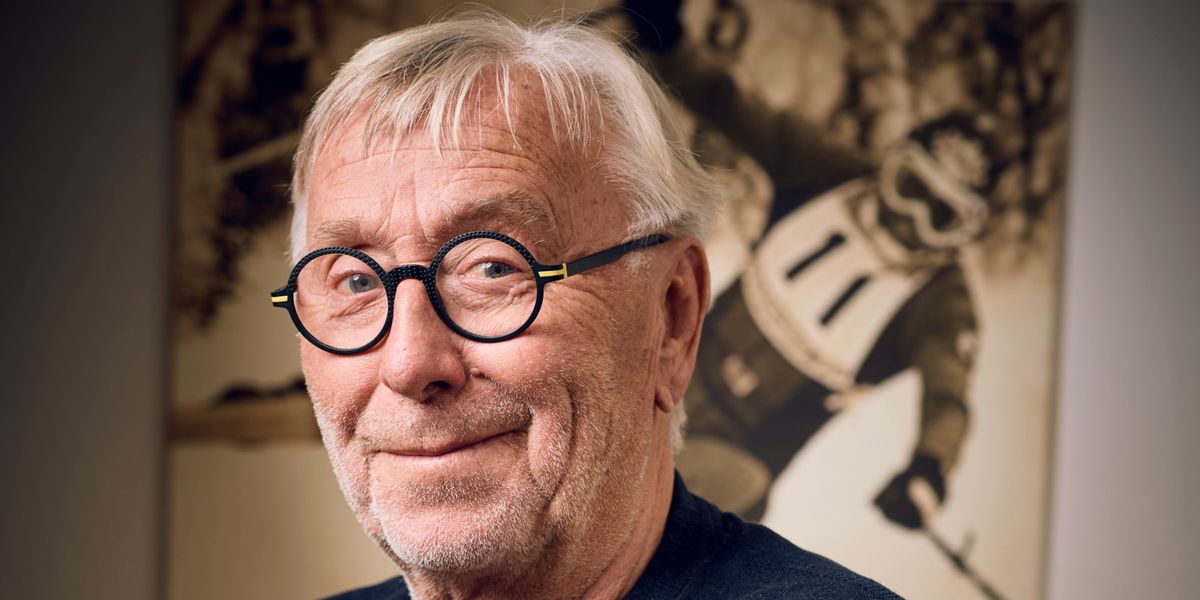
Swiss skiing icon Roland Collombin, affectionately known as “La Colombe” (The Dove), has died at the age of 75. A legendary figure in alpine skiing, Collombin defined an era of speed and bravery during the 1970s, most notably securing back-to-back victories in the prestigious Hahnenkamm downhill race in Kitzbühel. His passing marks the end of a chapter for Swiss winter sports, leaving behind a legacy of fearlessness that influenced generations of speed specialists.
Born in 1951 in Martigny, Switzerland, Collombin rose to prominence as a formidable force on the World Cup circuit. His career was defined by a rare combination of raw talent and an aggressive racing style that often pushed the limits of safety on the world’s most dangerous courses. According to records from the International Ski and Snowboard Federation (FIS), Collombin claimed eight World Cup victories, with his most dominant period occurring in the 1973 and 1974 seasons.
The Legend of La Colombe
Collombin earned his famous nickname—”The Dove”—not because of a gentle nature on the slopes, but as a play on his surname. On the mountain, he was anything but soft; he was a daring downhill specialist who became a national hero in Switzerland. His crowning achievements came in Kitzbühel, where he conquered the legendary Streif course in 1973 and repeated the feat in 1974. These victories solidified his status as one of the premier downhillers of his generation, often pitted against rivals like Austrian superstar Franz Klammer.
The rivalry between Collombin and Klammer remains a cornerstone of alpine skiing history. While Klammer would go on to define the decade, Collombin’s aggressive approach and technical prowess made him the man to beat during his peak. His career was characterized by a “win or fall” mentality, a trait that endeared him to fans but also frequently placed him in precarious situations on the ice.
Career Cut Short by Injury
The trajectory of Collombin’s career was abruptly altered by a severe crash in Val-d’Isère, France, in 1974. While training for a downhill event, he suffered a spinal injury that would eventually force his retirement from competitive skiing. His departure from the sport at the age of 24 came as a shock to the skiing world, as he was at the height of his physical powers and widely considered the favorite for upcoming Olympic and World Championship titles.
Despite the brevity of his time on the professional circuit, his impact was profound. He transitioned into life after sports with the same intensity he brought to the start gate, eventually settling in the Valais region. His connection to the mountains remained unbroken, and he continued to be a celebrated figure in the Swiss sporting community long after he hung up his skis.
A Legacy in Swiss Skiing
The news of his death has prompted an outpouring of tributes from the Swiss sports establishment and former colleagues. Collombin is remembered not just for his trophies, but for his character—a man who lived life at high velocity and never backed down from a challenge. His career statistics, including his two Kitzbühel wins and his overall performance in the 1973/74 World Cup season where he finished second in the downhill standings, are documented in the official FIS athlete database.

For those interested in the history of alpine skiing, Collombin’s career serves as a reminder of the sport’s evolution, particularly regarding safety standards and the professionalization of the circuit. He competed during a time when downhill racing was significantly more perilous, and his courage helped elevate the profile of the sport globally.
As the Swiss skiing community mourns, the focus remains on the immense contributions “La Colombe” made to the sport’s popularity in the Alps and beyond. Funeral arrangements and memorial services are expected to be announced by his family in the coming days. Readers are encouraged to share their memories of his greatest races in the comments section below.