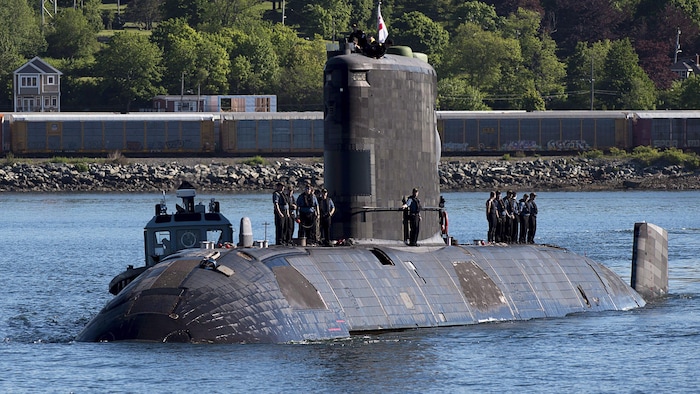
Nova Scotia is positioning itself as a central hub for the Canadian Navy’s upcoming submarine procurement program, with provincial leadership signaling readiness to support the industrial capacity required for such a long-term defense project. Premier Tim Houston has publicly expressed confidence in the province’s maritime infrastructure and workforce, framing the potential regional impact as a significant economic opportunity for Atlantic Canada.
The Canadian federal government is currently in the early stages of the Canadian Patrol Submarine Project (CPSP), a multi-billion dollar initiative aimed at replacing the existing Victoria-class submarine fleet. According to the Department of National Defence, the government is engaging with industry partners to assess the requirements for acquiring up to 12 conventionally powered submarines capable of under-ice operations. The federal government officially launched the request for information process to gauge market interest and technical capabilities in 2024, as documented in official government procurement notices.
Infrastructure Readiness and Industrial Capacity
The economic stakes for Nova Scotia are high, given the province’s existing footprint in naval repair and shipbuilding. Halifax is already home to the Atlantic fleet and the Halifax Shipyard, operated by Irving Shipbuilding. The shipyard is currently engaged in the National Shipbuilding Strategy, a long-term federal program focused on renewing the Royal Canadian Navy’s combatant fleet. Premier Houston’s administration maintains that the existing skilled labor pool and proximity to deep-water ports provide a competitive advantage for housing the maintenance and lifecycle support of a new submarine fleet.
However, the transition to submarine production or advanced maintenance involves complex industrial requirements. Unlike surface combatants, submarines require specialized facilities capable of handling pressurized hulls and highly sensitive nuclear-adjacent or specialized propulsion systems. The Canadian government’s National Shipbuilding Strategy remains the primary vehicle through which these industrial objectives are funneled, emphasizing the need for domestic sovereignty in fleet maintenance.
Strategic Context of the Submarine Procurement
The urgency behind the CPSP stems from the aging status of the current Victoria-class vessels, which were acquired from the United Kingdom in the late 1990s. These submarines are reaching the end of their operational lifespan, forcing the federal government to plan for a successor that can address modern geopolitical challenges in the Arctic and the Atlantic. The Department of National Defence has identified the need for enhanced surveillance and deterrence capabilities in northern waters, a priority reflected in the 2024 defense policy update, Our North, Strong and Free.
For Atlantic Canada, the project represents more than just a defense contract; it is viewed as a catalyst for high-tech job creation. Provincial officials have highlighted the potential for partnerships between local post-secondary institutions and defense contractors to train the next generation of marine engineers and technicians. This focus on human capital is essential, as the project will require a specialized workforce that does not currently exist at the scale needed for full-cycle submarine construction.
Economic Expectations and Future Milestones
While the Premier’s office remains optimistic, the path forward is contingent upon federal procurement decisions that are still evolving. The government has not yet selected a final design or a primary contractor for the submarines, and the budget for the project—while expected to be substantial—remains subject to parliamentary approval and Treasury Board oversight. Historical data on large-scale Canadian defense procurement shows that projects of this magnitude often span decades, meaning the economic benefits will be realized in stages rather than immediately.

The next major checkpoint for the procurement process is the formal evaluation of the responses to the request for information, which will inform the federal government’s strategy for the eventual request for proposals. Stakeholders in Nova Scotia are expected to monitor these federal updates closely, as the specific technical requirements of the chosen submarine design will dictate what upgrades are necessary for regional shipyards. Interested parties can track official updates through the CanadaBuys portal, which serves as the central hub for all federal procurement solicitations and project status reports.
As the federal government narrows its focus on technical specifications and international partnerships, the conversation in Nova Scotia will likely shift toward the specific infrastructure investments needed to secure a portion of the supply chain. Further announcements regarding the timeline for the CPSP are expected in the coming fiscal year, providing clarity on how the province’s industrial base will interface with national defense priorities.
We invite readers to share their perspectives on the impact of defense spending in Atlantic Canada in the comments section below. Stay tuned to our regional reporting for ongoing coverage of the Canadian Patrol Submarine Project as official milestones are reached.