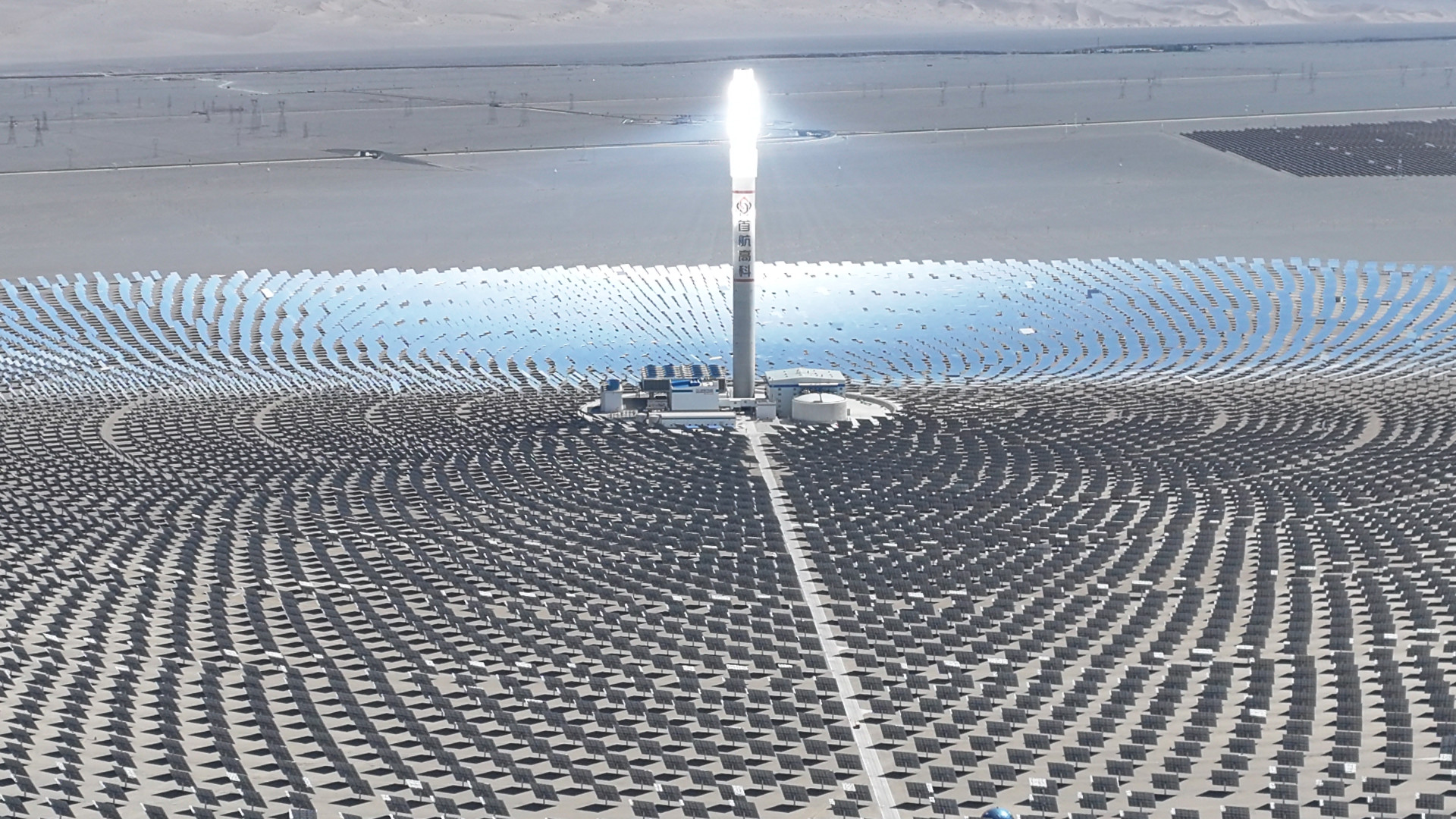
Researchers in China have demonstrated a prototype battery technology capable of operating at 550 degrees Celsius, utilizing molten salt as a thermal energy storage medium. This development, led by teams at the Chinese Academy of Sciences (CAS), aims to address the limitations of conventional lithium-ion batteries by leveraging high-temperature stability for specialized industrial and long-duration storage applications, rather than consumer electronics like laptops.
While reports have circulated regarding the use of “molten salt in laptops,” the technology currently exists as a high-temperature thermal battery prototype intended for grid-scale energy storage and industrial processes. The system relies on the latent heat capacity of inorganic salts, which remain stable at extreme temperatures, allowing for energy density levels that outperform traditional chemical batteries in specific stationary settings. According to technical documentation from the Chinese Academy of Sciences, these thermal storage units are designed to integrate with renewable energy grids, providing a solution to the intermittency of solar and wind power.
Thermal Energy Storage vs. Consumer Electronics
The core innovation involves a phase-change material—typically a mixture of nitrate or chloride salts—that stores energy as heat. When the salt reaches its melting point, it absorbs significant thermal energy, which can be released later to generate steam or drive turbines. In a laboratory setting, researchers have successfully maintained these temperatures at 550 degrees Celsius, a threshold necessary for high-efficiency power generation.

Contrary to speculation regarding portable consumer devices, the physical requirements of a 550-degree system make it unsuitable for mobile computing. Modern laptop batteries, primarily based on lithium-ion chemistry, are engineered to operate safely between 0 and 45 degrees Celsius. Integrating a molten salt system would require extensive vacuum-insulated thermal housing to prevent the device from reaching temperatures that would liquefy internal components. The National Renewable Energy Laboratory (NREL) notes that while molten salt is a proven medium for concentrated solar power (CSP), its current form factor remains strictly industrial.
Engineering Challenges and Material Stability
The primary hurdle for the research team at the CAS is material corrosion. At 550 degrees Celsius, molten salts become highly reactive, often degrading the metal containers and heat exchangers used to house them. Recent studies published in peer-reviewed journals, such as those indexed by the Solar Energy Materials and Solar Cells, indicate that researchers are testing specialized nickel-based alloys and ceramic coatings to extend the operational lifespan of these containment vessels.
The efficiency of these systems is measured by the “round-trip efficiency” of the thermal-to-electric conversion. While standard lithium-ion batteries often exceed 90% round-trip efficiency, thermal salt batteries generally operate in a range closer to 40% to 60%, depending on the heat-to-power conversion method utilized. However, the cost per kilowatt-hour of thermal storage is significantly lower than that of lithium-ion, making it a viable candidate for long-duration storage—defined as systems capable of discharging for 10 hours or more.
Grid Integration and Future Outlook
The Chinese government has prioritized the development of long-duration energy storage (LDES) as part of its “dual carbon” goals, which aim for peak emissions by 2030 and carbon neutrality by 2060. The National Development and Reform Commission (NDRC) has issued various policy guidelines encouraging the deployment of non-lithium storage technologies to stabilize the national power grid as the share of intermittent renewable energy increases.

For the average consumer, the immediate impact of this research is not found in hardware, but in the potential for a more stable and cost-effective energy grid. As the technology matures, the focus will remain on scaling the size of these thermal blocks to support industrial zones and municipal power networks. The next phase of development, as outlined in recent state-sponsored research roadmaps, involves pilot projects designed to test the longevity of these systems under continuous, multi-year cycling conditions.
Future updates regarding the commercial scalability of these molten salt systems will be provided by the Chinese Academy of Sciences as pilot project data becomes available. Readers interested in the broader landscape of energy storage technology can monitor the latest findings from the International Energy Agency (IEA), which tracks global trends in grid-scale storage deployment. We welcome your questions and observations on the evolution of energy technology in the comments section below.