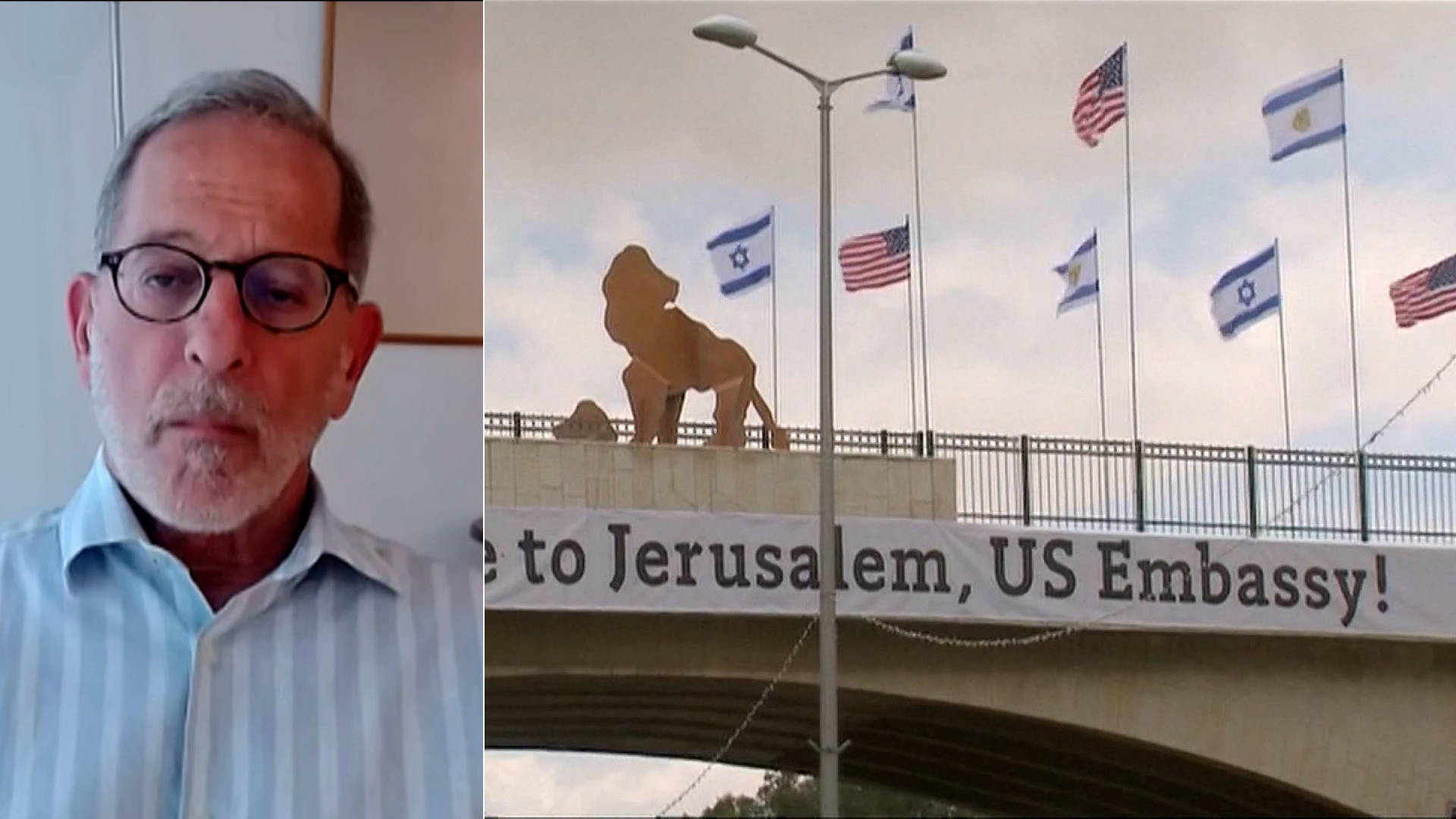
The United States and Israel have formalized a land-allocation agreement intended for the construction of a permanent U.S. Embassy in West Jerusalem, a move that follows the establishment of a temporary diplomatic facility during Trump’s first term in office. The project, slated for the area known as the Allenby compound, has drawn sharp opposition from Palestinian families who assert the site consists of land unlawfully taken from them decades ago.
Rashid Khalidi, Edward Said professor emeritus of modern Arab studies at Columbia University, is among those asserting a claim to the property. According to Khalidi, the agreement between the U.S. and Israeli governments represents a violation of international norms, specifically citing repeated United Nations Security Council resolutions regarding the status of Jerusalem. “So, here we have the U.S. government signing an agreement with the Israeli government to lease land the Israeli government has no right to, to which … we and many other families have title, in order to establish an illegal embassy in Jerusalem,” Khalidi stated.
The Legal and Diplomatic Context of the Jerusalem Site
The planned embassy location has been the subject of property disputes. Critics point to the site’s history as a point of contention involving private land ownership.

Historical Preservation and the Mamilla Cemetery
Rashid Khalidi has drawn attention to the ongoing struggle to protect the Mamilla Cemetery, a site he describes as “one of the most sacred and holy sites to Muslims.” The cemetery, which dates back centuries, has seen portions of its land repurposed over the years.
Israel has gradually taken over the cemetery, replacing it with a museum, parks and parking lots.
Public Response and Future Implications
The families claiming ownership of the land at the Allenby compound have pleaded with the U.S. government to reconsider the embassy’s planned location. For the families involved, the embassy project is a continuation of a decades-long struggle over property rights.
Keep reading