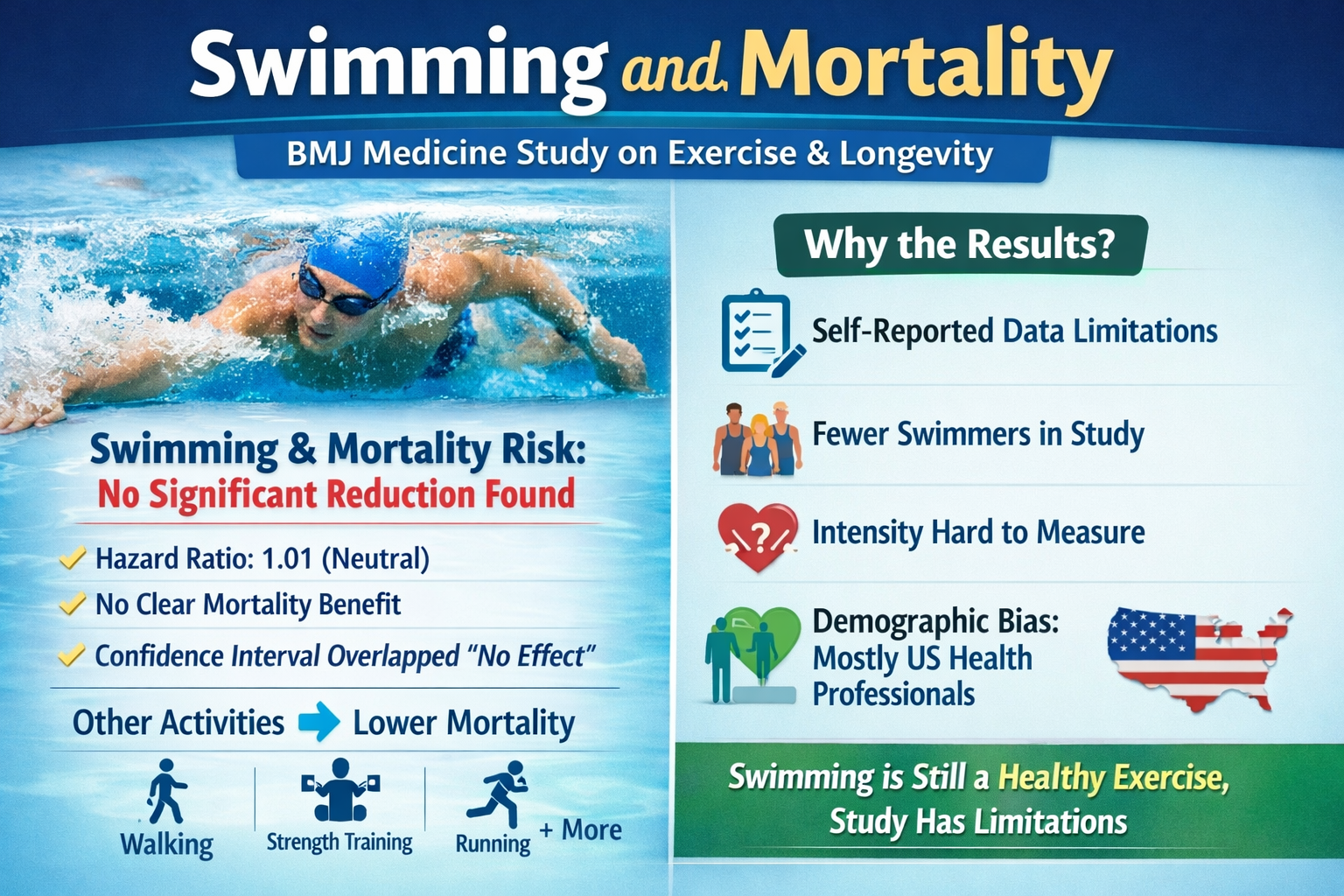
A recent large-scale study published in BMJ Medicine suggests that while most forms of physical activity are associated with a reduction in all-cause mortality, the specific type of exercise an individual chooses may influence their longevity outcomes. Researchers tracking more than 100,000 participants over several decades found that while walking, running, and strength training consistently correlated with improved survival rates, swimming did not show a statistically significant association with reduced mortality in this particular dataset.
It is important to clarify that this finding does not suggest swimming is ineffective or harmful. Instead, it highlights the complexities inherent in observational research, particularly regarding how we measure and categorize human movement. The study, which analyzed long-term health data, reinforces a growing consensus in medical literature: the most effective strategy for longevity appears to be a “diversified movement portfolio” rather than a reliance on a single modality.
Understanding the Data: Why Swimming Appeared Different
In this study, researchers utilized repeated questionnaires to track the physical activity habits of a large cohort, primarily composed of health professionals in the United States. When the data were analyzed, the hazard ratio for swimming remained statistically neutral. This means that, within the parameters of this specific study, the researchers could not establish a definitive link between swimming and a lower risk of death, though they also found no evidence of increased risk.
Several factors likely contribute to this result. First, measuring the intensity of swimming is notoriously difficult compared to land-based activities. A participant reporting “30 minutes of swimming” might be performing anything from gentle water walking to high-intensity interval laps, and questionnaires often fail to capture this variance. Second, water provides buoyancy, which reduces the cardiovascular and musculoskeletal stress typically associated with land-based exercise. While this makes swimming an excellent, low-impact option for joint health, it may alter the physiological signals that researchers use to correlate activity with mortality.
Furthermore, the statistical power of the swimming group may have been limited if fewer participants identified as regular swimmers compared to those who walked or engaged in strength training. Previous cardiovascular research—distinct from this observational study—has consistently demonstrated that aquatic exercise significantly improves endothelial function, aerobic capacity, and metabolic health. Therefore, the “neutral” signal in this study is more likely a reflection of measurement limitations than an indication of physiological failure.
The Case for Exercise Diversity
One of the most compelling takeaways from the BMJ Medicine research is the benefit of variety. Participants who engaged in multiple types of physical activity demonstrated a lower mortality risk than those who focused on just one, even when the total volume of exercise was identical. This aligns with current physiological understanding: the body thrives when challenged by different stimuli.
Cardiorespiratory training, such as running or brisk walking, improves heart and lung efficiency. Resistance training builds muscular strength and bone density. Flexibility and coordination work, often incorporated into activities like racket sports, maintain neuromuscular health. By combining these, you widen your “adaptation bandwidth,” ensuring that your body remains resilient across different domains of health. A single modality, no matter how effective, rarely optimizes all these systems simultaneously.
Limitations of Observational Research
When interpreting these findings, it is essential to consider the demographic and methodological constraints of the study. The cohort was predominantly composed of White, highly educated, and health-conscious US professionals. This limits the ability to generalize the findings to broader, more diverse populations globally, where socioeconomic status and access to recreational infrastructure—such as public pools or safe walking paths—vary significantly.
Additionally, observational studies are always subject to residual confounding. While researchers use statistical adjustments to account for factors like diet and smoking, they cannot fully eliminate the possibility that healthier individuals are simply more likely to participate in multiple types of exercise. Consequently, while the association between physical activity and longevity is clear, the specific contribution of any one activity remains difficult to isolate with absolute certainty.
Practical Guidance for Your Routine
For those looking to optimize their health, the takeaway remains optimistic: movement is medicine. If you enjoy swimming, there is no clinical reason to stop; it remains a superior choice for those managing joint limitations, back pain, or those seeking a full-body cardiovascular workout. The absence of a “mortality signal” in one study does not negate the decades of established science regarding the benefits of aquatic exercise.
Instead, consider using these findings to build a more sustainable and varied routine. Longevity is not a race; it is a long-term commitment to maintaining physiological function. The best exercise for you is the one you enjoy enough to perform consistently for years to come.
As we wait for future large-scale prospective trials to further refine our understanding of how specific exercise modalities influence long-term outcomes, the current evidence strongly supports a balanced, multi-faceted approach to physical activity. Readers are encouraged to monitor updates from major medical journals regarding longitudinal physical activity research. We will continue to track this data as new findings emerge in the field of exercise science and preventative medicine.
Keep reading