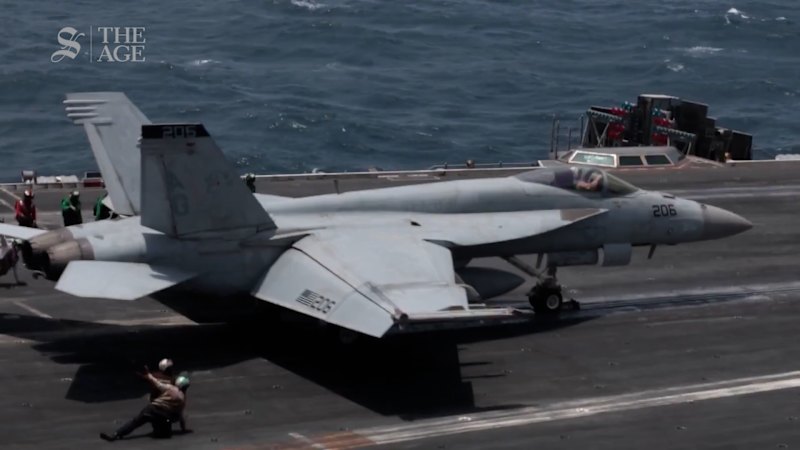
The United States military has conducted a series of airstrikes targeting facilities associated with Iranian-backed groups, while simultaneously intensifying its naval posture in the Strait of Hormuz to monitor and restrict maritime traffic. These actions follow a period of heightened regional volatility and represent a significant shift in the U.S. approach to managing Iranian influence in the Middle East, according to reports from the U.S. Department of Defense.
The Strait of Hormuz remains a critical global chokepoint, through which approximately 20% of the world’s total oil consumption passes daily, according to data from the U.S. Energy Information Administration. By increasing naval presence in these waters, the U.S. aims to deter potential interference with commercial shipping lanes, a strategy that has historically been used to counter Iranian naval maneuvers in the region. The U.S. military maintains that its operations are defensive in nature, designed to protect freedom of navigation and support regional allies.
Military Strategy and Recent Strikes
The latest strikes, as confirmed by Pentagon officials, targeted infrastructure used by paramilitary organizations linked to the Islamic Revolutionary Guard Corps (IRGC). These operations were directed at command-and-control centers and logistics hubs, according to statements released by U.S. Central Command (CENTCOM). The objective of these precision strikes, according to the official military briefings, is to diminish the operational capacity of militias that have been accused of conducting attacks against U.S. personnel and interests in Iraq and Syria.

The Biden administration has characterized these actions as a “necessary and proportionate” response to ongoing threats. Under the War Powers Resolution, the executive branch is required to notify Congress within 48 hours of introducing U.S. forces into hostilities, a requirement the White House has stated it intends to fulfill as the situation evolves, according to the Congressional Research Service. Regional analysts note that the dual approach of kinetic strikes and maritime blockades is intended to signal a policy of “maximum pressure” without escalating the conflict into a full-scale direct war between the two nations.
Maritime Security in the Strait of Hormuz
The resumption of heightened U.S. naval activity in the Strait of Hormuz serves as a direct challenge to Iranian efforts to exert control over the waterway. The U.S. Navy’s Fifth Fleet, based in Bahrain, has increased patrols and is coordinating with international maritime partners to ensure that commercial vessels are not harassed or detained by Iranian forces, according to the U.S. Naval Forces Central Command. This presence involves the deployment of guided-missile destroyers and surveillance assets capable of monitoring regional maritime traffic in real-time.

For global markets, the primary concern is the potential for supply chain disruptions. During previous periods of tension in the Strait, insurance premiums for commercial tankers operating in the Persian Gulf increased significantly, affecting global energy prices. The International Energy Agency has previously warned that any sustained closure or restriction of the Strait would have immediate consequences for global oil markets, necessitating a coordinated international response to maintain energy security.
Geopolitical Implications and Next Steps
The current U.S. policy represents a recalibration of its regional strategy, moving away from a purely diplomatic focus toward a more assertive stance involving military deterrence. Iranian officials have condemned the strikes, labeling them as violations of national sovereignty, though they have yet to announce a formal military retaliation, according to state-aligned media outlets in Tehran. The situation remains fluid, with international observers closely monitoring diplomatic channels for signs of de-escalation.
The next confirmed checkpoint for this development will be the upcoming briefing by the U.S. Secretary of Defense to the Senate Armed Services Committee, where the administration is expected to provide further details on the scope of the mission and its long-term objectives, according to the official Senate committee calendar. Please share your thoughts on these developments in the comments section below.
Related reading