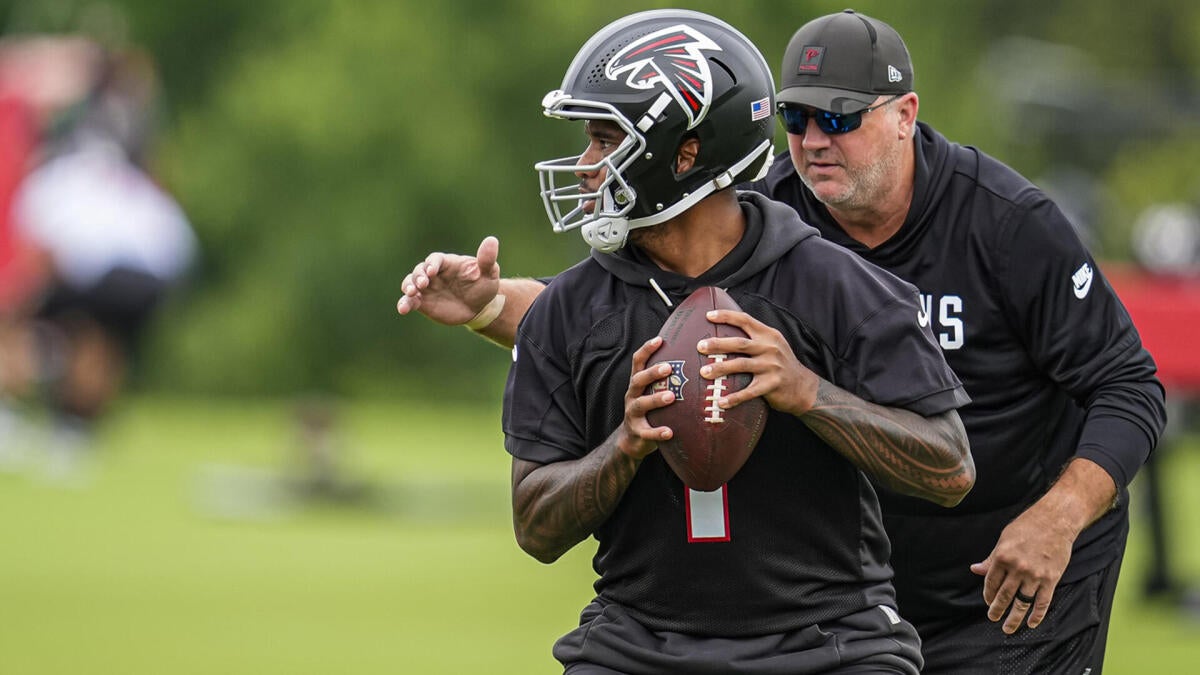
Kyler Murray, Tua Tagovailoa, Kirk Cousins, and Jeff Driskel—often discussed alongside backup options like Jeff Willis—enter a critical window in their careers where their performance in the coming seasons will dictate the long-term financial and strategic stability of their respective franchises. With the NFL salary cap landscape shifting and teams increasingly hesitant to commit to long-term, high-value deals without clear playoff success, these quarterbacks face a definitive “reset” period. According to league data, the current market for veteran signal-callers is defined by front-loaded contracts that allow for potential exits if performance metrics decline.
The pressure on these players is not merely about individual statistics; it is about the sustainability of their teams’ competitive windows. For franchises like the Arizona Cardinals, Miami Dolphins, Atlanta Falcons, and others managing quarterback depth, the 2025 and 2026 seasons represent a final evaluation before potential roster overhauls. As noted by analysts at NFL.com, the league’s salary cap reached $255.4 million for the 2024 season, a historic increase that has forced front offices to be more selective with how they allocate capital to the most important position on the field.
Kyler Murray and the Cardinals’ Competitive Timeline
Kyler Murray remains the focal point of the Arizona Cardinals’ offense, but the franchise has structured his contract to provide flexibility. Murray signed a five-year, $230.5 million contract extension in 2022, a deal that includes $160 million in guaranteed money, as verified by ESPN reporting. While his mobility and arm talent are elite, the team’s inconsistent performance over the last three seasons has led to questions regarding whether the current coaching staff and front office view him as a long-term lock beyond 2026.
The Cardinals have prioritized surrounding Murray with high-end receiving talent, including the selection of Marvin Harrison Jr. in the 2024 NFL Draft. This move signals a “win now” mentality intended to maximize the value of Murray’s prime years. If the team fails to secure a postseason berth, the financial structure of his contract—specifically the potential for dead money hits—will become a central point of discussion for the Cardinals’ front office.
Tua Tagovailoa and the Dolphins’ Financial Commitment
Tua Tagovailoa’s situation in Miami is uniquely tied to his health and his ability to execute the team’s high-velocity offensive scheme. In July 2024, Tagovailoa signed a four-year, $212.4 million extension with the Miami Dolphins, a deal that includes $167.1 million in guaranteed money, according to official NFL records. This massive investment underscores the team’s belief in his fit under head coach Mike McDaniel.
However, the narrative surrounding Tagovailoa frequently shifts based on his availability. Concussion history has been a documented factor in the Dolphins’ risk assessment. The 2025 and 2026 seasons will be the litmus test for whether Tagovailoa can maintain his efficiency while playing a full 17-game slate. Should he struggle with durability, the Dolphins’ ability to pivot will be constrained by the sheer size of his contract, making his performance the single most important variable in the organization’s future.
Kirk Cousins and the Atlanta Falcons’ Strategic Shift
Kirk Cousins represents a different category of quarterback reset. After signing a four-year, $180 million contract with the Atlanta Falcons in March 2024, Cousins was brought in to provide stability for a team that had struggled to find consistency at the position, as reported by NFL.com. Unlike Murray or Tagovailoa, Cousins is an established veteran whose arrival was intended to immediately elevate the Falcons to contender status.
The “reset” for Cousins is age-related. At 36 years old, the Falcons are banking on his ability to perform at a high level while simultaneously developing younger options on the roster, such as Michael Penix Jr. The 2026 season will likely be the year the Falcons decide whether to fully commit to the remainder of Cousins’ deal or transition to the younger talent they acquired in the 2024 draft. This creates a high-stakes environment where Cousins must prove that his recovery from his 2023 Achilles injury has not hindered his long-term viability.
Depth and the Role of Secondary Options
The conversation regarding quarterback stability often excludes the essential role of depth players like Jeff Driskel or others who fill the “bridge” or “emergency” slots. While these players are not tasked with leading a franchise to a Super Bowl, their presence is a hedge against the volatility inherent in the position. Teams that have invested heavily in starters like Tagovailoa or Cousins are increasingly looking for cost-effective, experienced backups who can keep the team afloat during short-term absences.
This market for veteran backups is tightening as teams prioritize salary cap space. In 2026, the league will see a shift where veteran backups may find themselves competing for fewer roster spots as teams pivot toward younger, cheaper developmental prospects. The ability for a team to maintain a stable secondary option is now a core requirement for any organization aiming for a deep playoff run.
The next major checkpoint for these four players will be the start of the 2025 training camps, where roster construction and salary cap compliance will offer the first look at how these franchises intend to manage their quarterback situations. Fans and analysts can follow official updates via the NFL Transactions wire for real-time changes to contracts and roster statuses. Please share your thoughts in the comments section below on how these quarterbacks will perform in the coming years.
Keep reading