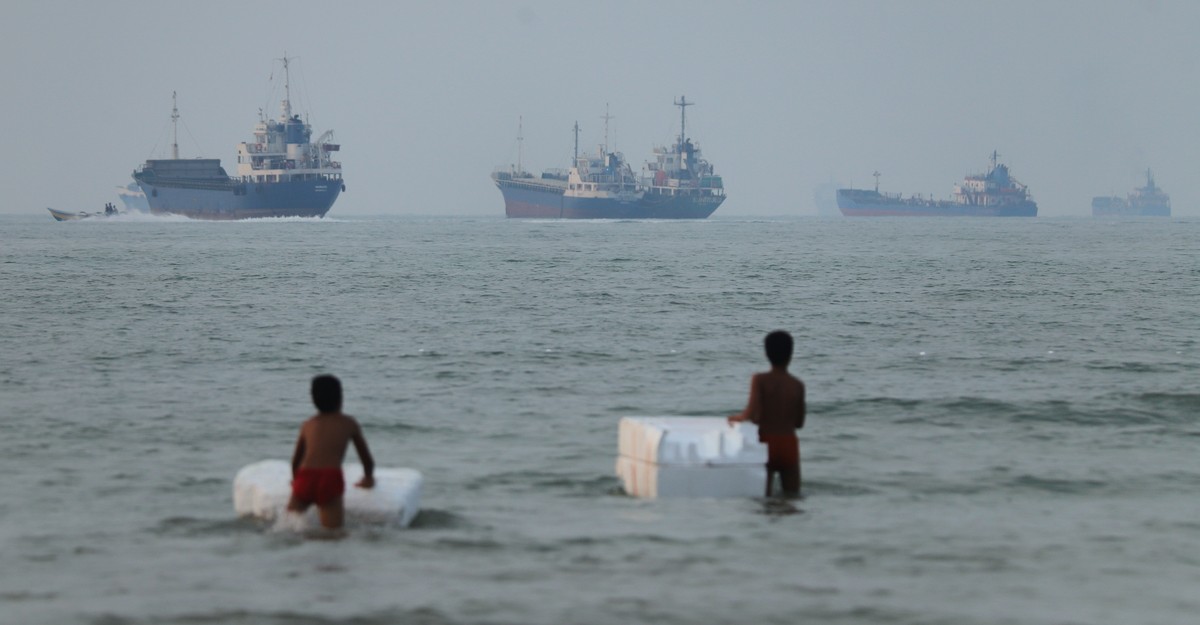
The Strait of Hormuz, a critical maritime chokepoint, remains a focal point of intensifying geopolitical instability. Following the collapse of recent cease-fire negotiations and the formal notification to the U.S. Congress that hostilities have resumed, the waterway has once again become a contested zone. Control over this 21-mile-wide passage is currently challenged by Iranian transit restrictions, creating significant uncertainty for global energy markets and international shipping lanes.
The strategic importance of the strait—located between Iran and Oman—is underscored by its history as a flashpoint for naval power. While the United Nations Convention on the Law of the Sea (UNCLOS) provides a framework for maritime territorial rights, the United States is not a party to the treaty, though it recognizes the principles as international law, according to Michael Poznansky, a nonresident senior fellow at the Brookings Institution. The current situation reflects a long-standing struggle for dominance, shifting from the 16th-century Portuguese “cartaz” permit system to modern efforts by the U.S. to ensure freedom of navigation.
Historical Precedents and the Carter Doctrine
The United States has historically viewed the stability of the Persian Gulf as a vital national interest. This perspective was formalized in 1980 through the Carter Doctrine, which asserted that any attempt by an outside force to gain control of the region would be regarded as an assault on the vital interests of the U.S. This policy led to direct military intervention during the 1980s, most notably Operation Earnest Will, where the U.S. Navy escorted Kuwaiti tankers to protect them from Iranian attacks during the Iran-Iraq War.

During that period, Iran frequently threatened to close the strait, though it ultimately refrained from a total blockade due to the potential for catastrophic damage to its own economy. This historical caution has shifted in recent months. Following strikes on its territory and the assassination of Supreme Leader Ali Khamenei, the Iranian regime has implemented increasingly stringent transit restrictions. These actions have included the use of naval mines and small, agile vessels capable of harassing commercial shipping, leading to a measurable decline in traffic through the waterway.
Military Challenges in the Persian Gulf
Current efforts to secure the strait face significant logistical and diplomatic hurdles. In May, the U.S. launched an initiative known as Project Freedom, designed to provide escort services for commercial vessels. The mission concluded after only two days, hindered in part by the refusal of regional partners, such as Saudi Arabia, to grant access to military bases and airspace for these operations. The erosion of traditional alliances has further complicated the ability of the U.S. to project power or coordinate a multilateral response similar to the naval coalitions of the 1980s.

Ray Takeyh, a senior fellow for Middle East studies at the Council on Foreign Relations, notes that maintaining freedom of navigation in the current environment may require a persistent, long-term U.S. military presence. Such a commitment carries high risks, including the potential for direct confrontation with Iranian forces and the ongoing threat posed by asymmetric naval tactics. Even with increased naval assets, analysts suggest that transit volumes may struggle to return to prewar levels due to the persistent risk of interference.
Shifting Strategic Objectives
Recent statements from the U.S. administration indicate a move toward reasserting influence in the Gulf, though the specific mechanisms for doing so remain in flux. While initial discussions mentioned the possibility of charging transit fees to vessels—a move that was later retracted—the current focus has shifted toward potential trade and investment agreements with regional states as a form of compensation for security efforts. The exact framework of these agreements and the specific nations that would participate remain unclear.
This approach represents a notable evolution in foreign policy for a government that had previously emphasized a reduction in its role as a global security guarantor. However, the practical reality of “policing” the strait is distinct from controlling it. As the conflict continues, the ability of the U.S. to stabilize the region will likely depend on its capacity to neutralize the systems of maritime dominance that Iran has established since the spring.
International observers and shipping entities continue to monitor for updates from the U.S. Department of Defense and the U.S. Central Command regarding the status of transit security in the region. Further developments are expected as diplomatic negotiations evolve and the military posture in the Gulf is adjusted. We invite readers to share their analysis of these developments in the comments section below.
Worth a look