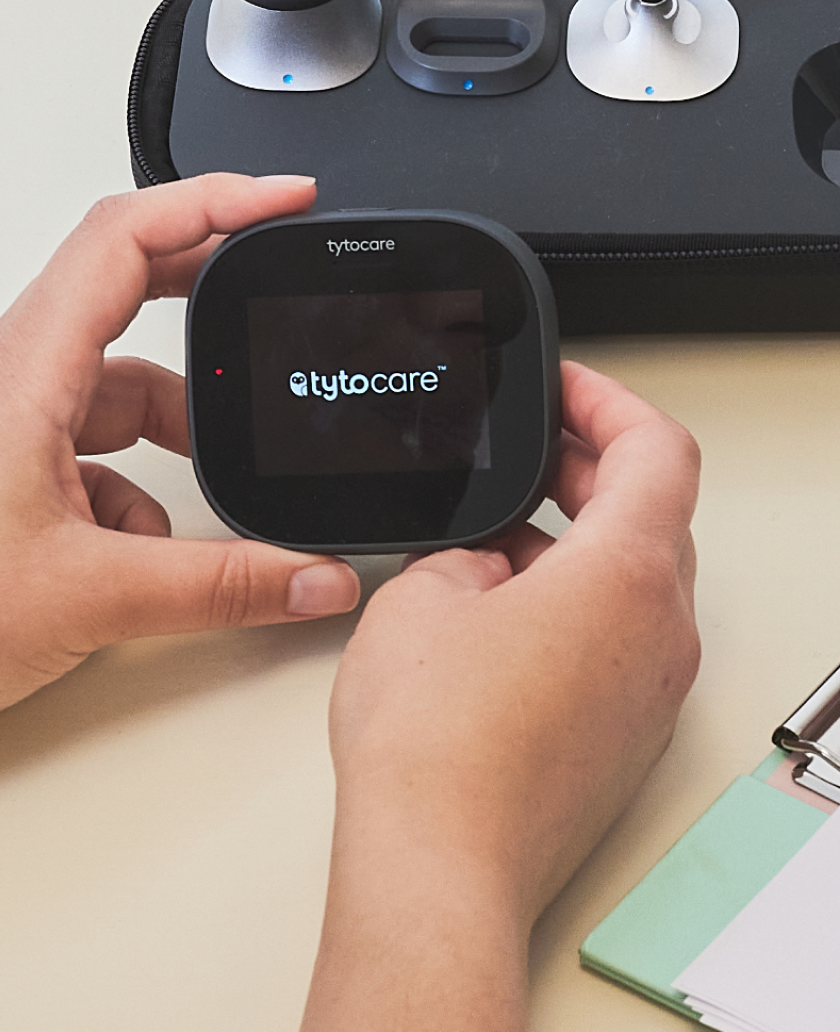
Telehealth technology provider TytoCare has appointed Adam Pellegrini as its new Chief Executive Officer, a leadership transition confirmed alongside the company’s announcement of a successful $25 million funding round. The investment, aimed at accelerating the company’s global expansion and product development, arrives as the digital health sector continues to navigate the post-pandemic landscape of remote patient monitoring and virtual clinical care.
Pellegrini, who previously served in senior leadership roles at CVS Health and Walgreens Boots Alliance, steps into the role with an extensive background in digital health integration. His appointment comes as TytoCare seeks to move beyond basic virtual visits, focusing instead on its proprietary hardware—which includes digital stethoscopes and otoscopes—that allows clinicians to conduct physical examinations remotely.
According to the company’s official corporate disclosures, this latest capital infusion brings TytoCare’s total funding to date to over $185 million. The round was led by existing investors, signaling continued institutional confidence in the company’s “Home Smart Clinic” model, which aims to bridge the gap between video-based telehealth and in-person medical diagnostics.
Strategic Leadership and Industry Experience
The selection of Adam Pellegrini represents a deliberate shift toward scaling commercial operations. During his tenure at CVS Health, Pellegrini oversaw the company’s digital health and consumer wellness initiatives, providing him with direct experience in how large-scale retail pharmacy chains integrate virtual care into traditional patient workflows. His transition to TytoCare follows the firm’s ongoing efforts to embed its remote examination tools into the broader healthcare ecosystem, including partnerships with major insurers and health systems.
According to clinical research published in peer-reviewed journals, remote patient monitoring devices that facilitate physical exams can significantly reduce the need for unnecessary emergency room visits, particularly in pediatric and chronic disease management settings. By providing physicians with real-time, high-fidelity audio and visual data, TytoCare’s platform intends to lower diagnostic uncertainty, a primary barrier in traditional telehealth adoption. The company currently maintains a presence in multiple international markets, with regulatory clearances in both the United States and the European Union.
Capital Deployment and Market Expansion
The $25 million in new growth capital is earmarked for several specific operational goals. These include expanding the company’s presence in the United States and Europe, as well as refining its AI-driven diagnostic features. As healthcare systems globally face staffing shortages and rising costs, the ability to perform physical exams remotely has become a focal point for organizations seeking to improve operational efficiency.
The investment reflects a broader trend in health-tech financing: a move away from generalist telehealth platforms toward specialized “high-acuity” remote care solutions. While the initial wave of pandemic-era telehealth focused on simple video consults, current industry trends prioritize diagnostic-grade data. TytoCare’s hardware suite is designed to integrate with electronic health records (EHRs), allowing for a more seamless transition of patient data into the clinical decision-making process.
The Future of Remote Diagnostic Care
As healthcare policy in many jurisdictions moves toward value-based care—where providers are reimbursed based on patient outcomes rather than the volume of services—tools that enable early, accurate diagnosis at home are increasingly valuable. The integration of artificial intelligence into these devices, which can assist clinicians in identifying abnormalities in heart or lung sounds, is a significant part of the company’s current development roadmap.
For patients and providers, the next few months will serve as a testing ground for how effectively these tools can be integrated into routine primary care. The company has indicated that its future updates will focus on expanding the diagnostic capabilities of its existing devices, potentially lowering the barrier to entry for clinics looking to adopt home-based examination protocols.
The next official update regarding the company’s strategic roadmap is expected during the upcoming annual digital health summit, where leadership is slated to present data on the integration of its diagnostic tools within large-scale hospital networks. Readers interested in the evolution of remote diagnostics are encouraged to track official filings with the U.S. Food and Drug Administration and the European Medicines Agency for updates on future product clearances.
What are your thoughts on the shift toward home-based clinical diagnostics? Share your perspective in the comments below.
Worth a look