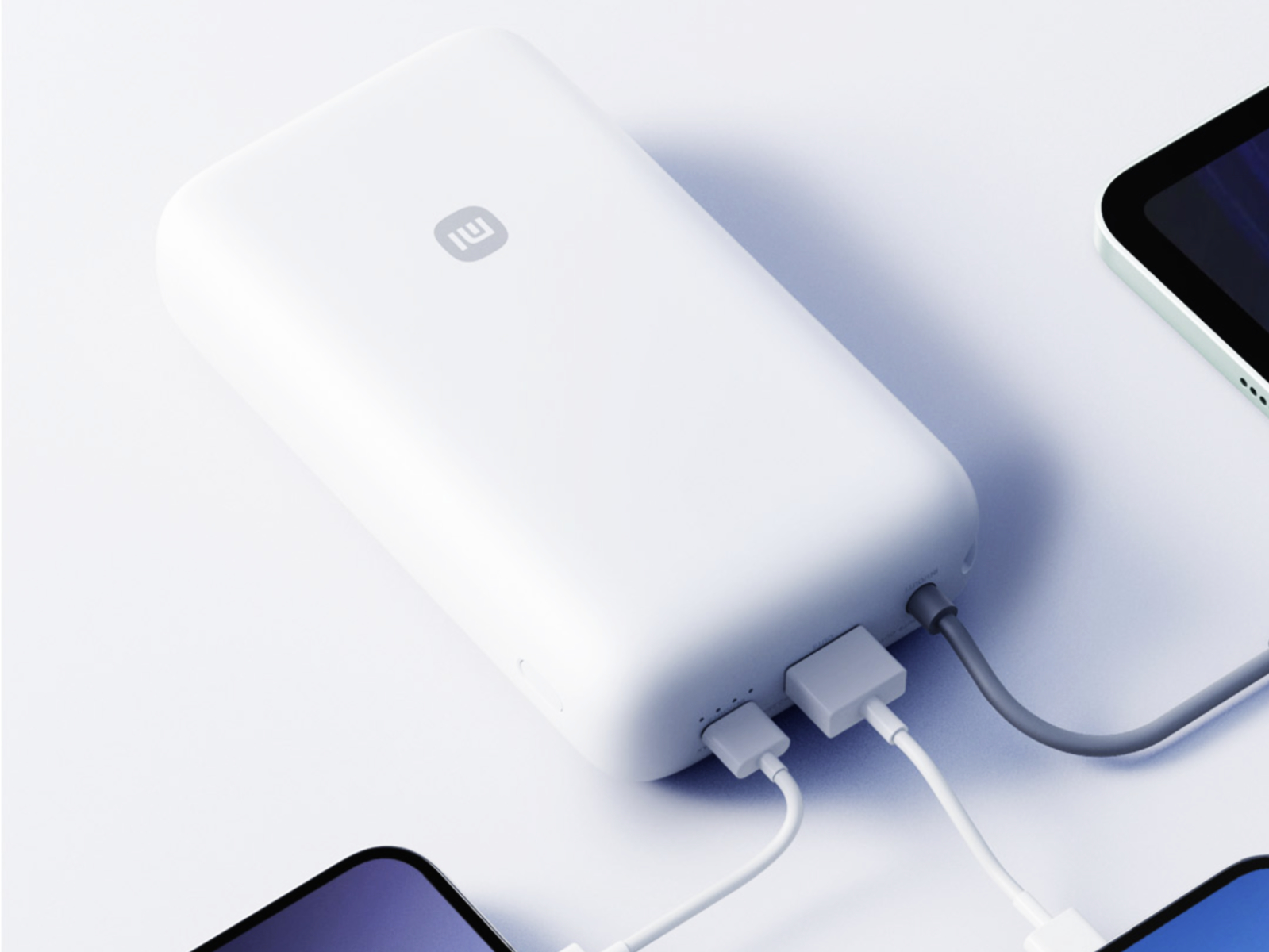
Xiaomi has expanded its portable power accessory lineup with the release of a new 20,000 mAh power bank featuring a built-in cable and a maximum output of 22.5 W. The device, designed to address user demand for integrated charging solutions, includes updated safety protocols and multi-port charging capabilities to support various mobile devices and small electronics. The product is currently rolling out to international markets following its initial announcement, offering a high-capacity option for users requiring extended battery life on the go.
The power bank utilizes a high-density lithium-ion polymer battery, which allows for a substantial 20,000 mAh capacity while maintaining a portable form factor. According to official product specifications provided by Xiaomi, the unit supports 22.5 W fast charging, which is compatible with a wide range of smartphones and tablets. The inclusion of an integrated USB-C cable eliminates the need for users to carry additional charging cords, a design choice intended to improve convenience during travel. The device also features a secondary USB-C port and a USB-A port, allowing for simultaneous charging of up to three devices.
Safety remains a priority for the manufacturer in this latest iteration. The power bank incorporates a multi-layer protection system, which includes safeguards against over-temperature, short circuits, and over-voltage. Xiaomi states that these internal circuits are designed to monitor power flow continuously, ensuring that connected devices receive a stable current without the risk of thermal runaway. These safety standards align with international regulatory requirements for portable power banks, ensuring the device meets necessary safety certifications for consumer use. Further information on specific regional compliance and regulatory filings can be accessed via the official Xiaomi global portal.
Technical Specifications and Charging Performance
The core functionality of the 20,000 mAh power bank centers on its dual-way fast charging capabilities. While the output reaches 22.5 W, the input charging speed is also optimized to ensure the power bank itself can be recharged efficiently. When paired with a compatible high-wattage wall adapter, the device significantly reduces the downtime required to reach a full charge. This efficiency is critical for users who rely on power banks to sustain multiple devices throughout a standard 24-hour cycle.
The physical design includes a digital indicator or LED array—depending on the specific regional model—that provides real-time information regarding remaining battery capacity. This transparency allows users to manage their power usage more effectively. The integrated cable is rated for durability, undergoing rigorous stress tests to ensure it withstands repeated bending and pulling during daily use. By consolidating the power source and the connection method into a single chassis, Xiaomi is targeting the needs of commuters and frequent travelers who prioritize space-saving hardware.
Market Positioning and Consumer Utility
In the current consumer electronics landscape, the demand for high-capacity portable charging has shifted toward units that offer fast-charging protocols like Power Delivery (PD) and Quick Charge (QC). Xiaomi’s latest entry competes in the mid-range segment, providing a balance between capacity and price. By focusing on 20,000 mAh, the device provides enough energy to charge a typical modern smartphone—which averages between 4,000 mAh and 5,000 mAh—roughly three to four times on a single charge.
The shift toward “all-in-one” power banks is a response to the growing fragmentation of charging standards. With USB-C becoming the universal standard for mobile devices, the integrated cable ensures immediate compatibility for most modern hardware. For users with older devices, the inclusion of the USB-A and extra USB-C port ensures that the power bank remains useful regardless of the specific generation of their mobile hardware. This versatility is a key differentiator for the device in a crowded market of generic portable chargers.
Safety Protocols and Device Longevity
The longevity of a lithium-ion battery depends heavily on the quality of its battery management system (BMS). Xiaomi has integrated a smart chip that adjusts the output current based on the requirements of the connected device. This “trickle charging” mode is particularly useful for low-power accessories such as Bluetooth earbuds or smartwatches, which can be damaged by high-amperage chargers. By automatically detecting the power needs of the peripheral, the power bank prevents overcharging and preserves the health of the connected device’s internal battery.
Users are encouraged to monitor the official Xiaomi support page for firmware updates or specific safety advisories related to their regional model. While the power bank is designed for high-frequency use, standard maintenance—such as avoiding storage in extreme temperatures—is recommended to extend the total lifespan of the battery cells. As the company continues to distribute this model across global retail channels, consumers should verify that they are purchasing from authorized retailers to ensure the authenticity of the hardware and the validity of the manufacturer’s warranty.
Future updates regarding local availability and specific pricing tiers will be released through Xiaomi’s regional distribution partners. For those interested in the latest product documentation or technical manuals, checking the company’s regional websites remains the most reliable method for obtaining verified information. We invite readers to share their experiences with this device in the comments section below or join the discussion on our community forums regarding the latest in mobile accessory technology.
Keep reading