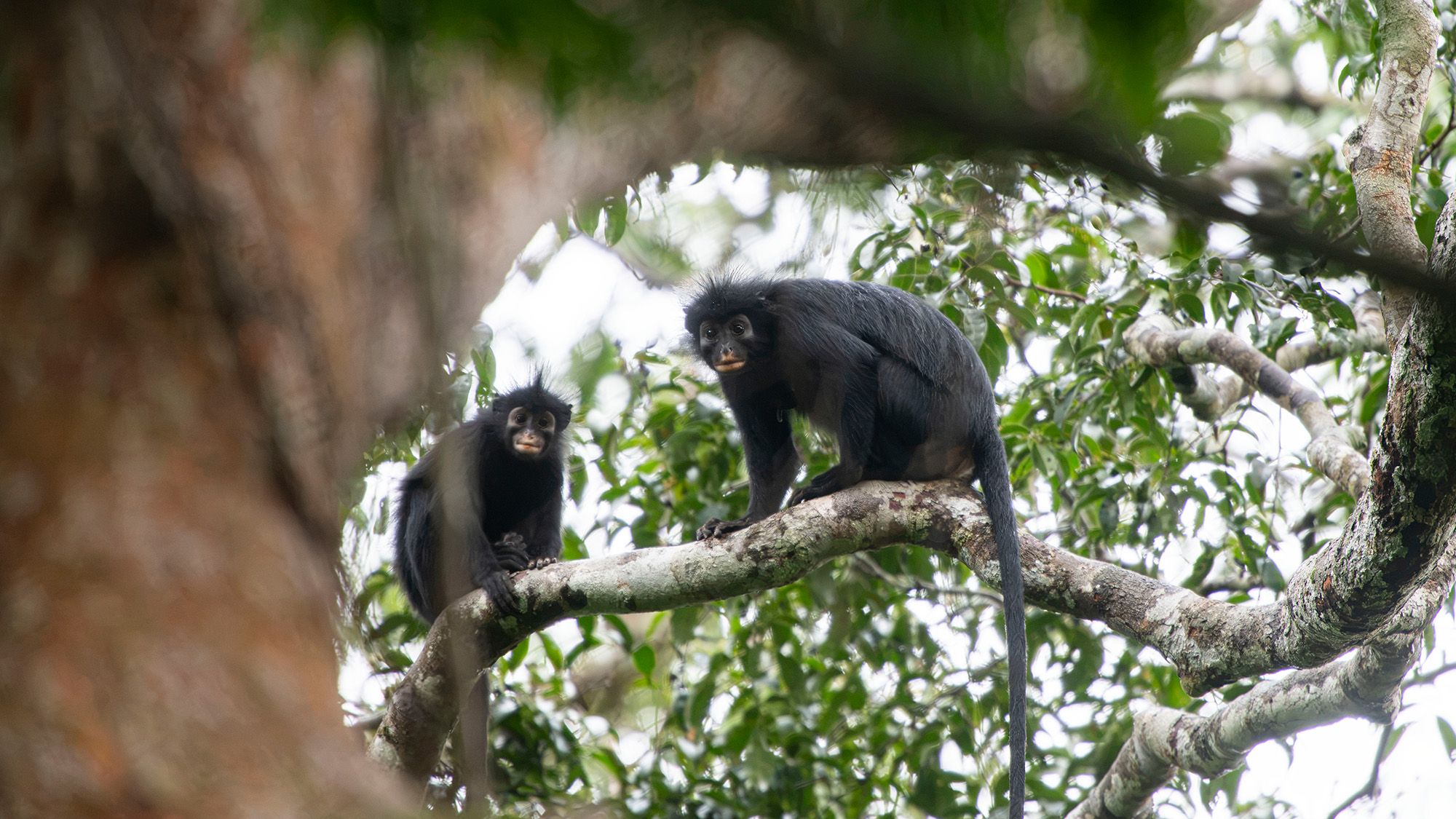
Scientists have formally identified a new species of monkey, Colobus congoensis, found in the remote rainforests of the Democratic Republic of the Congo (DRC). The primate, known locally as the “likweli,” is distinguished by a unique orange-cream patch around its mouth and nose and a vocal repertoire featuring deep, resonant roars punctuated by sharp snorts. This discovery marks only the fifth new monkey species identified in Africa over the past 75 years, according to research published in the journal PLOS One.
The identification of a new, relatively large primate species in the 21st century is a significant event for biodiversity science. The discovery, detailed in the study published July 15, highlights the biological importance of the Congo Basin, which remains one of the world’s most significant reservoirs for unknown wildlife. Researchers suggest that the dense, isolated nature of this region may harbor additional, as-yet-undocumented mammal species.
Field Research and Local Knowledge
The path to identifying Colobus congoensis began with photographic evidence. In 2008, conservationists working in Lomami National Park captured images of an unidentified monkey, though the initial photos were partially obscured. A decade later, in 2018, additional photographic evidence prompted researchers to launch a more targeted investigation. Junior Amboko, a researcher at Lomami National Park and an anthropologist at Florida Atlantic University, led the effort to document the species. To verify the animal’s existence and range, the team conducted interviews across 52 villages surrounding the park.

The field work, conducted between 2018 and 2022, resulted in 114 confirmed sightings of the monkey. These sightings established a geographic range of approximately 660 square miles (1,700 square kilometers), an area naturally isolated by the Lomami and Lualaba rivers. Local communities provided essential context for the researchers; while members of the Balanga ethnic group referred to the animal as “likweli,” members of the Mituku community called it “kasaba nkoni,” or “the branch shaker,” a nod to the colobus monkey’s agile movement through the canopy.
The researchers worked in the Lomami National Park, within the Congo Basin in the Democratic Republic of Congo. (Image credit: Daniel Rosengren, Frankfurt Zoological Society)
Genetic Divergence and Evolutionary History
To confirm the classification of the monkey as a distinct species, the research team utilized DNA sequencing. By analyzing tissue samples obtained from animals encountered in the illegal bushmeat trade—along with comparisons of skulls, teeth, and pelts housed in museum collections—the team determined that the species was genetically distinct from other known colobus monkeys. Kate Detwiler, a study co-author and anthropologist at Florida Atlantic University, noted that the divergence in the mitochondrial genome was unexpected. The research indicates that C. congoensis likely diverged from its closest relatives between 5.78 million and 3.44 million years ago.

Interestingly, while the new species shares its habitat with the Angola colobus (Colobus angolensis), its closest genetic relative is the black colobus (Colobus satanas), which is found approximately 750 miles (1,200 kilometers) to the west in regions including Cameroon and Gabon. This significant distance between the two closely related species represents the longest known evolutionary split within the Colobus genus.
DNA analysis confirmed C. congoensis was a previously unknown species. (Image credit: Daniel Rosengren, Frankfurt Zoological Society)
Conservation Status and Future Outlook
Given the limited geographic range and the ongoing threats posed by habitat loss, the study authors have recommended that Colobus congoensis be classified as endangered on the IUCN Red List. The researchers emphasize that the discovery underscores the ecological value of Lomami National Park, which also served as the site for the 2012 identification of the lesula monkey (Cercopithecus lomamiensis).

Joshua Linder, an anthropologist and president and co-founder of The Forest Collective, who was not involved in the study, noted that the identification of a new, large primate remains an uncommon event in modern primatology. The discovery serves as a reminder of the biodiversity present in the Congo Basin, which is the world’s second-largest tropical forest.
Researchers think the new species diverged up to 5.78 million years ago. (Image credit: Daniel Rosengren, Frankfurt Zoological Society)
Related reading
- US Launches Airstrikes and Naval Blockade Against Iran as Conflict Escalates
- Babylon Fire Near Monticello, Utah: Residents Prepare for Evacuations
- Why Night Mode Turns Your Screen Orange, Not Just Dark (daybreakwire.com)
- WHO Alarmed as Ebola Outbreak Surges in Congo With Over 2,000 Cases (world-today-news.com)