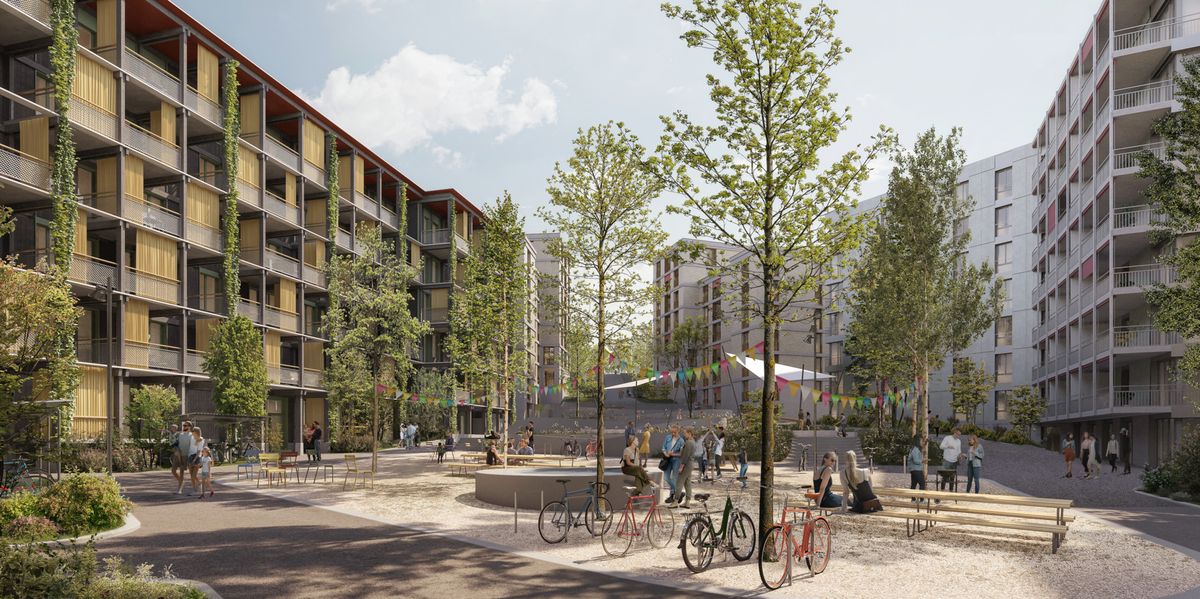
The city of Zürich is advancing plans to address its persistent housing shortage through a new development project in the Witikon district. Municipal authorities have confirmed intentions to construct 367 small-scale residential units, a move designed to diversify the local housing stock and increase the availability of affordable living spaces in one of the city’s more established residential areas. According to official city planning documents, this project represents a significant effort to meet the needs of single-person households and seniors, who make up a growing portion of the city’s demographic profile.
The development is part of a broader strategy by the Zürich municipal government to manage urban growth while maintaining social cohesion. By integrating a mix of market-rate and subsidized housing, the city aims to ensure that lower-income residents are not displaced by rising rents. Data from the City of Zürich’s Statistical Office underscores the urgency of these measures, as the demand for small, affordable apartments continues to outpace supply across the metropolitan area.
Development Scope and Subsidization
Central to the Witikon proposal is the allocation of 50 units specifically for the Stiftung Alterswohnungen der Stadt Zürich (SAW), the city’s foundation for senior housing. This partnership ensures that a portion of the new development is dedicated to elderly residents, providing them with modern, accessible housing options that allow for independent living within the community. The foundation, which manages thousands of apartments across the city, plays a critical role in the municipal social safety net.
The financial structure of the project incorporates a tiered approach to affordability. Approximately one-third of the total 367 units will be classified as subsidized housing, meaning they will be offered at rates below the standard market value. This subsidy model is intended to provide stable housing for individuals and families who would otherwise struggle to find suitable accommodation in a competitive real estate market. The project also includes provisions for commercial space and infrastructure improvements to support the increased residential density in the Witikon neighborhood.
Urban Planning and Housing Policy
The decision to focus on small-scale units reflects a deliberate shift in Zürich’s housing policy. As urban density increases, the city has prioritized the construction of smaller apartments to better accommodate the rising number of single-person households. This approach is consistent with the city’s long-term urban development plan, which emphasizes compact living and the efficient use of land in suburban zones like Witikon.
Planning officials have noted that the project will undergo rigorous environmental and architectural reviews to ensure compliance with the city’s sustainability standards. Zürich has committed to achieving net-zero carbon emissions by 2040, and new housing developments are expected to incorporate energy-efficient heating systems, solar panels, and sustainable building materials. These requirements, while increasing initial construction costs, are viewed as essential for the long-term viability of the urban housing landscape, according to the City of Zürich’s Department of Structural Engineering.
Impact on the Witikon Community
The introduction of 367 new units is expected to have a noticeable impact on the social and economic fabric of Witikon. Residents and local community groups have been engaged in the planning process, with public hearings held to discuss traffic management, green space preservation, and the integration of the new development into the existing neighborhood architecture. The city’s approach aims to mitigate potential friction by ensuring that the scale of the new buildings is compatible with the surrounding residential houses.
Furthermore, the inclusion of the SAW units provides a pathway for long-time residents of the area to downsize without having to move away from their established social networks. This demographic stability is a key objective for municipal planners, who seek to avoid the “hollowing out” of neighborhoods that can occur when housing prices exclude younger workers or force older residents to relocate. The project remains in the development phase, with further details regarding construction timelines and application procedures expected to be released by the city’s housing department in the coming months.
Readers interested in following the progress of the Witikon development can monitor official updates through the City of Zürich’s official communications portal. The city is expected to finalize the architectural plans and issue building permits following the completion of the current consultation phase. We invite our readers to share their thoughts on the balance between urban growth and housing affordability in the comments section below.
Related reading