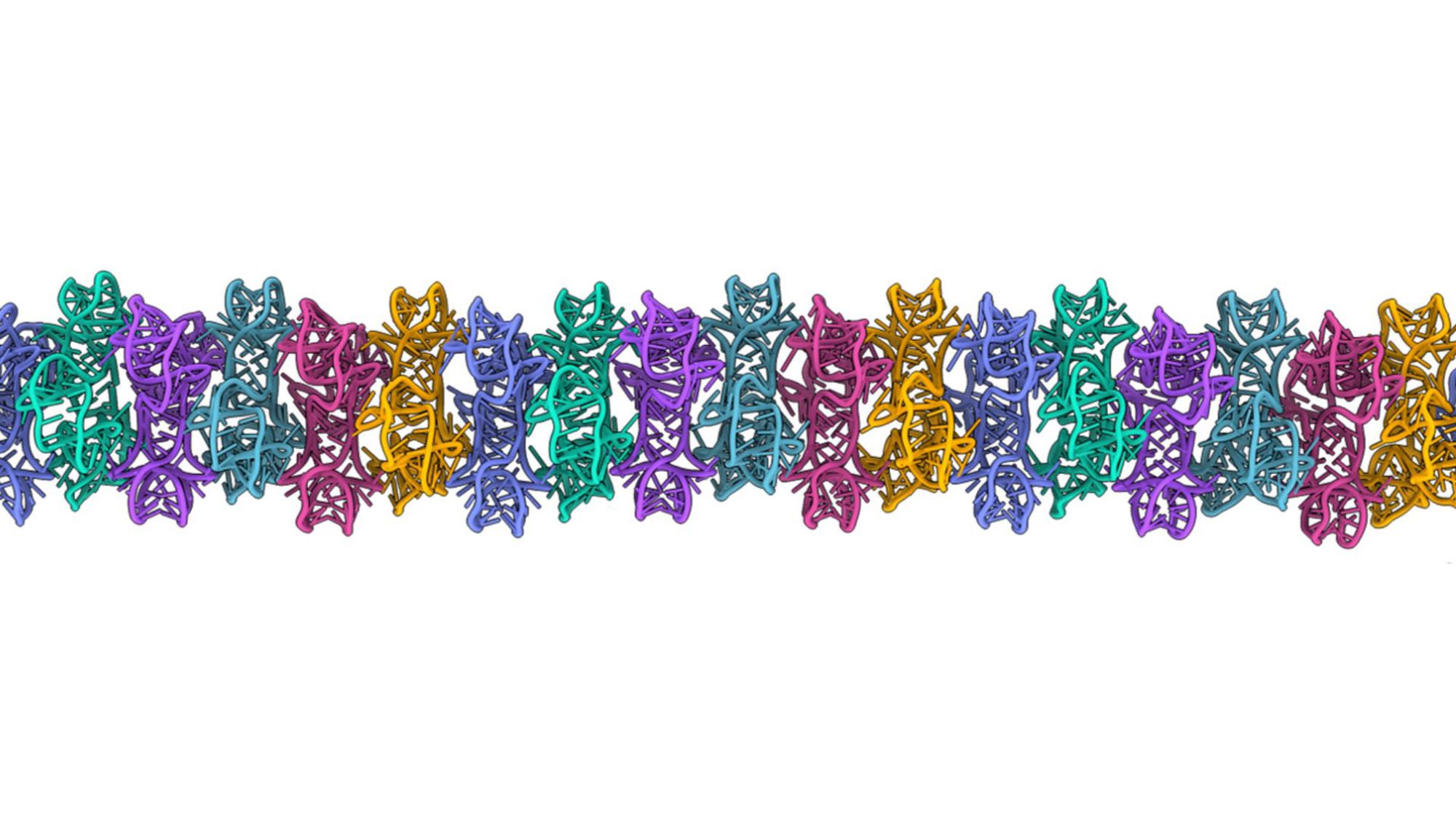
New research suggests that RNA molecules are capable of forming complex, large-scale structures—including filaments and icosahedral cages—previously thought to be exclusive to proteins. This finding, based on laboratory analysis of RNA sequences from bacteriophages, challenges long-standing assumptions about the structural limitations of RNA at the dawn of life.
The “RNA world” hypothesis posits that early life-forms relied on RNA for both genetic storage and enzymatic catalysis before the emergence of DNA and proteins. Because proteins are built from 20 different amino acids, they were traditionally viewed as the only molecules complex enough to form intricate biological structures. By contrast, RNA is composed of only four nucleotides, leading many scientists to assume its structural roles were limited. This new evidence, however, indicates that RNA may possess a greater capacity for sophisticated assembly than previously recognized.
Mechanisms of RNA Assembly
The research team, which includes RNA biologist Lin Huang of Sun Yat-Sen University, identified that specific sequences within bacteriophage-encoded RNA can fold into “kissing stem loops.” This process occurs when an RNA strand folds back on itself to create a loop, similar to a shoelace knot. When loops from different RNA molecules interact, or “kiss,” they can link together to form larger, more complex architectures.
Using cryo-electron microscopy, the researchers observed that these RNA molecules spontaneously assembled into two distinct, high-order geometries in a laboratory dish:
- Filaments: Long, scaffold-like structures that resemble the protein-based cytoskeleton, which is essential for cell shape and movement in modern organisms.
- Icosahedra: Cages shaped like soccer balls, composed of 20 equilateral triangles. These structures are similar in size and geometry to viral capsids, the protein shells that package genomes in many viruses, such as herpesviruses.
The study highlights that these structures were generated using relatively short RNA strands, each no longer than 200 nucleotides. According to Huang, these findings suggest that RNA could have assembled into a wide variety of functional shapes during the early stages of life on Earth.
RNA structures assemble into icosahedra as large as protein-based virus capsids. (Image credit: Lin Huang)
Environmental Factors and Future Research
While the study demonstrates the structural potential of RNA, researchers emphasize that this does not confirm these structures were present or functional during the origin of life four billion years ago. Anna Medvegy, an evolutionary biologist at Eötvös Loránd University in Hungary, noted that the stability of these structures in a primordial environment remains a significant question. “Can these structures form in the environment in which the hypothetical RNA World existed?” Medvegy asked in an email regarding the study’s implications.
Future investigations are required to determine if these complex RNA assemblies can form under the extreme conditions—such as high temperatures or low pH—that likely characterized the early Earth. Furthermore, while the current work utilized controlled laboratory conditions, it remains to be seen whether these RNA complexes form within bacteriophage-infected bacteria, where other cellular factors like proteins might either facilitate or disrupt the assembly process.
Potential Applications in Biotechnology
Beyond evolutionary biology, the discovery that RNA can form stable, cage-like structures offers potential utility in the field of biotechnology. Scientists are currently exploring “DNA origami”—the process of folding DNA into specific shapes—as a method for targeted drug delivery within the human body. Huang suggests that RNA, as a structural cousin to DNA, could eventually serve similar roles in medical technology.
As the scientific community awaits peer review of these findings, the research underscores the evolving understanding of molecular biology. Updates on the peer-review status of the bioRxiv submission are expected as the research moves through the academic publication process.
Keep reading