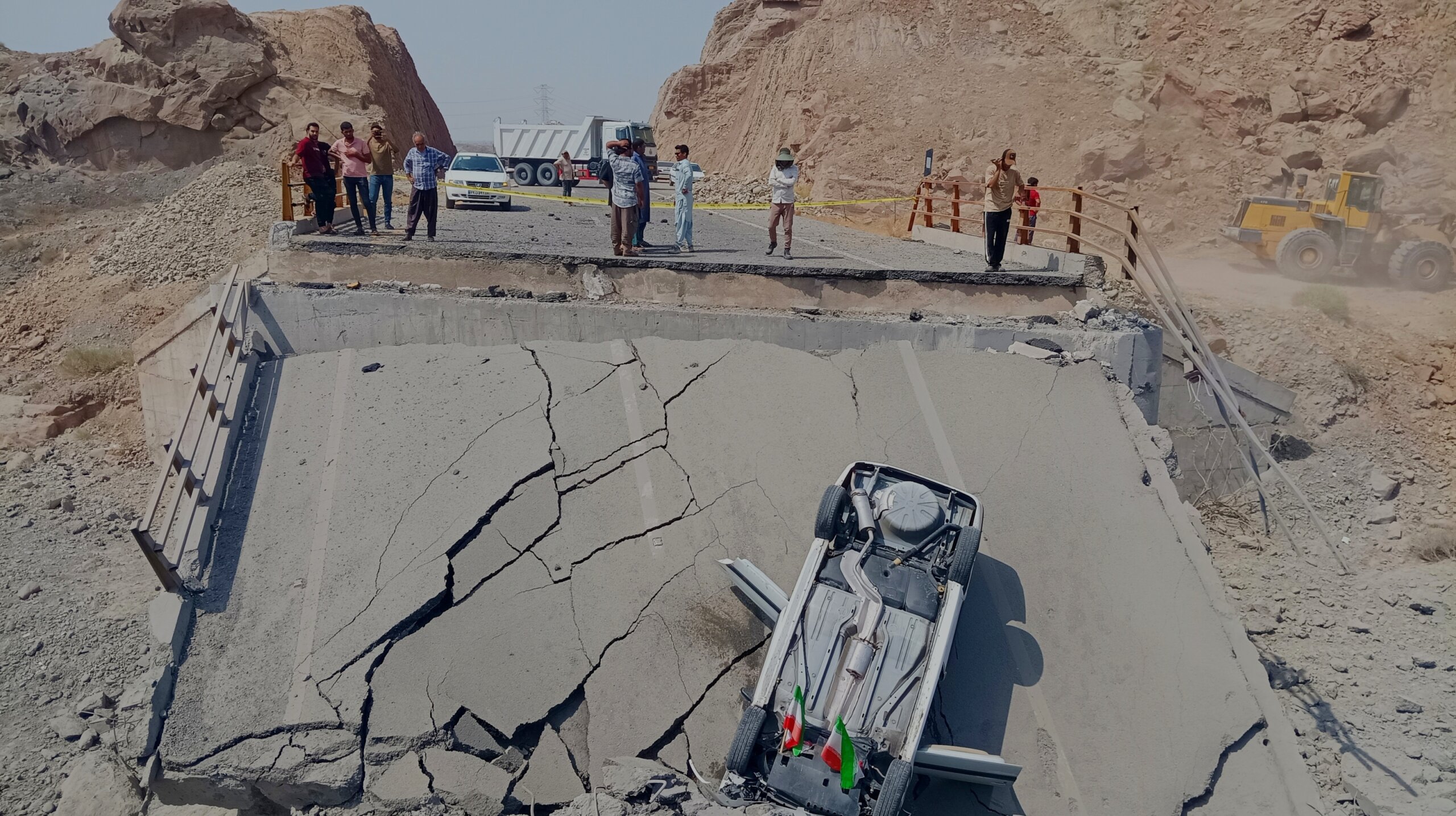
The United States military launched a series of airstrikes against Iranian facilities on Sunday, marking a significant escalation in the ongoing conflict following the deaths of U.S. troops in Jordan. In response, Iran fired a barrage of missiles toward Jordan, raising concerns that the hostilities could expand into Israeli territory. The military actions represent a further breakdown of a 60-day interim agreement, intended to de-escalate regional fighting, which has now stalled alongside shipping traffic in the strategic Strait of Hormuz.
According to U.S. Central Command, the latest strikes targeted Iranian coastal surveillance, air defense facilities, and drone and missile storage sites controlled by the Islamic Revolutionary Guard Corps (IRGC). The U.S. military stated these operations were designed to degrade Iran’s ability to control the Strait of Hormuz and to retaliate for the killing of American service members in Jordan last Friday. Since the conflict began on Feb. 28, the U.S. reports that 16 service members have been killed and over 430 wounded, while Iranian authorities claimed on Sunday that 50 people have been killed and 517 wounded in recent U.S. strikes.
Regional Impact and Air Defense Activations
The conflict has increasingly affected U.S. allies across the Middle East, with Kuwait, Jordan, and Bahrain forced to activate their air defense systems on Sunday to intercept incoming Iranian drones and missiles. The Jordanian military confirmed it successfully shot down several Iranian missiles, noting that no casualties or significant damage occurred during the engagement. Jordan serves as a critical host for U.S. military bases and relies on American-supplied air defense technology for its security.
In Kuwait, the impact on civilian infrastructure has been severe. The Ministry of Electricity, Water and Renewable Energy reported that a power and water desalination plant was struck for the second time in two days, resulting in fires. While the ministry stated the national power grid remains stable, the repeated targeting of such facilities has drawn sharp condemnation. The secretary-general of the six-nation Gulf Cooperation Council, Jasem Mohamed al-Budaiwi, accused Iran of war crimes, citing the targeting of essential civilian infrastructure. Under international humanitarian law, civilian facilities like power plants are protected unless they are utilized for military purposes, in which case any attack must adhere to the principles of proportionality and the minimization of civilian harm.
Nuclear Site and Maritime Blockade
Tensions have been further complicated by reports regarding Iran’s nuclear infrastructure. Iranian state television claimed that U.S. strikes hit the construction site of a planned nuclear power plant in the country’s southwest. While satellite imagery from Planet Labs PBC confirms earth clearing at the Darkhovin site, the International Atomic Energy Agency (IAEA) previously characterized the location as being in the very early stages of construction and containing no nuclear material during its last inspection. The U.S. military has maintained that its strikes are focused on degrading the IRGC’s capacity to launch ballistic missiles and control maritime chokepoints.
The conflict has effectively halted a substantial portion of transit through the Strait of Hormuz, a maritime corridor that accounted for roughly one-fifth of global oil supplies prior to the war. In an effort to tighten pressure on Tehran, the U.S. has reimposed a naval blockade on Iranian ports, aiming to disrupt crude oil shipments. The U.S. military confirmed on Saturday that it had redirected five commercial vessels and disabled one in the course of these operations. These moves align with stated U.S. strategy to use economic and military leverage to compel Iran to loosen its control over the strait.
Diplomatic Breakdown and Future Outlooks
The interim agreement, which was halfway through its 60-day window, now appears to be effectively void. An Iranian negotiator stated that Tehran is suspending its commitments under the deal, accusing the United States of violating the terms. Supreme Leader Mojtaba Khamenei warned in a statement on Saturday that the U.S. would face “unforgettable lessons” if the military campaign continues against the Islamic Republic.
As the situation remains fluid, Israel has issued warnings regarding the potential for conflict spillover. The Israeli military reported that Iranian missiles launched toward the Jordanian port city of Aqaba created a risk of debris falling into Israeli territory. In nearby Eilat, security officials indicated that two interceptors were launched to mitigate potential threats. With the collapse of the interim diplomatic framework, the region faces a period of heightened uncertainty.