Amateur Astronomer’s Google Maps Discovery Confirmed as 390-Million-Year-Old Impact Crater
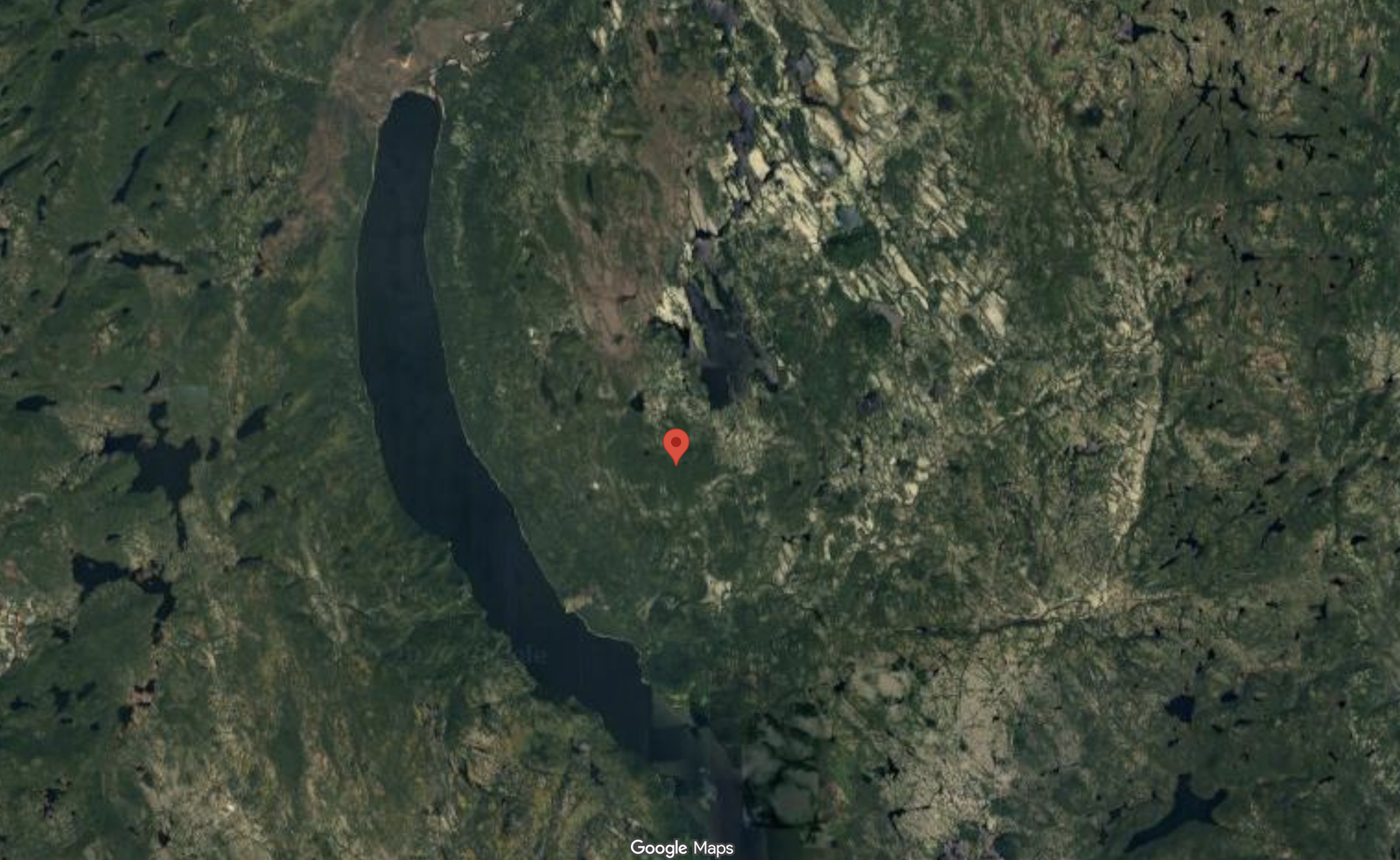
Researchers have confirmed that a 25-kilometer (15.5-mile) wide circular feature in Quebec’s Côte-Nord region, first identified by an amateur astronomer using Google Maps, is a 390-million-year-old meteorite impact crater. Named Uhackatik, with approval from the Innu Council of Ekuanitshit in whose traditional lands the crater lies, the site was verified by geologists following a rugged expedition in October 2025 to locate definitive impact evidence.
The discovery began with a routine search for hiking trails. In late 2023, Joël Lapointe, an amateur astronomer, was plotting a camping route for a 2024 vacation on Google Maps when he noticed a distinct, circular indentation centered on Lake Marsal, located 100 kilometers north of the town of Magpie, Quebec. Lapointe, whose love of space dates back to watching the stars at his grandmother’s house as a child, suspected the formation might be an impact crater. I told myself, ‘You haven’t discovered anything, Joël, it’s not possible, they must already know about this,’
Lapointe recalled. When he did not find the pit in existing crater databases, he reached out to experts. His persistence eventually led him to French geophysicist Pierre Rochette, who noted that the surrounding topography was very suggestive
of an impact crater, and later to Western University in London, Ontario.
Verifying the Uhackatik Impact Site
The process of confirming the site as an impact crater required more than satellite imagery. Gordon Osinski, a professor of planetary geology at Western University—known as “Oz” by the space community—initially approached the report with professional skepticism. Osinski, who manages the university’s Impact Earth website for crowdsourcing potential craters, noted that he frequently receives reports of potential discoveries that do not pan out. However, the circular topographical features of the pit warranted an in-person investigation.
In October 2025, Osinski and a team of geologists conducted a field mission to the site, which they described as exceptionally challenging. This was one of the most arduous expeditions I’ve ever done—and I’ve done 25 expeditions to the Arctic and six continents,
Osinski said. The team navigated incredibly rough and rugged terrain and dealt with “lots of bugs” to reach the structure.
For more on this story, see Quebec Meteorite Crater Confirmed After Amateur Spots Site on Google Maps.
Evidence of Shock Metamorphism
To confirm an extraterrestrial origin, the scientists sought physical evidence of shock metamorphism, which Osinski explained can only occur due to the immense pressures created by asteroid or cometary impacts—or nuclear explosions. While initial testing of samples retrieved from the site contained zircon, a mineral often formed during meteor impacts, the team required further evidence.
During the expedition, the geologists discovered two primary indicators of an impact event:
- Shatter Cones: These are grooves or lines in the rock’s surface caused by shockwaves passing through the ground. Osinski noted that while most impact features are microscopic and require lab confirmation, these could be easily seen by the team in the field.
- Impact Melt Rocks: These are large volumes of rock that were liquefied by the impact’s heat and later crystallized, appearing similar to volcanic rock. Osinski described finding these preserved as a “big surprise,” as they are usually some of the first parts of a crater to be eroded.
Osinski noted that to his knowledge, the last discovery of that scale was the approximately 31-kilometer (19-mile) Hiawatha structure spotted in Greenland in 2018. However, he noted that the Hiawatha structure is completely buried by ice, making its diameter uncertain and its origin a subject of controversy. In contrast, the Uhackatik crater has no doubt at all
regarding its origin.
Scientific Significance
The research team is scheduled to present their findings at the Annual Meeting of the Meteoritical Society in Germany in August 2026. For Lapointe, the confirmation validated his initial hunch. For an amateur astronomer who loves to connect with space and loves meteorites, it was just amazing,
Lapointe said. By utilizing public mapping tools to identify a feature of this magnitude, the discovery highlights the role of crowdsourced data in modern geological exploration.
Keep reading