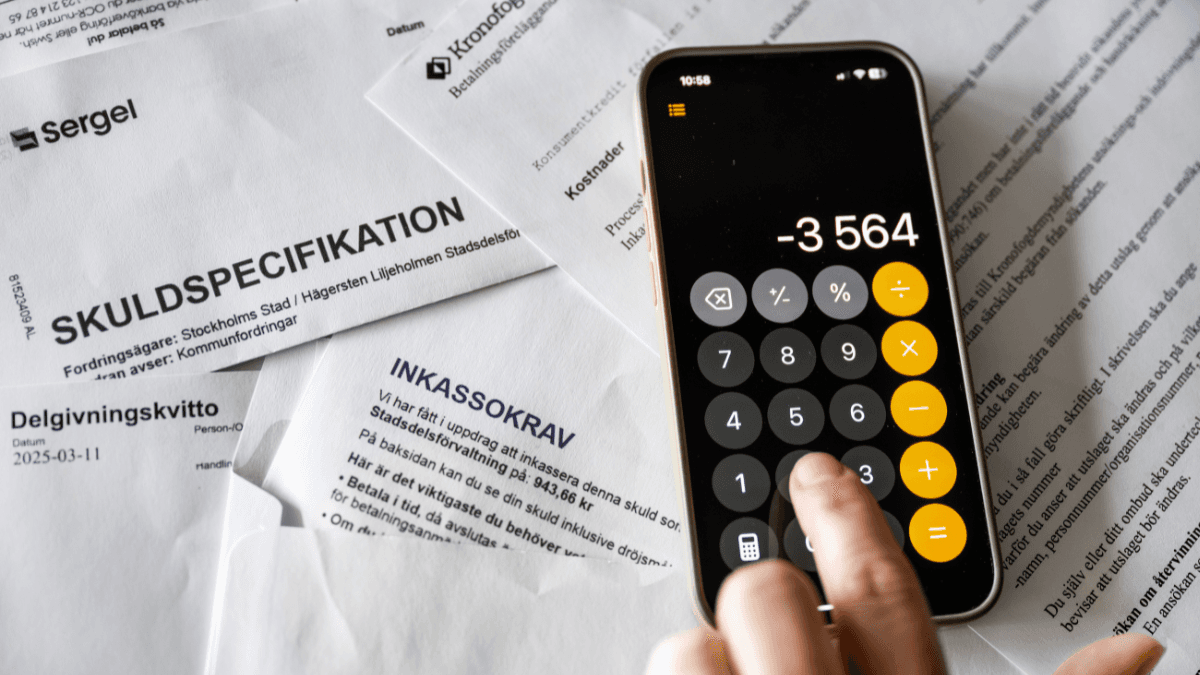
An increasing number of Swedish residents aged 55 and older are receiving debt collection notices, according to recent data analysis highlighting a shift in the demographic profile of consumer debt. This trend suggests that a growing segment of the older population is struggling to manage financial obligations amidst rising living costs and changing credit accessibility.
The rise in debt collection among the 55-plus demographic reflects a broader economic strain affecting fixed-income households. While historically debt collection has skewed toward younger adults, current indicators show that the proportion of older individuals facing formal payment demands is climbing significantly, according to reports from News55.
Financial instability in this age group often stems from a combination of inflation-driven cost-of-living increases and the prevalence of high-interest consumer loans. As the cost of essential goods and services rises, those on pensions or fixed salaries find their margins shrinking, leading to missed payments and subsequent inkassokrav, or debt collection demands.
Drivers of Increasing Debt Among Swedish Seniors
The surge in debt collection notices for those over 55 is tied to the volatility of the Swedish economy over the last several years. High inflation rates have eroded the purchasing power of pensions, forcing some retirees to rely on credit to maintain their standard of living. According to data from Statistics Sweden (SCB), the cost of living has seen sharp increases in areas such as electricity and food, which disproportionately impact households with limited income growth.
Another contributing factor is the accessibility of “quick loans” or high-interest consumer credits. Digital lending platforms have made it easier for all age groups to acquire debt without the rigorous scrutiny associated with traditional bank loans. For older adults who may be unfamiliar with the compounding nature of these high-interest products, the transition from a manageable loan to a debt collection case can happen rapidly.
The psychological impact of this trend is noted by social services and financial advisors. Many seniors experience significant shame associated with debt, which often leads them to ignore the initial payment reminders. By the time a notice reaches a formal debt collection agency, the fees have accumulated, making the total sum significantly harder to pay off.
The Mechanism of Swedish Debt Collection
In Sweden, the process typically begins with a reminder (påminnelse) and then progresses to a debt collection notice (inkassokrav). If the debt remains unpaid, the case can be referred to the Swedish Enforcement Authority, known as Kronofogden. According to Kronofogden, a payment order or a debt record (betalningsanmärkning) can severely limit an individual’s ability to rent an apartment, sign new contracts, or obtain further credit.
For those over 55, a record with the Enforcement Authority is particularly damaging. Many in this demographic are looking to downsize or move into senior housing, processes that often require a clean credit history. The increase in the proportion of older adults entering this cycle threatens their housing security and overall quality of life.
Financial analysts suggest that the “invisible” nature of digital debt contributes to the problem. Unlike traditional bank statements, digital credits and automated subscriptions can be overlooked, leading to a cascade of unpaid invoices that trigger the debt collection process before the consumer is even aware of the default.
Impact of Fixed Incomes and Inflation
The correlation between inflation and senior debt is evident in the shrinking disposable income of the elderly. When the prices of heating, medicine, and groceries rise, the fixed nature of the Swedish pension system means that adjustments often lag behind real-world price spikes. This gap is frequently filled by credit, creating a precarious financial loop.
The risk is amplified for those who have taken out loans to help children or grandchildren, a common social trend in Sweden. When the primary borrower’s income cannot cover both their own needs and the loan repayments, the risk of debt collection increases. This intergenerational financial support, while culturally significant, has become a liability in a high-inflation environment.
Budgetary counselors across Sweden report a rise in requests for help from older citizens. These consultations often reveal that the debt is not the result of luxury spending, but rather a failure to keep up with basic monthly expenses. This shift indicates that the financial vulnerability previously associated with youth is now migrating toward the older population.
Resources for Debt Management and Relief
To combat this trend, Swedish municipalities provide free budgetary and debt counseling (budget- och skuldrådgivning). This service is designed to help residents negotiate payment plans with creditors and organize their finances to avoid the Enforcement Authority. Access to these services is a critical step in preventing a debt collection notice from turning into a permanent credit record.
Individuals facing debt are encouraged to contact their creditors immediately upon receiving a reminder. Negotiating a payment plan early can stop the transition to a formal debt collection agency, thereby avoiding the additional fees that typically accompany inkassokrav. The Swedish Consumers’ Agency (Konsumentverket) provides guidance on consumer rights and the legal limits of debt collection fees to ensure seniors are not overcharged.
For those whose debts have become unmanageable, the option of debt restructuring (skuldsanering) exists through Kronofogden. This is a rigorous process where the individual lives on a minimum subsistence level for several years to pay off a portion of the debt, after which the remainder is forgiven. While extreme, it provides a legal path out of insolvency for those with no other means of repayment.
The next critical indicator for this trend will be the release of the annual debt statistics from the Swedish Enforcement Authority, which will provide a verified count of the number of individuals over 55 with active payment orders. These figures will determine if the current increase is a temporary spike or a long-term demographic shift in Swedish consumer debt.
If you or a family member are struggling with debt collection, we encourage you to share your experiences or ask questions in the comments below to help others find available resources.
Keep reading