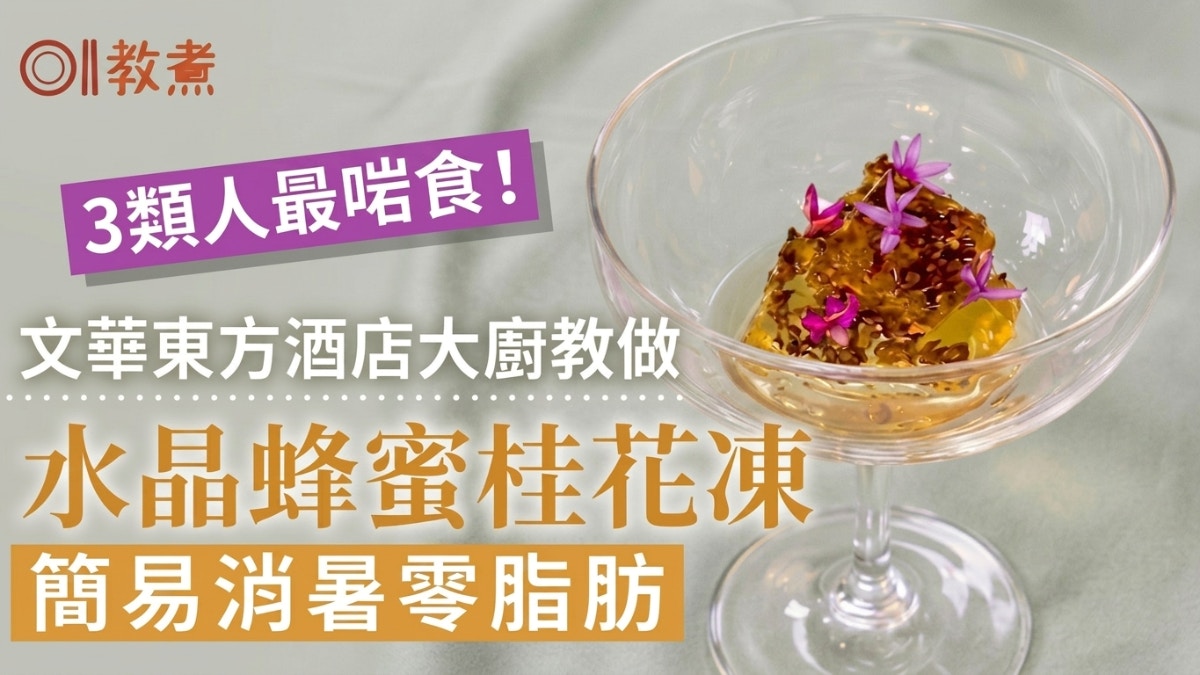
Crafting a refreshing, zero-fat dessert that balances floral and honey notes is easier than home cooks might think, thanks to a straightforward culinary approach gaining attention for its simplicity and elegance. This four-step osmanthus jelly recipe transforms dried osmanthus flowers, honey, water, and gelling agents into a light, aromatic treat designed to counter warm-weather sluggishness. According to culinary guides detailing traditional Asian dessert preparations, the method relies on precise temperature control to extract the delicate fragrance of the blossoms without introducing bitterness.
Osmanthus flowers—known for their rich, apricot-like aroma—have long played a staple role in traditional Chinese pastry and dessert making. When combined with honey and set into a translucent, shimmering gelatin or agar-agar base, the ingredients create a visually striking dish that requires zero dietary fats. Professional kitchen techniques emphasize steeping the dried petals gently rather than boiling them aggressively, a step that preserves the volatile aromatic compounds responsible for the flower’s signature scent.
For home cooks looking to replicate this five-star style sweet, the process breaks down into four manageable phases: infusion, sweetening, setting, and chilling. Below is a detailed breakdown of how to execute each stage cleanly, ensuring a crystal-clear finish and a balanced flavor profile.
Step 1: Preparing the Osmanthus Infusion
The foundation of any good floral jelly is a clean, aromatic liquid base. Cooks begin by measuring dried osmanthus flowers—typically one to two tablespoons depending on desired intensity—and rinsing them briefly to remove any residual dust. According to standard culinary preparation practices for herbal infusions, the petals should be steeped in hot water just below the boiling point for roughly 10 to 15 minutes. This controlled extraction pulls out the essential oils while preventing the flowers from turning bitter, which can happen if they are boiled directly over high heat for an extended period.
Once the water takes on a rich golden hue and a pronounced floral scent, the liquid is strained through a fine-mesh sieve to remove the solid petals. Maintaining clarity is essential for achieving the polished, glass-like aesthetic characteristic of high-end restaurant presentations. Cooks often reserve a small pinch of fresh, unsteeped blossoms to scatter into the molds later, creating suspended visual flecks once the mixture sets.
Step 2: Incorporating Sweetness and Gelling Agents
With the warm infusion ready, the next phase involves balancing the floral notes with a clean sweetener and establishing the structural integrity of the dessert. Honey is a popular choice because its floral undertones complement the osmanthus naturally, though rock sugar or standard cane sugar can be used depending on preference. It is important to stir the sweetener into the warm—not actively boiling—liquid until fully dissolved, ensuring an even distribution of flavor.
To achieve the signature gelatinous wobble without adding heavy fats, culinary professionals typically turn to plant-based gelling agents like agar-agar powder or traditional gelatin sheets. When using agar-agar, the powder must be whisked thoroughly into the liquid and brought to a brief simmer to activate its gelling properties. If using gelatin sheets, they must first be softened in ice-cold water, squeezed dry, and then stirred into the warm liquid until completely melted. Precision at this stage prevents lumps and guarantees a uniform, smooth mouthfeel.
Step 3: Pouring and Suspending the Blossoms
The third step transitions the liquid mixture into individual serving vessels or a decorative mold. To prevent the reserved osmanthus blossoms from floating entirely to the top or sinking straight to the bottom, culinary experts recommend allowing the liquid base to cool slightly until it reaches a lukewarm, slightly thickened state. Gently stirring in the reserved dry petals at this point helps them suspend evenly throughout the mold.
Pouring the mixture slowly into silicone molds, glass ramekins, or shallow trays minimizes the formation of surface bubbles. Any stray bubbles can be gently popped using a toothpick or the edge of a spoon to ensure a flawless, crystal-clear surface. Professional kitchens often utilize specialized silicone shapes that allow the set dessert to release effortlessly when inverted onto a serving plate.
Step 4: Chilling and Serving the Chilled Treat
The final phase requires patience as the dessert sets in a refrigerated environment. Molds should be transferred to the refrigerator for at least two to four hours, depending on the volume of the mixture and the specific gelling agent used. Agar-agar sets relatively quickly at room temperature compared to gelatin, but a thorough chill ensures the dessert reaches its optimal firm yet delicate consistency.
When ready to serve, molds can be dipped briefly into a warm water bath to loosen the edges before being inverted onto a cold ceramic plate. The resulting osmanthus jelly offers a cooling, aromatic experience that cleanses the palate without feeling heavy. As home cooks continue to experiment with light, zero-fat culinary creations, this simple four-step method remains a reliable way to bring restaurant-quality elegance to a domestic kitchen.
Related reading