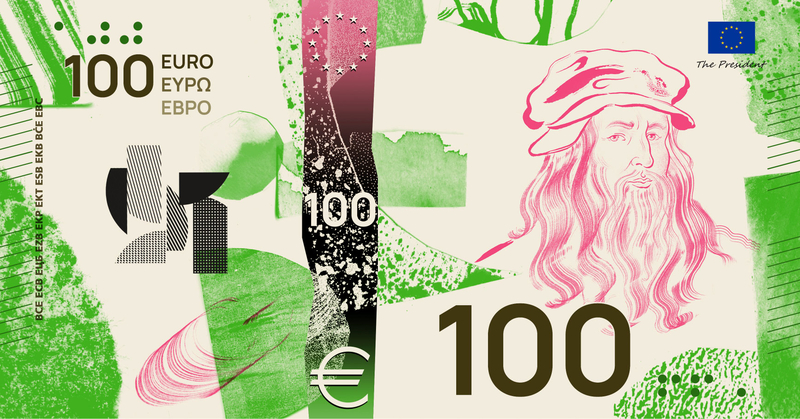
The European Central Bank unveiled ten finalist design concepts for redesigned euro banknotes on July 23, 2026, marking the first complete overhaul of the currency since its 2002 launch. Citizens across the eurozone can vote online until September 21, 2026, helping guide the final decision expected by year’s end.
Twenty-five years after euro notes first entered circulation, the European Central Bank is preparing a sweeping aesthetic and technological redesign. Unveiled during a ceremony in Frankfurt, the ten finalist bozzetti represent the culmination of a process that began with initial public consultations in 2021.
Public Voting Portal Opens for Ten Finalist Designs Across Two Themes
The European Central Bank launched an online consultation platform where residents throughout the eurozone can review the artwork and register their preferences. The public poll remains active until September 21, 2026. The ten finalist proposals are divided evenly between two distinct thematic categories: European Culture and Rivers and Birds.

The cultural track pairs notable historical figures with contemporary creative spaces and educational institutions. The selected personalities include Maria Callas paired with performing arts and street performances for the 5-euro note, Ludwig van Beethoven assigned to the 10-euro denomination alongside choral music, and Marie Curie representing universities and schools on the 20-euro banknote. Other honored figures across the concepts include Leonardo da Vinci, Miguel de Cervantes, and Bertha von Suttner.
Stepping Away From Abstract Bridges and Architecture
When the single currency debuted in 2002, designers purposely chose abstract bridges, arches, and generic architectural styles to avoid favoring any single nation or sparking interstate jealousy. The upcoming series discards those neutral architectural motifs in favor of recognizable cultural icons and regional wildlife.
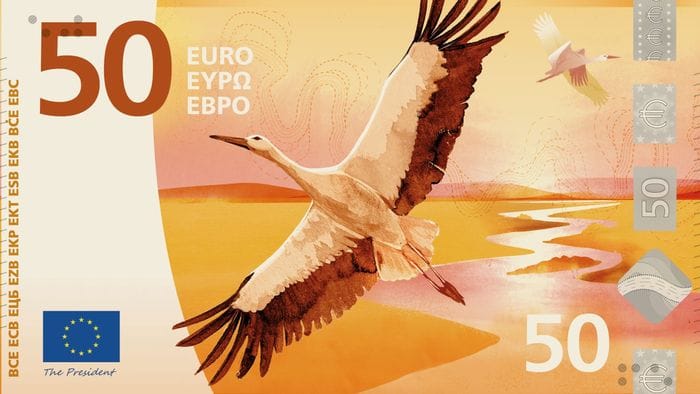
The natural track, titled Rivers and Birds, highlights indigenous species and natural river environments across the continent, symbolizing freedom of movement and a lack of natural borders within the continent. Traditional color schemes ranging from reddish tones to blue, green, and yellow will remain preserved across the denominations spanning 5, 10, 20, 50, and 200 euros.
The euro banknotes are not just a means of payment: they are one of the most tangible expressions of Europe, combining beauty and meaning, they will strengthen our common identity. Christine Lagarde, President of the European Central Bank
Security, Sustainability, and the Timeline Toward Production
Beyond updating the visual presentation, the redesign project addresses practical challenges regarding counterfeit prevention, environmental impact, and physical accessibility. The future series will incorporate advanced security features to ease recognition for individuals with visual impairments, alongside more durable and sustainable paper materials designed to lower the carbon footprint of manufacturing and circulation.
The Governing Council of the ECB will evaluate the public survey data alongside findings from a parallel independent research poll and technical evaluations before selecting the definitive design before the end of 2026. Once authorities authorize the final artwork, technical teams will begin extensive pre-production testing. Citizens will not see the new currency immediately; physical distribution across the euro area is scheduled to begin in subsequent years, and current banknotes will remain in active circulation alongside the new series.