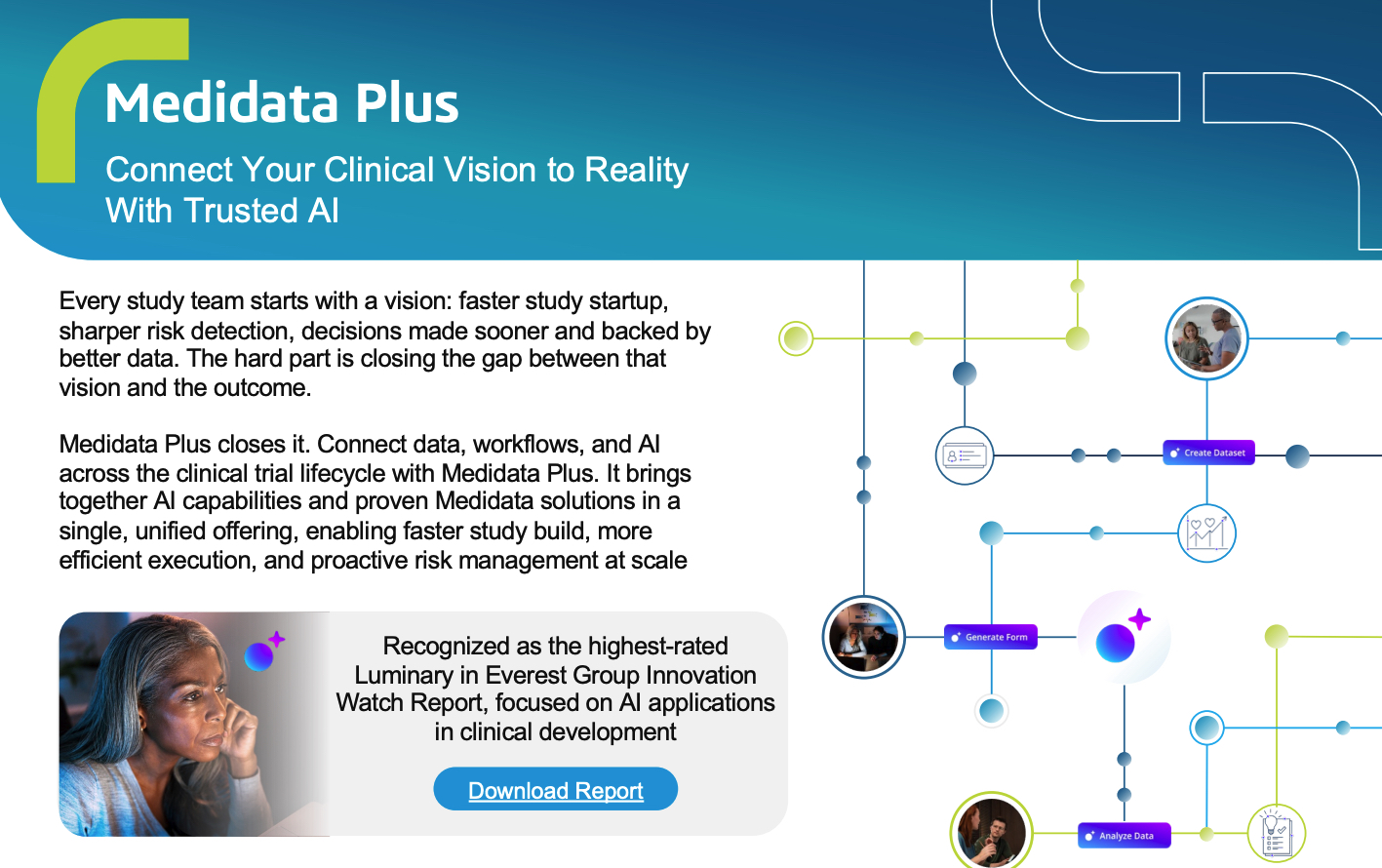
Medidata, a brand under Dassault Systèmes, has rolled out Medidata Plus, an embedded clinical artificial intelligence layer engineered to establish a predictable, standardized data infrastructure across the entire Medidata Platform. The rollout addresses a growing operational hurdle in clinical research, biopharmaceutical research and development, and Contract Research Organization sectors, where sponsors struggle to unify fragmented software environments. According to data highlighted by the company, while 92% of life sciences decision-makers plan to increase artificial intelligence expenditures, only 29% report that their current deployments meet expectations.
The efficiency bottleneck across global portfolios largely stems from vendor and tool fragmentation. Over recent years, trial sponsors and contract research organizations adopted diverse, single-use artificial intelligence tools, stitching together specialized software for study design, site selection, patient recruitment, and data management. This patchwork approach generated unpredictable software expenses, fragmented data silos, and complex integration requirements that ultimately slowed down clinical trial timelines. Medidata Plus aims to eliminate this point-solution complexity by providing a unified artificial intelligence foundation built directly into the core platform.
By replacing fragmented point solutions with an end-to-end artificial intelligence architecture, the new offering delivers a drop-in strategy designed to secure predictable costs, streamline data governance, and accelerate trial execution. The system introduces a clinically fluent intelligence layer spanning every operational phase of global trial execution, targeting specific pain points in study setup, data handling, and regulatory readiness.
Accelerated Study Builds and No-Code Data Transformation
Medidata Plus cuts initial study setup timelines from weeks down to hours by automating the generation of Electronic Data Capture (EDC) and Electronic Clinical Outcome Assessment (eCOA) workflows. Furthermore, the layer constructs synthetic patient datasets to enable rapid User Acceptance Testing (UAT) before live data enters the system. This capability significantly reduces the friction typically associated with configuring software protocols for complex clinical trials.
The platform also incorporates no-code data transformation tools designed to harmonize data streams across disparate clinical trial management systems, wearable sensors, and real-world data sources without requiring custom programming. This automated standardization helps eliminate data silos that historically complicated cross-functional analysis. Sponsors can ingest and standardize both traditional clinical data and real-world evidence seamlessly within a single architecture.
Proactive Risk Triage and Agentic Audit Mining
To address operational risks before they disrupt trials, Medidata Plus leverages real-time predictive analytics to detect enrollment downtrends and early safety signals. These early warning indicators help mitigate mid-trial pauses and streamline regulatory inspection readiness by maintaining cleaner, more transparent audit trails throughout the study lifecycle.
The platform features agentic natural-language artificial intelligence that allows study teams to query end-to-end audit histories directly. Rather than manually sifting through complex compliance logs, researchers can use conversational queries to interrogate compliance data, converting intricate regulatory records into immediate, actionable intelligence.
“Stitching together point solutions isn’t a strategy — it’s a liability. Drug development’s next leap will come when AI is consistent, connected, and portfolio-wide,” stated Dr. Nimita Limaye, Research VP, Life Sciences R&D Strategy and Technology at IDC. “Medidata Plus delivers this with a cohesive AI layer across the entire lifecycle.”
Next Operational Checkpoints
As life sciences organizations evaluate integrated artificial intelligence strategies to offset rising research and development costs, industry stakeholders are monitoring software deployment milestones and regulatory guidance updates regarding synthetic data usage in clinical evaluations. Global biopharmaceutical leaders and contract research organizations can access further updates and technical specifications through official Dassault Systèmes and Medidata corporate channels. Readers are encouraged to share their perspectives on clinical trial software integration in the comments below.
Worth a look