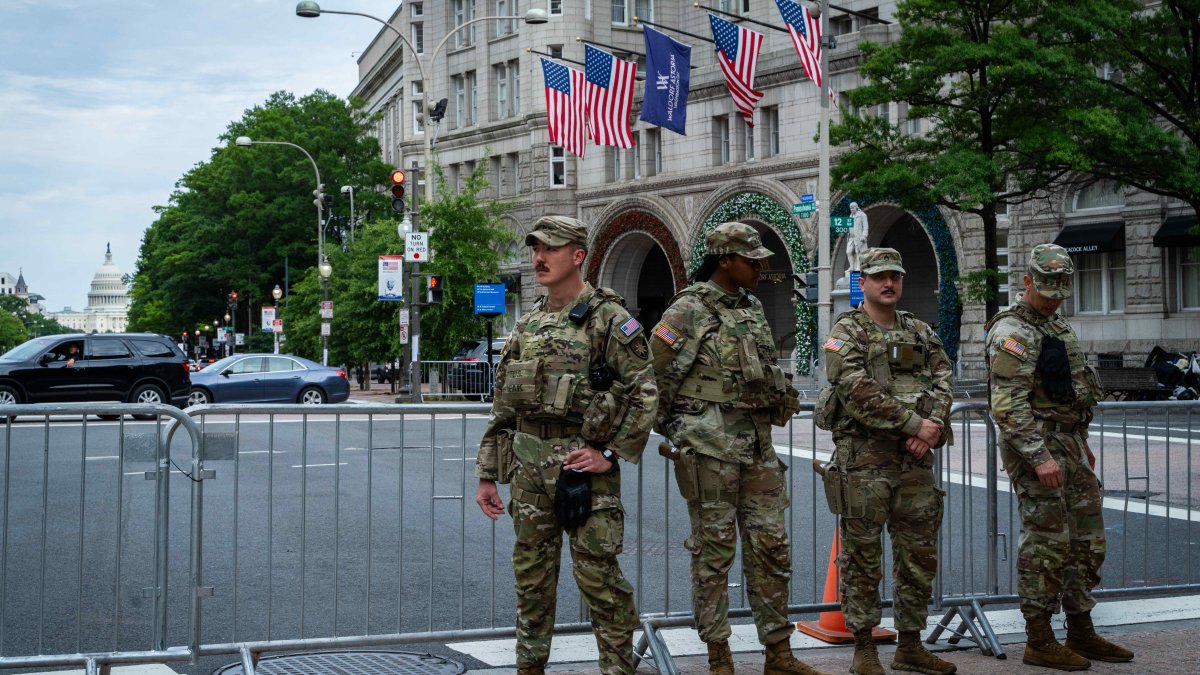
National Guard members deployed to Washington, D.C., are transitioning from regional hotel rooms into apartment-style short-term housing following a nearly $300 million contract awarded by the federal government. The National Guard and the Trump administration announced Friday afternoon that the agreement with flexible real estate provider Placemakr will supply up to 2,000 lodging units for troops supporting Joint Task Force – District of Columbia.
The arrangement marks the largest interagency lodging acquisition in the history of the National Guard. According to the U.S. General Services Administration (GSA), the $292 million task order will reduce lodging expenditures by roughly half compared to the cost of maintaining troops in commercial hotels across the region.
Troops have been housed in local hotels since their deployment to the nation’s capital began last September. Federal officials note that the shift to apartment-style accommodations is designed to offer more stable living conditions, enhanced privacy, secure parking, and consolidated support services for the mobilized personnel.
Contract Details and Cost Projections for District Deployment
The GSA’s agreement with Placemakr addresses mounting logistical expenses associated with the long-term presence of out-of-state National Guard units in the District. Federal planners project that the flexible housing model will yield substantial savings over traditional lodging while accommodating up to 2,000 guardsmen at any given time.
Despite the lodging cost adjustments, the broader financial footprint of the deployment remains a subject of intense debate. Research published by the Center for American Progress indicates that maintaining the National Guard presence through early 2029 could drive total deployment costs toward $4 billion. Congressional estimates cited by the organization place taxpayer spending at more than $1.7 billion through the end of 2026 alone, prior to the finalization of the Placemakr contract.
“This is ineffective,” said Chandler Hall, author of the Center for American Progress study, pointing to the financial scale of the operation. “This is not doing anything to make people safer, and yet it’s costing taxpayers billions of dollars.”
Local Opposition and Ongoing Legal Challenges
The federal deployment continues to draw sharp pushback from municipal officials in Washington, D.C. The presence of thousands of guardsmen is currently slated to persist through the conclusion of President Donald Trump’s second term, over the objections of city leadership.
D.C. Council Chairman Phil Mendelson and other local leaders have repeatedly called for the removal of out-of-state troops from the district. Meanwhile, a legal challenge brought by D.C. Attorney General Brian Schwalb remains active as it proceeds through the appellate courts.
Independent researchers have also questioned the operational impact of the mission. A recent study evaluating the deployment found no measurable correlation between the presence of the National Guard and reductions in violent crime, homicides, or gun-related offenses within the District.
As the transition from regional hotels to Placemakr apartments gets underway, federal and military officials have not announced additional administrative checkpoints. Readers seeking further updates on the D.C. National Guard deployment can monitor official announcements through the U.S. General Services Administration or court dockets regarding the ongoing litigation.