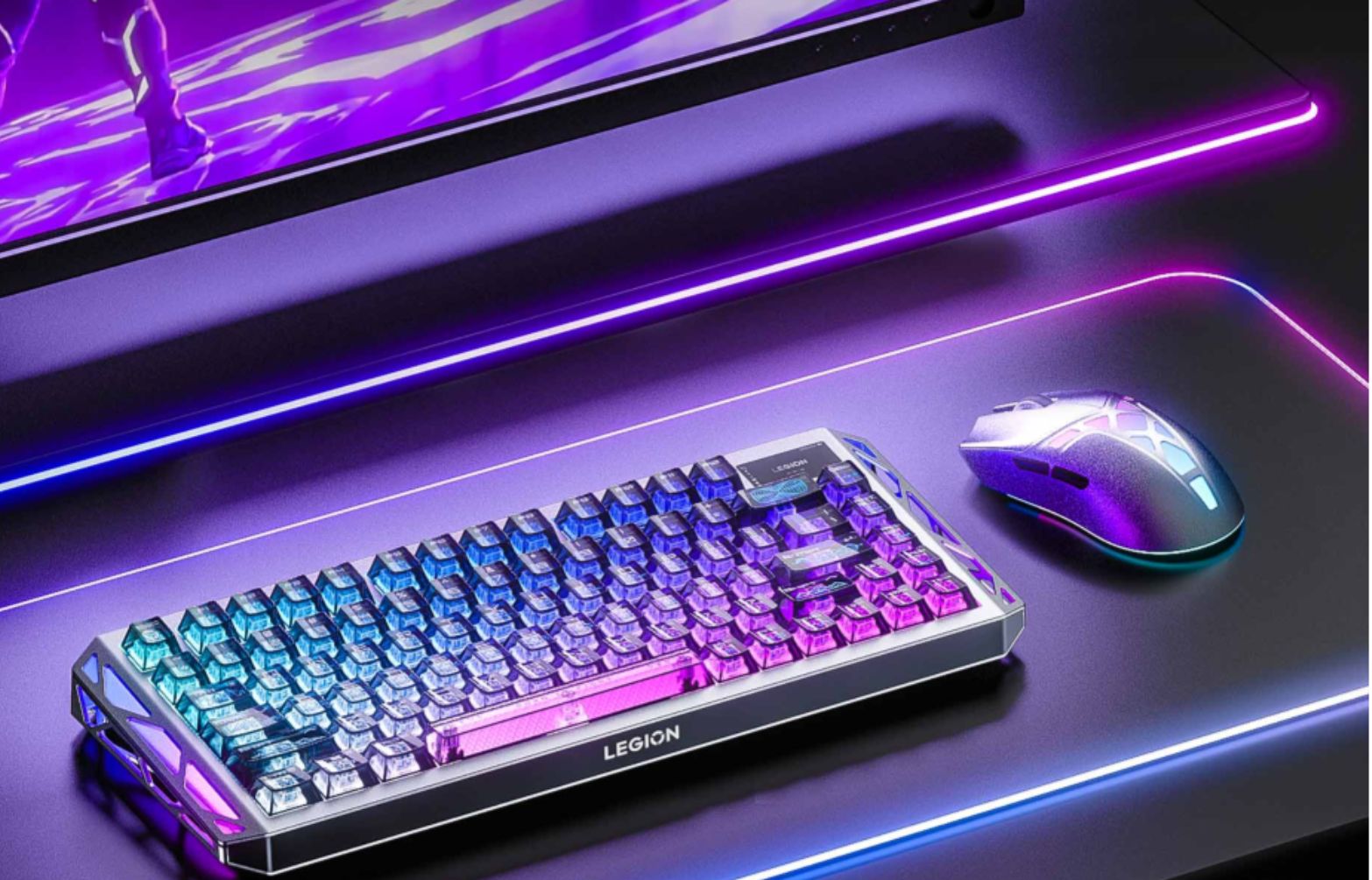
Lenovo is expanding its gaming hardware ecosystem with the release of the Legion Y7MG, a high-performance gaming mouse designed to target competitive players and enthusiasts. Equipped with the advanced PAW3950 optical sensor and an 8,000Hz polling rate, the new peripheral aims to deliver ultra-low latency and precision tracking for fast-paced titles. As manufacturers push hardware specifications further into the professional gaming tier, this latest entry joins a growing market of ultra-responsive input devices built for high refresh rate monitors and twitch-reaction gameplay.
The core of the Lenovo Legion Y7MG relies on PixArt’s PAW3950 sensor, a flagship component known for its high DPI limits, tracking accuracy, and surface adaptability. Alongside this sensor, the mouse supports an 8K polling rate, meaning it communicates with a connected computer 8,000 times per second. This frequency significantly reduces input lag compared to standard 1,000Hz peripherals, offering smoother cursor movement and faster registration for competitive gamers who demand absolute responsiveness.
Hardware features like high polling rates and advanced optical sensors require optimized software and robust firmware to prevent system stutter or excessive CPU usage. While many competitive players utilize 4K and 8K polling rates to shave milliseconds off response times, real-world benefits depend heavily on system specifications and game engine compatibility. Industry hardware reviews note that while higher polling frequencies demand more processing power, they provide a measurable advantage in latency-sensitive esports scenarios.
As brands continue to refine ergonomic designs, weight distribution, and switch durability, the Legion Y7MG positions itself among top-tier contenders in the current peripheral landscape. Pricing and regional availability details for the Lenovo Legion Y7MG roll out through official Lenovo channels and participating tech retailers, with regional launches varying by market.
Hardware Specifications and Sensor Performance
The integration of the PAW3950 sensor allows the Lenovo Legion Y7MG to offer fine-tuned sensitivity adjustments and exceptional tracking speeds. PixArt’s sensor architecture supports high-speed flicks without losing tracking fidelity, making it suitable for low-sensitivity and high-sensitivity players alike. Furthermore, the 8,000Hz polling rate ensures that every physical movement translates to the screen almost instantaneously, matching the performance standards set by recent high-end esports mice.
Managing an 8K polling rate requires stable USB connectivity and sufficient system resources to handle the high volume of data interrupts. Players using high-refresh-rate displays, such as 240Hz or 360Hz monitors, will notice the most fluid integration, as the faster input reporting pairs naturally with rapid visual feedback. Lenovo designed the internal architecture to maintain structural rigidity while keeping the overall chassis lightweight, addressing the primary ergonomic demands of modern competitive gaming communities.
Market Positioning and Availability
The gaming mouse segment has seen a rapid shift toward high-polling-rate capabilities and flagship sensors over recent hardware cycles. Competitors from major peripheral brands have also adopted PAW3950-based solutions, driving innovation and competition across the board. The Legion Y7MG strengthens Lenovo’s broader Legion portfolio, which encompasses gaming laptops, desktops, and monitors tailored for performance-driven users.
Consumers looking to purchase or check regional pricing for the Lenovo Legion Y7MG can monitor official product listings on Lenovo’s regional web stores and authorized hardware distributors. As tech manufacturers release updates and companion software for custom macro configuration and DPI stepping, users should check the official support portal for the latest firmware downloads to ensure optimal device performance.
Worth a look