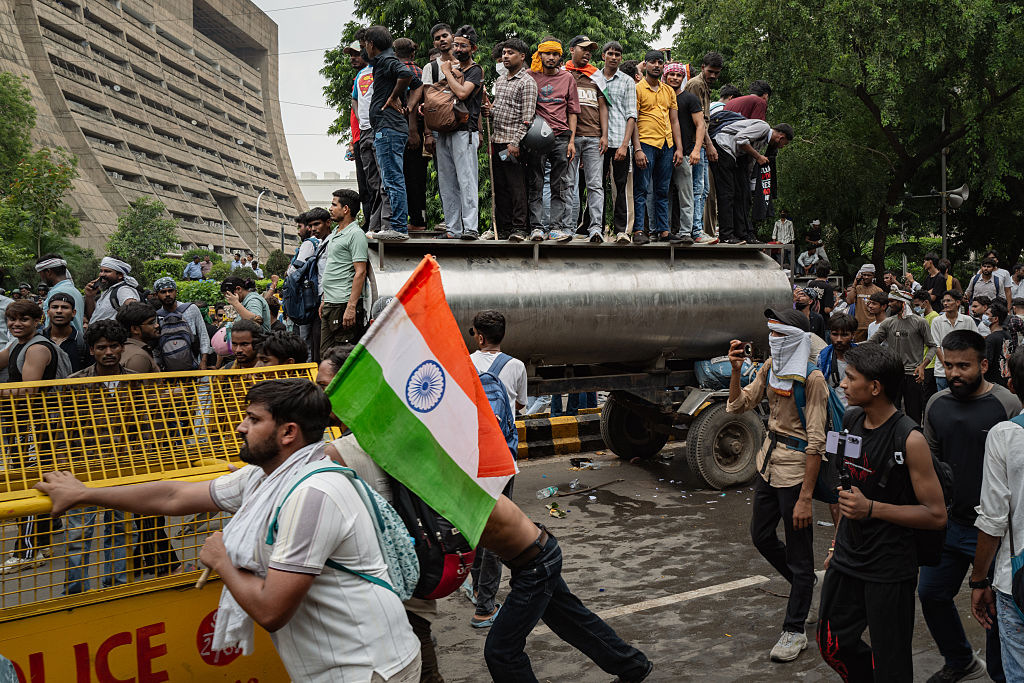
Indian Education Minister Dharmendra Pradhan resigned on Saturday, July 25, 2026, following mounting pressure from the youth-led “Cockroach Movement” that erupted over massive irregularities in the National Eligibility-cum-Entrance Test (NEET). The high-stakes entrance exam, taken by over 2 million students for fewer than 130,000 undergraduate medical slots nationwide, was invalidated by authorities in May after police confirmed that question papers had leaked and circulated on WhatsApp for nominal fees.
While Pradhan defended his tenure by pointing to upcoming technological overhauls and a successful re-examination held in June, he stepped down to prevent anti-national forces from exploiting the widespread public discontent.
Indian President Droupadi Murmu swiftly appointed Pralhad Joshi to oversee the Ministry of Education in addition to his existing portfolios overseeing Consumer Affairs, Food and Public Distribution, and New and Renewable Energy, according to official government announcements. Meanwhile, leaders of the Cockroach Janta Party (CJP)—the political embodiment of the street protests—have signaled that their campaign for complete transparency and accountability is far from over.
How a WhatsApp Exam Leak Triggered a National Crisis
The crisis began in May when Indian authorities invalidated the annual NEET undergraduate medical entrance exam after an exam coach noticed suspicious similarities between test questions and a “guess paper” circulating online. According to investigations reported by the Indian Express, individuals paid as little as 5,000 rupees (about $52) to access the leaked material via WhatsApp. The breach compromised an examination process involving more than 2 million prospective medical students, as documented by the BBC.
The stakes for the examination are exceptionally high. India’s National Medical Commission offered fewer than 130,000 seats for undergraduate medical programs this year, driving intense competition in a system where financial resources are often limited. Following the cancellation of the exam results, Agence France-Presse reported that at least 20 students died by suicide, with protesters and student advocates attributing the tragedies to systemic failures within the nation’s educational infrastructure.
In his resignation statement posted to social media, Pradhan praised India’s youth but stopped short of accepting direct blame for the leak. He confirmed that a replacement exam had been successfully administered in June and announced plans to transition toward a computer-based testing model to safeguard against future fraud.
The Rise of the Cockroach Janta Party and Street Protests
The protest movement adopted the moniker “Cockroach Janta Party” (CJP) after starting as a social media parody account in May. The name references remarks made by Chief Justice Surya Kant during an unrelated hearing that month, in which he used derogatory terms to describe young unemployed citizens. The parody page quickly evolved into a serious political force, garnering millions of followers and organizing coordinated demonstrations led by founder Abhijeet Dipke.
Tensions reached a boiling point last week when tens of thousands of demonstrators defied police orders to march on Parliament, leading to clashes with law enforcement. Protestors escalated their tactics the following day by erecting barricades at key metro station entrances, disrupting public transportation for millions of daily commuters. Police deployed tear gas and batons to disperse the crowds, drawing widespread condemnation from civil rights groups.
Prominent activist Sonam Wangchuk also amplified the pressure by undertaking a 26-day hunger strike to draw attention to demands for official accountability. Wangchuk ended his fast after receiving assurances that Parliament would address the exam failures, later welcoming Pradhan’s departure as a milestone for Indian democracy. Speaking to reporters in New Delhi, Dipke celebrated the resignation as a historic win for ordinary citizens.
Government Negotiations and What Lies Ahead for the CJP
Following Pradhan’s exit, CJP representatives met with government officials in New Delhi to negotiate a comprehensive list of demands originally established on May 16. In addition to calling for Pradhan’s resignation, the party has demanded 10 million rupees ($104,000) in compensation for the families of each student who died by suicide following the scandal. Their broader platform includes enhanced legislative oversight of education, gender equity in government positions, media independence, and a 20-year ban preventing politicians from switching parties before running for office.
CJP Spokesperson Saurav Das announced during a press conference on Saturday that government officials had agreed to all of their demands and urged demonstrators to return home peacefully. Das also stated that party representatives would reconvene with government officials in four weeks to review progress on broader systemic reforms. Newly appointed Education Minister Pralhad Joshi, who previously noted that technology-driven examinations would take shape by next year, faces immediate scrutiny from youth leaders.
“Whoever becomes the Education Minister should know that the youth are watching. They will demand accountability,” Das told local media outlet ANI. CJP leaders confirmed they plan to meet with the new minister soon to ensure that the commitments made during negotiations translate into concrete legislative action.
Worth a look