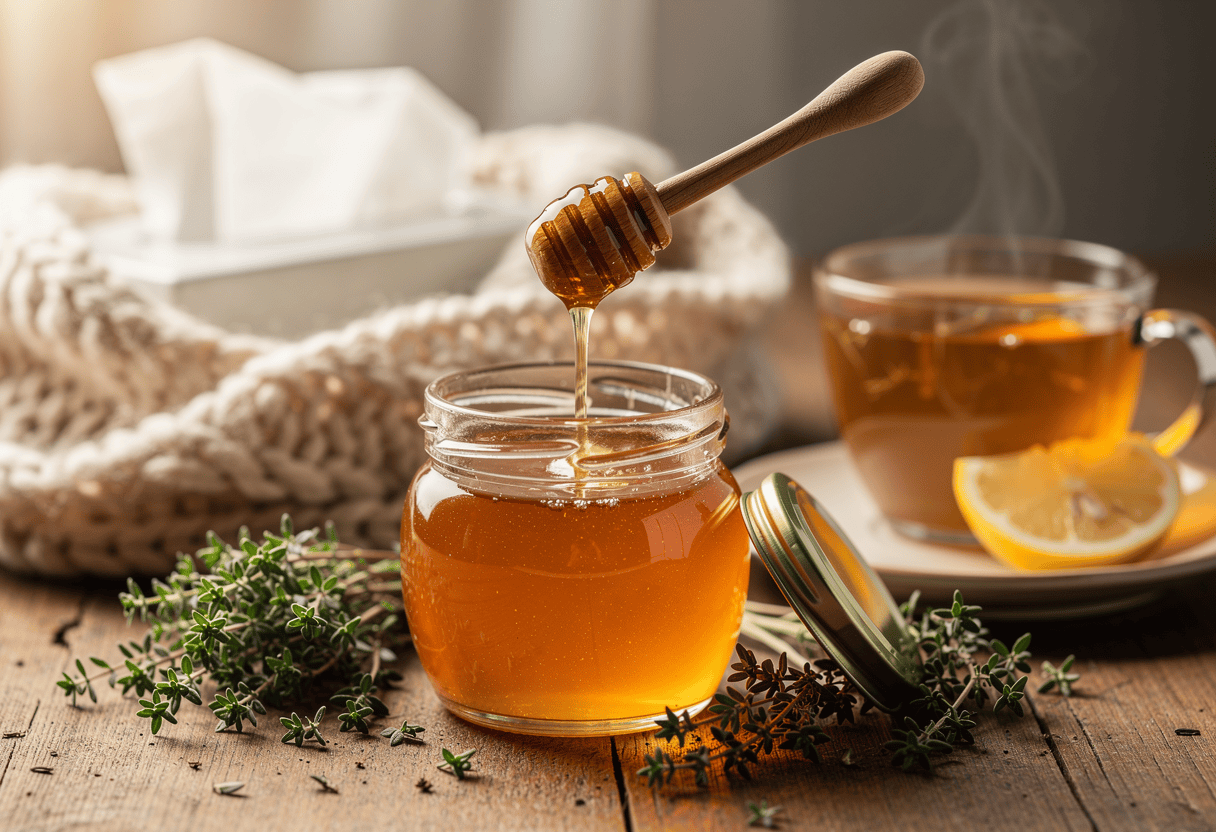
Thyme honey, widely known in French-speaking regions as miel de thym, has long been a staple of traditional natural remedies and modern apitherapy, particularly valued for soothing seasonal respiratory irritation. Produced by bees foraging on wild thyme blossoms—scientifically classified as Thymus vulgaris—this aromatic golden honey combines the natural demulcent properties of viscous nectar with the botanical biochemical compounds characteristic of the Lamiaceae family. According to botanical and nutritional overviews published by health information platforms like Passeport Santé, the distinct profile of thyme honey stems from its concentrated phenolic content and natural antimicrobial agents, making it a frequent subject of interest for individuals seeking complementary approaches to managing winter coughs and sore throats.
As winter ailments and upper respiratory infections prompt consumers to explore alternative symptom management, understanding the biochemical composition, proper daily administration, and safe sourcing of authentic thyme honey remains essential for public health. While honey is widely recognized for its ability to coat the pharynx and suppress acute coughing episodes, medical authorities consistently emphasize that honey should never be given to infants under one year of age due to the risk of infant botulism, a rare but serious neuroparalytic condition caused by spores of Clostridium botulinum. For adults and children over twelve months, incorporating therapeutic-grade honey into warm herbal teas provides a safe, evidence-supported method for easing nocturnal coughing and mild upper respiratory discomfort.
Botanical Origins and Biochemical Profile of Miel de Thym
True thyme honey originates predominantly from arid, rocky scrublands across the Mediterranean basin, including regions of Greece, Spain, and southern France, where wild thyme thrives under intense sunlight. Unlike multifloral honeys gathered from diverse meadow blossoms, unifloral thyme honey features a dominant concentration of nectar derived from the genus Thymus. Phytochemical analyses cited in nutritional and pharmacological literature indicate that thyme nectar transfers significant amounts of active botanical compounds into the finished honey, including thymol and carvacrol. These naturally occurring monoterpenes contribute distinct antiseptic, antioxidant, and anti-inflammatory characteristics that differentiate thyme honey from standard commercial sweeteners.
The golden-amber coloration and intense, herbaceous aroma of authentic thyme honey serve as primary visual and olfactory indicators of its botanical purity. According to standard food science evaluations, high-quality artisanal honeys exhibit low moisture content, high enzymatic activity, and natural crystallization tendencies over time. These physical attributes protect the product against bacterial proliferation without requiring chemical preservatives or artificial additives. Consumers examining honey labels or purchasing directly from apiaries look for designations specifying unifloral origin and cold-extraction methods, which preserve heat-sensitive enzymes such as glucose oxidase—the enzyme responsible for producing natural hydrogen peroxide when honey is diluted.
Therapeutic Uses, Cough Relief, and Evidence-Based Guidelines
The primary therapeutic application of miel de thym centers on its efficacy as a natural cough suppressant and throat-soothing agent during viral upper respiratory tract infections. Clinical guidelines and reviews by organizations such as the World Health Organization acknowledge honey as an effective, low-cost demulcent that alleviates acute cough symptoms in children and adults. The thick consistency of the honey coats irritated mucosal membranes in the upper pharynx, reducing the mechanical friction that triggers coughing reflexes. Furthermore, the mild antimicrobial properties derived from its botanical phytochemicals assist in subduing local microbial irritation without the adverse side effects associated with pharmaceutical cough suppressants.
Integrating thyme honey into an effective daily regimen involves simple, measured preparation methods that protect its active constituents. Nutritionists and herbalists generally recommend dissolving one to two teaspoons of thyme honey into warm water, chamomile tea, or herbal infusions, ensuring the liquid is not boiling hot, as excessive heat degrades beneficial enzymes and volatile compounds. For optimal results in managing nighttime coughing fits, a single teaspoon consumed directly before bed provides prolonged soothing action on the throat. However, individuals managing metabolic conditions such as type 2 diabetes must account for the high sugar and carbohydrate content of honey, treating it as an active dietary component rather than an unrestricted sweetener.
Sourcing Authentic Thyme Honey and Navigating Market Quality
Securing genuine, high-purity miel de thym requires careful attention to labeling, geographic origin, and retail sourcing, as the global honey market frequently encounters fraudulent blending and adulteration with cheap corn or cane sugar syrups. Regulatory bodies and consumer protection agencies advise buyers to purchase honey directly from certified local beekeepers, specialized organic markets, or verified farm cooperatives that provide transparent traceability regarding hive locations and harvesting methods. Authentic European thyme honey often carries protected designation of origin labels, such as the Greek varieties renowned for their exceptional aromatic complexity and stringent quality controls enforced by agricultural authorities.
When evaluating honey products, consumers should remain vigilant against misleading marketing terminology and unusually low price points that suggest industrial processing or syrup dilution. Pure, raw thyme honey naturally crystallizes into a smooth or granular texture over several weeks or months, a physical transformation that demonstrates the absence of high-temperature pasteurization and ultra-filtration. Retaining this raw state ensures that the natural pollens, antioxidants, and trace minerals remain fully intact. For those seeking official dietary advisories and food safety updates regarding honey consumption and allergy precautions, consulting resources provided by public health ministries or national food safety agencies offers a reliable foundation for informed nutritional choices.