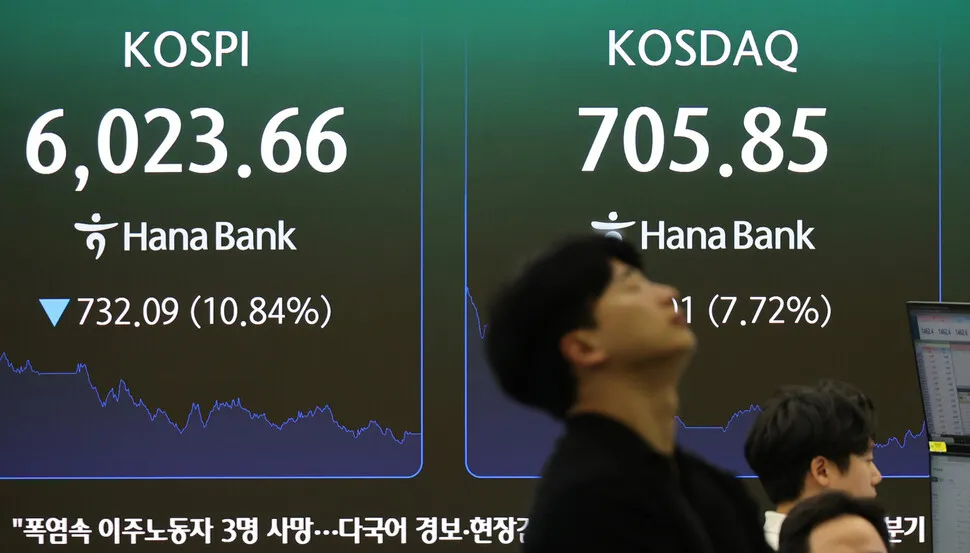
South Korea’s financial markets experienced a severe downturn as plummeting semiconductor shares triggered a broad stock market crash, pushing the benchmark Kosdaq index back to levels last seen. According to market data and local financial reports, the sharp correction struck tech-heavy equities without the catalyst of an unprecedented geopolitical shock, distinguishing this sell-off from historical crises linked to armed conflicts or international terrorism.
Financial analysts tracking the session noted that while previous historic crashes involved major external shocks such as the 9/11 attacks or Middle Eastern military escalations, the latest market slide stemmed directly from shifting momentum in global semiconductor investments and tightening liquidity conditions. Investors trimmed risk exposure across major export-oriented technology firms, driving down share prices and dragging down secondary indices.
The sudden loss of upward momentum erased months of market gains, leaving index values compressed below key psychological thresholds. Market participants are closely monitoring upcoming macroeconomic releases and corporate guidance from major chipmakers to gauge whether the correction represents a temporary consolidation or a deeper structural shift in equity valuations.
Semiconductor Sector Weakness Drags Down Broader Indexes
The downturn centered heavily on bellwether technology stocks, where profit-taking and cooling expectations for artificial intelligence chip demand weighed on valuations. Trading volumes surged as institutional investors adjusted portfolios, putting intense downward pressure on both the mainboard and secondary markets.
Market strategists point to softening overseas demand indicators and cautious capital expenditure outlooks among major hardware manufacturers as core drivers behind the sell-off. As chip stocks lost ground, secondary suppliers and platform companies experienced sharp pullbacks, amplifying the overall market decline.
Kosdaq Retreats to Baseline
The Kosdaq index bore the brunt of the volatility, erasing gains accumulated over successive quarters. Market trackers confirmed that the index slipped back to valuations recorded prior to the inauguration of the current government administration, effectively neutralizing the post-election rally.
Retail investors, who maintain a significant presence in Kosdaq trading, faced margin pressures as portfolio values contracted. Brokerage firms reported increased activity in retail accounts as investors sought to rebalance holdings amid heightened intraday volatility.
Market Outlook and Monitoring Checkpoints
Regulatory authorities and financial exchanges have increased surveillance to manage potential volatility risks, though no emergency stabilization measures have been formally announced. Investors await upcoming export statistics from the Ministry of Trade, Industry and Energy, alongside upcoming quarterly earnings reports from leading technology conglomerates, to determine the near-term trajectory of equities.
Market participants seeking official disclosures and daily trading statistics can review data published directly through the Korea Exchange information portal.
Worth a look
- Lee Jae-myung Defends Legal Use of Mortgages in Apartment Sale
- Does Academic Bias Prove Leftists Misunderstand Conservative Beliefs?
- Michael Zheng vs Martin Landaluce Total Games Tennis Prediction Market (world-today-news.com)
- Kalshi Wins Preliminary Injunction Against Minnesota Prediction Market Ban (time.news)