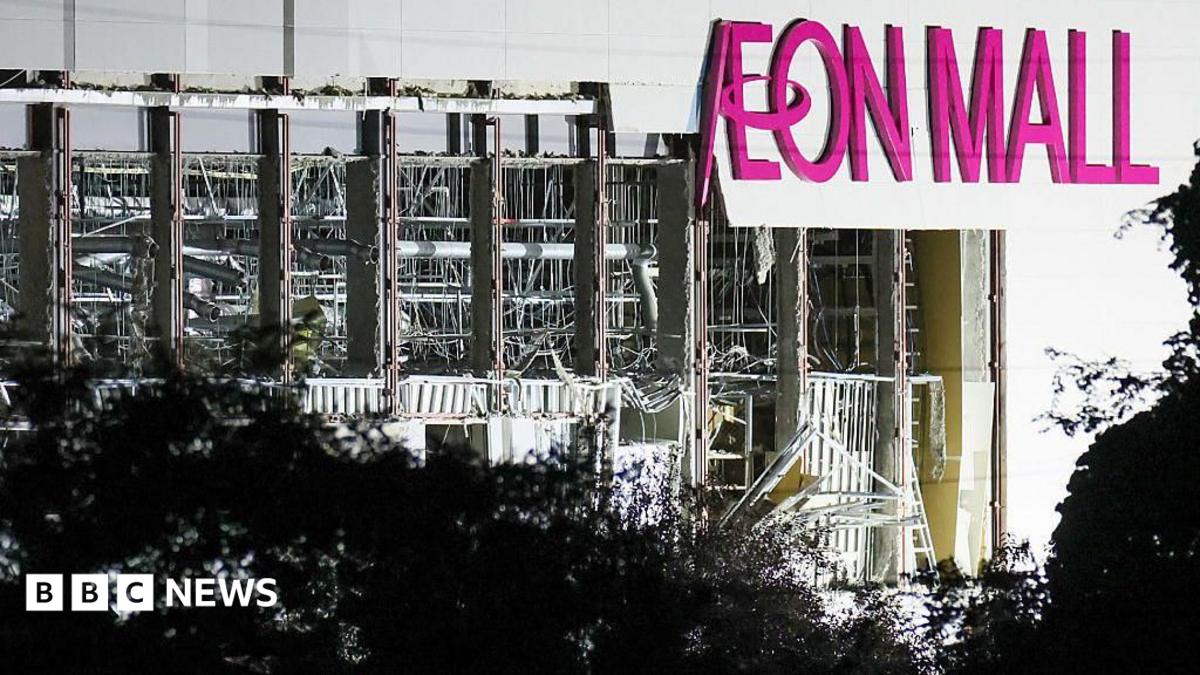
A powerful earthquake struck the Kyushu region of Japan, triggering urgent warnings and disrupting infrastructure across the island. The Japan Meteorological Agency (JMA) monitors the seismic activity and provides real-time updates on potential tsunami risks and aftershocks to protect residents in the affected coastal and inland areas.
The seismic event centered on Kyushu, one of Japan’s four largest islands, creating significant shaking that was felt across multiple prefectures. Local authorities have deployed emergency response teams to assess structural damage to roads, bridges, and residential buildings, while the JMA continues to track the stability of the region’s fault lines.
Emergency services are currently prioritizing the search for missing persons and the restoration of power and water services in the hardest-hit municipalities. According to the Japan Meteorological Agency, the primary focus remains on monitoring the seabed for displacement that could trigger secondary waves, though the severity of these risks fluctuates based on the earthquake’s precise magnitude and depth.
Infrastructure Damage and Emergency Response in Kyushu
Reports from local government offices in Kyushu indicate that the earthquake caused various levels of structural failure, ranging from cracked pavement to collapsed walls in older residential districts. The Japanese government has activated emergency protocols, deploying the Self-Defense Forces to assist in clearing debris and establishing temporary shelters for displaced citizens.
Transportation networks faced immediate disruption. According to reports from the Japan Railways (JR) Kyushu company, several train lines were suspended or delayed as a safety precaution to inspect tracks for warping or misalignment. Major highways in the region also experienced temporary closures while engineers verified the integrity of overpasses and tunnels.
Utility providers are working to restore electricity to thousands of households. In some areas, power outages were caused by downed poles and transformer failures. The regional government has urged residents to remain vigilant and avoid using open flames in damaged buildings due to the risk of gas leaks, a standard safety precaution following high-magnitude events in Japan.
Tsunami Warnings and Coastal Evacuations
Following the initial shock, the JMA issued tsunami advisories for the coastlines surrounding Kyushu. These warnings prompt immediate evacuations to higher ground or designated “tsunami evacuation towers” located in low-lying coastal towns. The agency emphasizes that even small tsunami waves can be dangerous due to the force of the water and the debris they carry.
Coastal residents in Miyazaki and Kagoshima prefectures were specifically alerted to move away from the shore. According to the Government of Japan, the coordination between the JMA and local municipal mayors is critical in the first hour following a quake to ensure that evacuation orders are communicated via sirens and mobile phone alerts.
The risk of a tsunami is determined by the earthquake’s epicenter location and whether the movement occurred vertically, displacing the water column. While initial warnings were stringent, the JMA typically downgrades these advisories once sensors confirm that wave heights have subsided to safe levels, though they caution that “delayed” waves can sometimes arrive hours after the primary event.
Seismic Context and Future Risks
Kyushu’s geography makes it susceptible to frequent seismic activity due to its position near the intersection of several tectonic plates, including the Philippine Sea Plate and the Eurasian Plate. This geological volatility is a primary reason why Japan maintains some of the strictest building codes in the world, requiring structures to sway rather than collapse during intense shaking.
Geologists are currently analyzing the data to determine if this event was an isolated shock or part of a larger sequence. The possibility of “cluster” earthquakes—where one event triggers another on a nearby fault—is a significant concern for the JMA. This pattern was observed in previous major events, such as the 2016 Kumamoto earthquakes, which saw a series of powerful shocks over several days.
The impact on the region’s industrial sector is also under review. Kyushu is a major hub for semiconductor manufacturing and automotive production. Any significant damage to these facilities can have ripple effects on global supply chains, though early reports suggest that most high-tech plants utilize advanced seismic isolation systems to minimize downtime.
Safety Guidance and Official Resources
Residents and visitors in Kyushu are advised to follow the “Drop, Cover, and Hold On” protocol during aftershocks. The Japanese government recommends keeping an emergency “go-bag” containing water, non-perishable food, a flashlight, and a battery-powered radio.
For those seeking the most current information, the following resources are the primary authorities:
- Japan Meteorological Agency (JMA): The definitive source for magnitude, epicenter location, and tsunami warnings.
- NHK World-Japan: The public broadcaster providing real-time English-language updates on casualties and damage.
- Local Prefectural Offices: The primary coordinators for evacuation center locations and food/water distribution points.
The next confirmed checkpoint for the public will be the daily briefing provided by the Cabinet Office of Japan, which will detail the total number of casualties and the estimated cost of infrastructure recovery as the assessment phase continues.
If you have information regarding the current situation in Kyushu or are seeking specific updates on a region, please share your comments below.
- Russia Kills at Least 13 in Massive Missile and Drone Strikes Across Ukraine
- CFMEU Administrator Michael Crosby Reveals John Setka Threats and Questions Jacinta Allan’s Claims
- Australian Rugby Players Sue Japan Rugby League One Over Rule Changes (world-today-news.com)
- 7.1 Magnitude Earthquake in Southwest Japan Claims At Least 30 Lives (newsdirectory3.com)