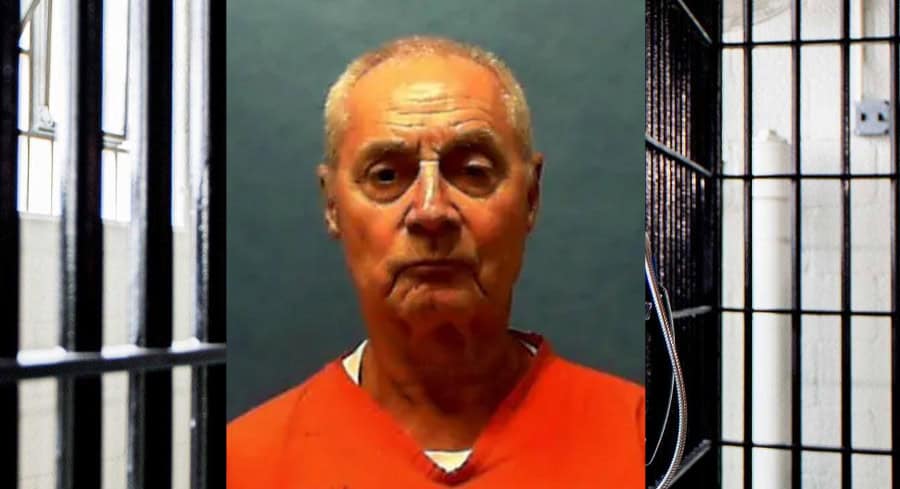
Florida executed James Aren Duckett by lethal injection on Tuesday, July 28, 2026, marking the first of a rare double execution scheduled for a single day. The state’s busy death chamber continues a pace that exceeds any other U.S. state, driven by Governor Ron DeSantis’s push for prompt victim-led justice.
Florida carried out the first of two lethal injections planned for a single day, putting an aging former police officer to death at the Florida State Prison near Starke. James Aren Duckett, 68, was pronounced dead at 1:19 p.m. after receiving a three-drug execution, according to the Florida Department of Corrections. Duckett declined to make a final statement when asked by prison officials.
Duckett had spent decades on death row after being convicted of the 1987 rape and drowning of 11-year-old Teresa McAbee while working as a police officer in a small central Florida city. Attorneys for Duckett had made last-ditch appeals to the U.S. Supreme Court, pointing to inconclusive DNA evidence results as the basis for claims of innocence. The nation’s highest court denied the requests in orders issued just before the execution.
A Rare Double Execution and National Leadership in Capital Punishment
Tuesday marked the first time a state has planned virtually back-to-back executions on the same day since Arkansas carried out two executions in April 2017. It also underscores an aggressive pace under Republican Governor Ron DeSantis, who leaves office in January and has overseen a dramatic surge in capital punishment cases.
Since the beginning of 2025, Florida has carried out nearly half of all state executions in the United States. The state executed 19 people by lethal injection in 2025 alone, accounting for 40 percent of the nation’s executions that year. By comparison, the next closest states—Texas, Alabama, and South Carolina—each executed five people over the same twelve-month period, according to data compiled by the Death Penalty Information Center.
Legal Battles Over Aging Inmates and Cruel and Unusual Punishment Claims
The state’s execution schedule has brought forward legal challenges centered on the advanced age and health conditions of aging inmates. Later on Tuesday evening, 80-year-old Dominick Anthony Occhicone was scheduled to be put to death for the 1986 killings of his ex-girlfriend’s parents, Raymond and Martha Artzner. Occhicone’s attorneys argued in court filings that age-related medical ailments, including kidney and prostate problems, could render his lethal injection especially painful and constitute cruel and unusual punishment.

The U.S. Supreme Court denied the final appeals for both men just prior to the first execution. The surge in executions also coincides with an aging death row population nationwide. On June 25, Florida executed 74-year-old Dusty Ray Spencer, and earlier in the state’s recent series of lethal injections involving aging inmates, 74-year-old Dennis Sochor was put to death for a 1982 murder.
Advocacy Group Pushback and Victim-Driven Justice Justifications
Anti-death penalty advocates sharply criticized the state’s actions on Tuesday. Ahead of the scheduled double execution, Floridians for Alternatives to the Death Penalty urged the governor to halt both procedures.
Hanna noted that none of the four execution recommendations made by juries this year in Florida was unanimous. All but two states in the U.S. that retain capital punishment require a unanimous jury recommendation before a judge can issue a death sentence.
Governor DeSantis has rarely commented directly on the acceleration of warrants, but previously explained that his administrative approach aims to bring justice to victims’ families who have waited decades for closure. Pointing to crimes that date back to the 1980s, the governor maintained that justice delayed is justice denied, expressing a commitment to running the process smoothly and promptly for grieving relatives.
Worth a look