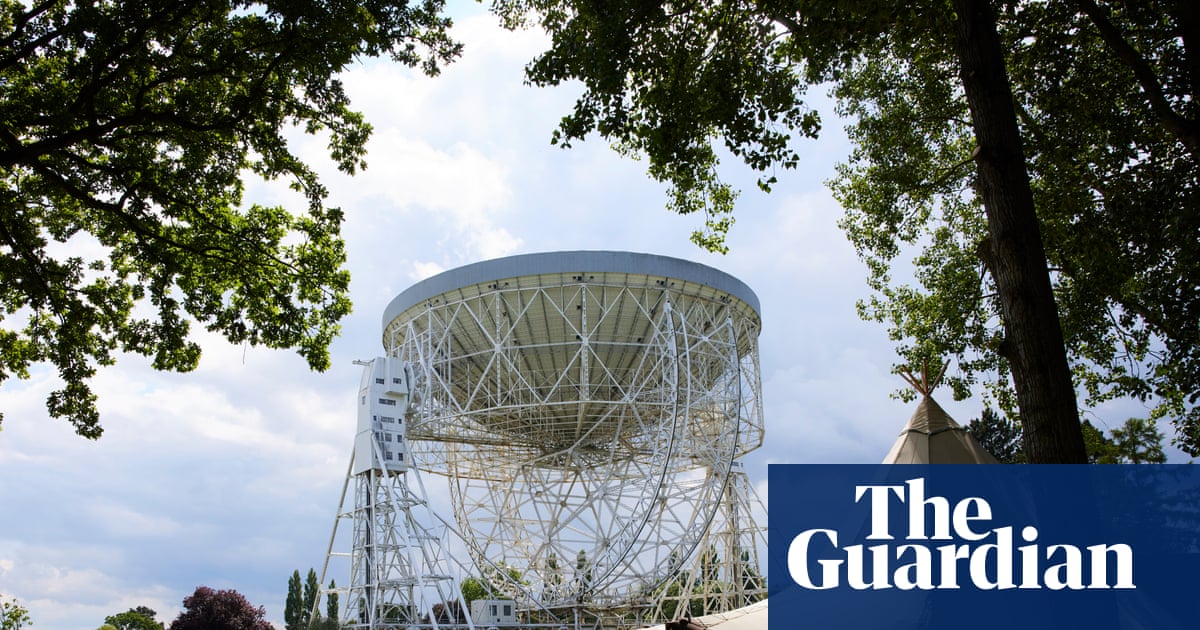
British funding body UK Research and Innovation announced on Monday that public funding for the e-Merlin radio telescope network at the Jodrell Bank Observatory will end in March 2028, threatening the future of the world-famous Lovell telescope and sparking sharp alarm across the scientific community.
Jodrell Bank Observatory, a UNESCO World Heritage Site in northwest England that houses the Grade I-listed Lovell telescope, faces potential closure after government financial support was slashed by funding body UK Research and Innovation. The cuts target the e-Merlin network, a system of seven radio telescopes across the country connected to the astrophysics center south of Manchester.
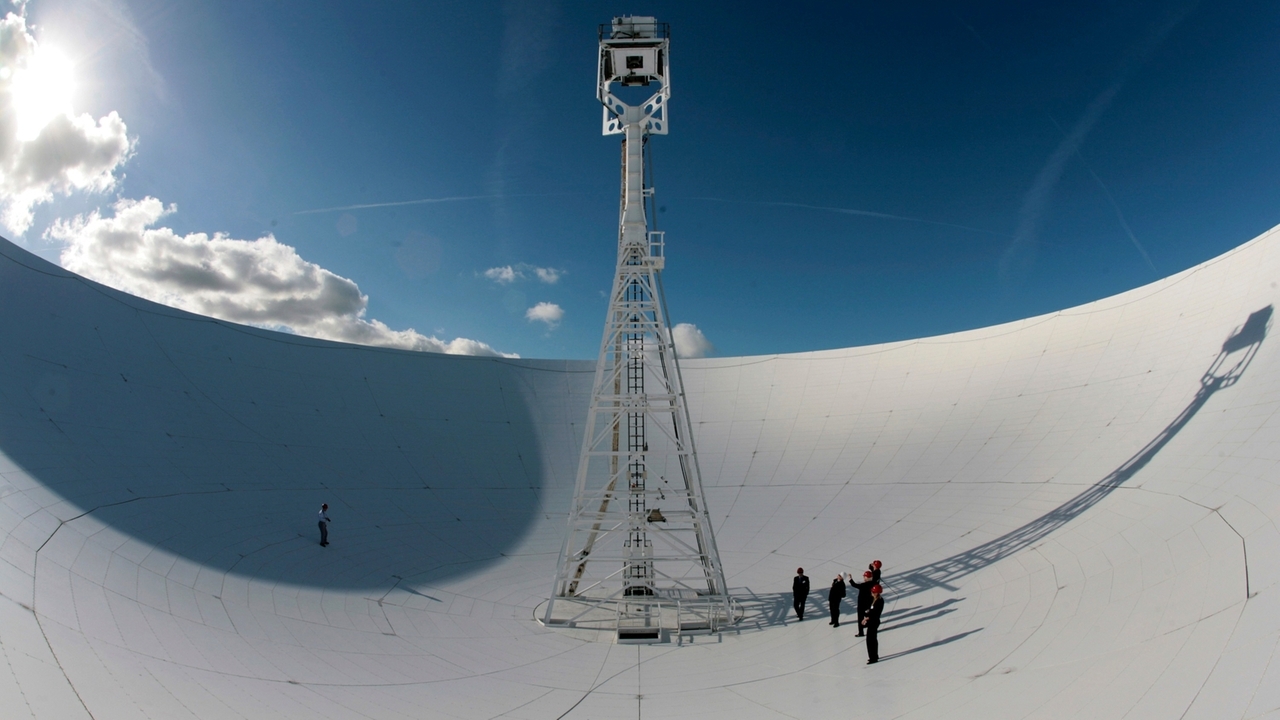
Scientists and academic leaders responded immediately with warnings about the impact on British research. Completed in 1957, the 250-foot-wide parabolic reflecting bowl of the Lovell telescope has supported decades of discovery, tracking Sputnik during the Soviet launch in 1957 and receiving the first images from the lunar surface in 1966.
UK Research and Innovation Cites Prioritization Amid Rising Costs
The funding withdrawal stems from a rigorous prioritization process intended to focus investment on long-term scientific capabilities. According to the Science and Technology Facilities Council, which receives funding from the nearly £10bn annual budget of UK Research and Innovation, substantial savings became necessary following cost overruns driven by soaring electricity and staff expenses at domestic facilities, alongside high foreign exchange rates for international collaborations such as the CERN nuclear research laboratory near Geneva.
“The decision to withdraw funding from e-Merlin was the result of a comprehensive, evidence-based prioritisation process. As part of this, STFC is focusing investment on the areas that will deliver the greatest long-term scientific capability and value, including the next generation of world-leading radio astronomy facilities.”
NIH Research Funding Cuts: What It Means?
Science and Technology Facilities Council spokesperson, via The Guardian
The University of Manchester, which operates the e-Merlin network, announced it is actively looking for alternative financial support from businesses, government channels, or charitable organizations. Sarah Sharples, the university’s dean of science and engineering, outlined the risks if those efforts fail.
“But, if we don’t find those alternative sources of funding, then there is a risk that as of the end of March 2028, the Lovell Telescope will not be an actively functioning scientific facility for radio astronomy.”
Sarah Sharples, dean of science and engineering at the University of Manchester, via Associated Press
Prof Simon Garrington, an associate director of the observatory, noted that withdrawing support effectively pulls the rug out from under Jodrell Bank. The decision places 28 jobs at risk and impacts nearly 3,000 researchers who utilize the facility. Garrington indicated plans to challenge the decision while exploring alternative applications for the telescope, such as tracking satellites and space debris, to attract new financial backing.
Broad Fallout Across British Physics and Astronomy
The action at Jodrell Bank forms part of a wider wave of reductions affecting dozens of scientific facilities, instruments, and research projects across the United Kingdom, projected to eliminate about 800 jobs. University of Manchester particle physicist Brian Cox criticized the measures as devastating and irreversible.
Photo: newsday.com
“These devastating and irreversible cuts are a legacy from a series of hasty and ill-considered decisions taken by UKRI, overseen by a government department that no longer exists. I am astonished that UKRI are still ploughing ahead, and not working with the Burnham government to find a solution.”
Brian Cox, particle physicist and professor at the University of Manchester, via The Guardian
Other major international collaborations also absorbed substantial reductions. UK participation in the Rubin Observatory in Chile sustained a 20% reduction in funding, while the Next-Generation Transit Survey faced a 45% cut. Funding for future instruments on the Extremely Large Telescope in Chile was eliminated entirely, and the UK withdrew from the Event Horizon Telescope collaboration that imaged the black hole at the center of the Milky Way.
Photo: apnews.com
Paul Howarth, president of the Institute of Physics, labeled the cuts a terrible blow to the scientific community and urged Prime Minister Andy Burnham to review the decisions to protect the nation’s research reputation. Sue Ferns of the Prospect trade union warned that closing Jodrell Bank would undermine national ambitions to serve as a science superpower, while Royal Astronomical Society president Prof Jim Wild emphasized that discarding unique observatories threatens the future of technological innovation and inspires generations of new astronomers.
Despite the funding cuts to active scientific research, officials confirmed that the Jodrell Bank engagement center, which welcomes the public and visiting school groups, will remain open and unaffected by the changes.
Innovation at Risk: How Science Funding Cuts are Impacting Progress and Research