Scientists have discovered the remains of a new dinosaur species in northern Zimbabwe. Named Musango matusadonaensis, the 210-million-year-old sauropodomorph lived during the Late Triassic epoch. Researchers say the find challenges long-held assumptions about ancient ecosystems across southern Africa.
A newly identified dinosaur species unearthed along the shores of Lake Kariba is offering fresh clues to how prehistoric animals diversified and spread across the region. Excavated from rocks originally spotted jutting out from water near Matusadona National Park, the fossils mark only the fifth dinosaur species ever formally named from Zimbabwe.
Excavating Zimbabwe’s Newest Dinosaur From a Boat
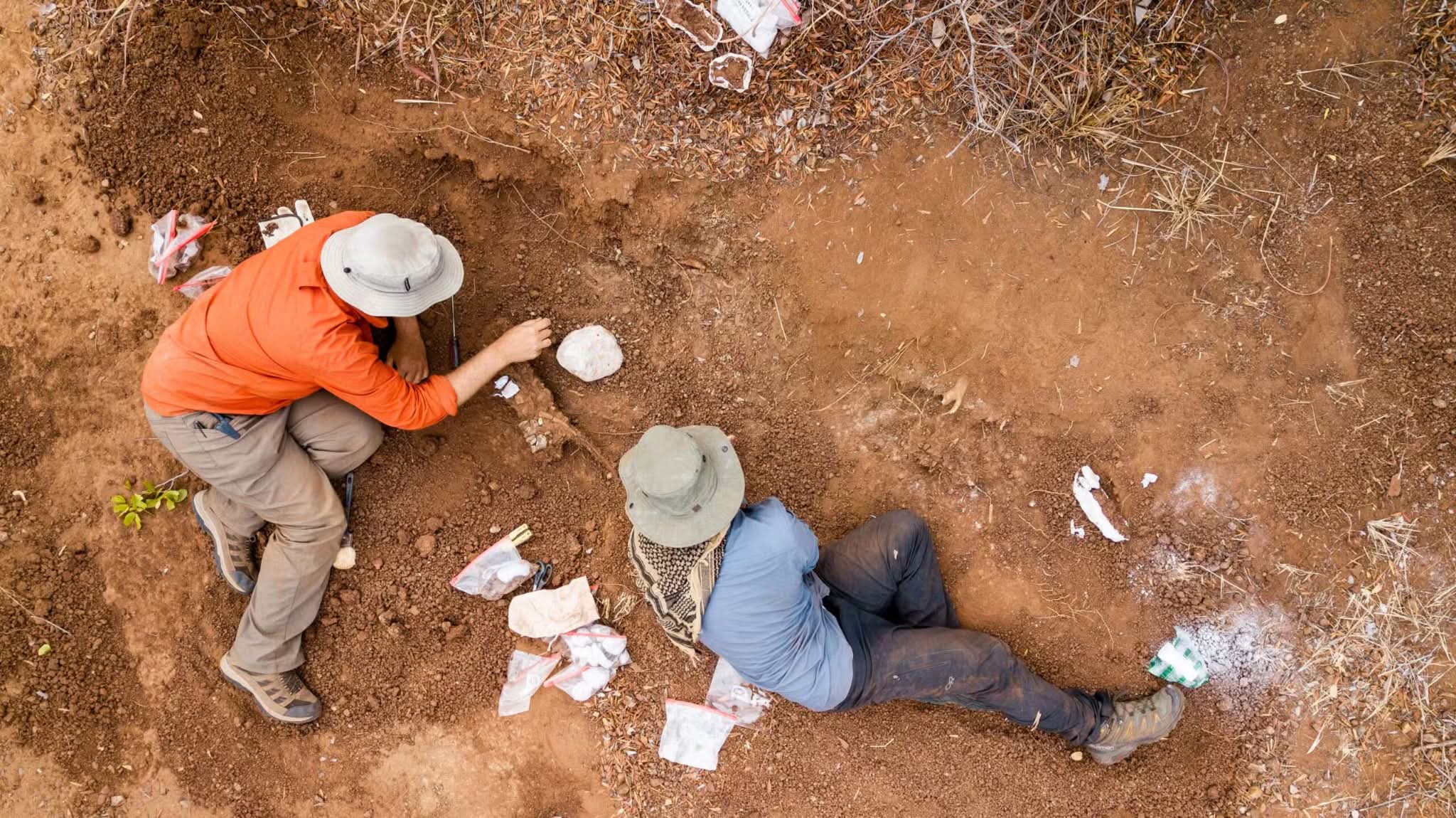
The discovery of Musango matusadonaensis required an unconventional approach. Because the fossil site is situated along the edges of Lake Kariba on the border of Zimbabwe and Zambia—an area teeming with wildlife—international researchers conducted their 2017 and 2018 expeditions entirely from the water.
Detailed laboratory analysis at the Evolutionary Studies Institute in Johannesburg later revealed the skeleton belonged to a previously unknown species. The animal’s generic name derives from the ChiShona word musango, which means living in the bush.
Physical Characteristics and Life of Musango Matusadonaensis
Dating back roughly 210 million years, Musango lived during the Late Triassic, a pivotal geological era when dinosaurs were beginning to expand across the planet prior to becoming dominant land animals. The animal belonged to the sauropodomorph group, an early relative of the giant long-necked dinosaurs like Diplodocus that evolved millions of years later.
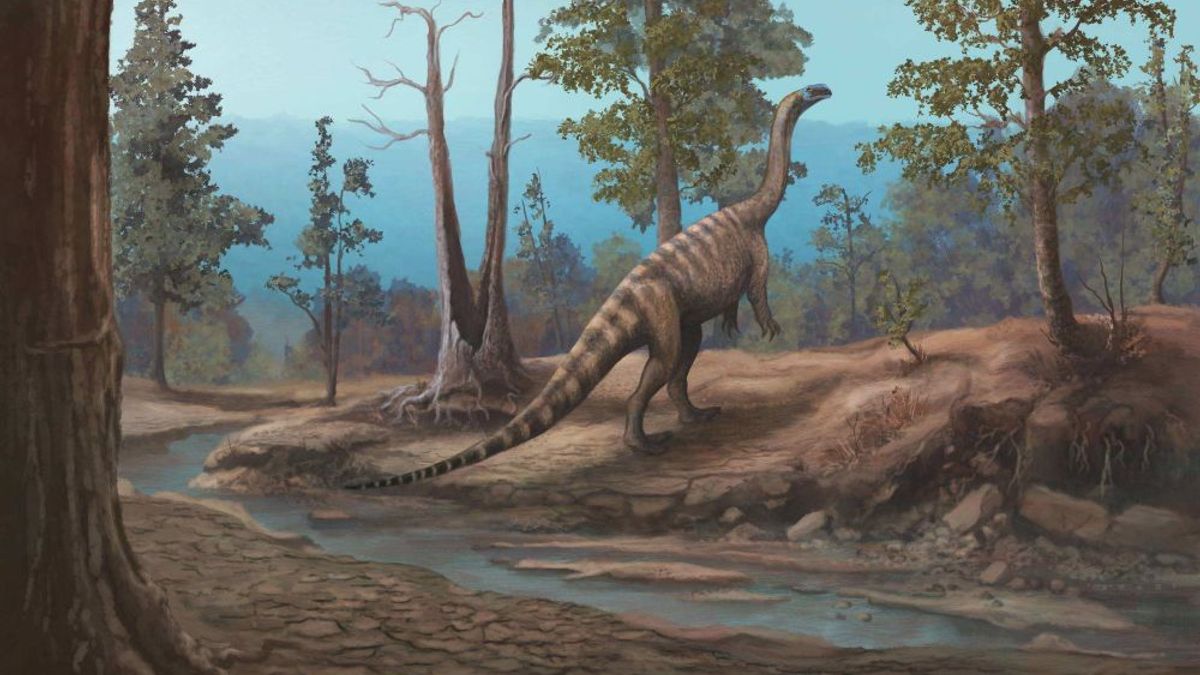
Unlike those later giants, Musango was lightly built. Measuring about 4.5 meters, or 15 feet long, the dinosaur weighed an estimated 222 kilograms, roughly equivalent to a fully grown pig. Scientists believe it walked on two legs.
New Dinosaur Species Discovered In Zimbabwe Challenges Evolution History
“For a dinosaur from this time, we actually have quite a lot of Musango.”
Paul Barrett, Natural History Museum in London
Researchers recovered a partial skeleton preserving bones from the spine, ribs, arms, legs, and feet. Analysis of the animal’s bones indicate it was about eight years old and nearing full size when it died. Although its skull remains missing—leaving scientists unable to definitively prove whether it fed exclusively on plants or operated as an omnivore—the bone analysis yielded unexpected details about its life history.
The bones showed it had recovered from a serious injury or infection. The bones proved that Musango survived the trauma and continued growing.
Challenging Assumptions About Ancient Southern African Ecosystems
The discovery is forcing paleontologists to revise how they view prehistoric geography in the region. Previously, scientists assumed that Late Triassic dinosaurs inhabiting southern Africa were largely uniform across vast distances.
Photo: discovermagazine.com
However, the discovery suggests the region was instead made up of several distinct ecosystems, each home to different dinosaur species.
“Until recently, it was assumed that the dinosaurs living across southern Africa were largely the same. However, these discoveries are showing that this part of the ancient supercontinent Gondwana was actually made of a series of smaller ecosystems – each with a different cast of characters.”
Musango probably fed on plants growing along rivers and streams.
The find follows the 2022 discovery of Mbiresaurus raathi, which lived approximately 230 million years ago and held the title of Africa’s oldest known dinosaur. With Musango recovered from the same rock layers as the larger sauropodomorph Musankwa sanyatiensis, researchers emphasize that southern Africa’s fossil record holds substantial untapped potential.
“It suggests that what we’ve found so far is only the tip of the iceberg. We’ve already got one other new species that we’ve yet to describe, while our team has been told about other fossils from the region that we’re yet to look at.”