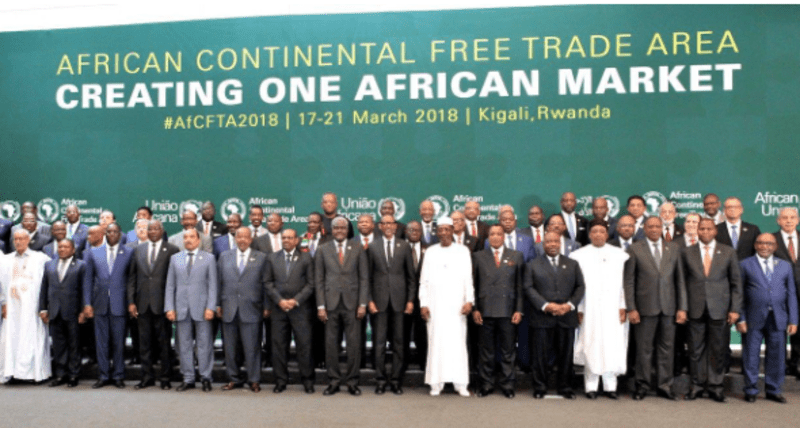
The African Continental Free Trade Area approaches universal adoption as 49 out of 54 African Union member states ratified the agreement by July 2025. The initiative aims to form a single market of 1.4 billion people with a combined gross domestic product of $3.4 trillion to boost intra-African trade.
Africa’s push for regional economic integration is accelerating as nations seek resilience against global trade tensions and protectionist pressures. According to the 2026 African Trade Report published by Afreximbank, 49 out of 54 African Union member states had ratified the agreement by July 2025, bringing the continent close to universal adoption. Eritrea remains the sole African Union member yet to sign the agreement, while Benin, Libya, Somalia, South Sudan, and Sudan still need to complete their ratification processes.
The institutional framework underpinning this single market draws strength from planning. Member states signed the agreement in Kigali, Rwanda, before it entered into force. Commercial trading under the agreement has since commenced.
Tariff Liberalization and Rules of Origin Progress
Implementation has advanced beyond initial ratification into technical trade negotiations and tariff concessions. Market access talks have seen 49 provisional schedules of tariff concessions submitted, with 48 of those adopted. However, disparities persist across the continent, as only 17 countries had submitted full tariff schedules covering all tariff categories.

Negotiations regarding rules of origin—the criteria that determine whether goods qualify for preferential duty-free treatment—have progressed to about 92.43 percent of tariff lines. Unresolved discussions remain concentrated in sensitive sectors such as textiles and automotive products, which are vital manufacturing industries for economies including Egypt, Morocco, and South Africa.
South African Trade Volumes and Regional Logistics
Individual member states are already registering tangible economic activity under preferential terms. Official data shows that South Africa recorded R2.6 billion in trade under preferential terms between January 2024 and February 2026, spanning machinery, food items, and electrical equipment. South African exports to the rest of the continent continue to grow robustly in sectors like processed food, chemicals, and vehicles.

This expansion forms part of the AfCFTA Guided Trade Initiative, a pilot program launched in October 2022 to test the operational, institutional, and legal environments before full rollout. Eight countries participated initially: Cameroon, Egypt, Ghana, Kenya, Mauritius, Rwanda, Tanzania, and Tunisia.
“The current global context, with its uncertainties and shifting trade patterns, reminds us that Africa must act with unity and urgency. To build resilience and safeguard our collective interests, we must accelerate implementation of the AfCFTA.”
Wamkele Mene, AfCFTA Secretariat executive secretary, via Newsday Zimbabwe
Economic Projections and World Bank Forecasts
Projections from international financial institutions outline potential gains for regional output and poverty reduction.
Furthermore, regional output is estimated to increase, with the natural resources and services sectors witnessing growth.
Digital Trade Protocols and Grassroots Integration
Beyond traditional goods and manufacturing, the agreement incorporates frameworks to address digital commerce and administrative bottlenecks.
“The Digital Trade Protocol in particular opens new avenues for e-commerce, fintech, and ICT-enabled services. If harnessed fully, it can generate millions of jobs for Africa’s young people and ensure that the continent is not left behind in the global digital economy.”
Wamkele Mene, AfCFTA Secretariat executive secretary, via Newsday Zimbabwe
Despite continental ambitions, small and medium-sized enterprises often face challenges translating high-level policy into everyday commercial reality. Experts emphasize that unlocking the full potential of the free trade area requires addressing local logistics, non-tariff barriers, customs procedures, and regional transport infrastructure to ensure micro-entrepreneurs, women, and youth can participate effectively across borders.
Related reading