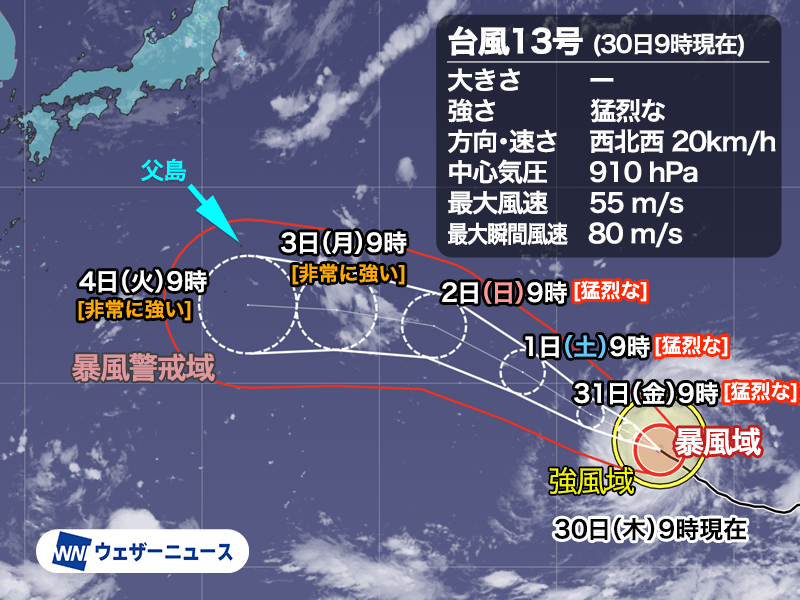
Typhoon 13, known internationally as Dolphin, has intensified into a “violent” storm system while tracking northward from the Ogasawara Islands toward the waters south of Japan’s main islands, according to regional meteorological advisories. Weather authorities across the region are closely monitoring the system’s trajectory as it packs extreme winds and generates high waves across the western Pacific.
According to updates from the Japan Meteorological Agency and regional forecasters such as Weathernews, the storm has undergone rapid intensification. Forecasters note that the system’s projected path could bring severe weather impacts to parts of the Japanese archipelago, prompting emergency services and local municipalities to review disaster preparedness protocols.
The progression of Typhoon Dolphin highlights a critical period for maritime traffic, coastal communities, and disaster-prone regions already recovering from recent seismic events. Meteorological agencies continue to issue regular updates on atmospheric pressure, wind speeds, and projected landfall zones as the system gathers strength over warm ocean waters.
Typhoon Path and Intensity Projections
Meteorological models indicate that Typhoon 13 has transitioned into a highly dangerous system, featuring maximum sustained winds and gusts that pose significant threats to shipping lanes and island communities. According to reports from the Japan Meteorological Agency, the storm’s center was tracked moving in a west-northwesterly direction, with central pressures dropping significantly as convection intensified around the eye.
Forecasting agencies, including international tracking desks from various defense and civilian meteorological services, show general agreement on the initial northward movement toward the Ogasawara island chain. However, divergences in medium-range computer models remain regarding the exact point at which the storm might recurve toward the main islands of Honshu. Regional weather authorities emphasize that even a slight shift in the steering currents could substantially alter the impact zone along the Pacific coast.
Regional Preparations and Vulnerable Zones
Local authorities and disaster management bureaus have urged residents in coastal areas and regions with fragile infrastructure to remain vigilant. Disaster response divisions in areas previously impacted by earthquakes, such as parts of Kumamoto and surrounding prefectures, are reviewing evacuation readiness and checking drainage systems to mitigate potential flooding and landslide risks.
Municipal governments across the anticipated path are stocking emergency supplies, testing public alert systems, and preparing evacuation centers.
Next Official Updates and Advisory Schedule
Readers are encouraged to share this report or leave comments below with local weather observations as the situation develops.
- Regional Response to Attacks on Saudi Oil Facilities and Iranian-Backed Militias in Iraq
- Sporting Kansas City vs. Houston Dynamo Betting Tips & Predictions
- Japan Cuts GDP Growth Forecast as South Korea, Taiwan Surge on AI Semiconductor Boom (archynewsy.com)
- Australian Rugby Players Sue Japan Rugby League One Over Rule Changes (world-today-news.com)