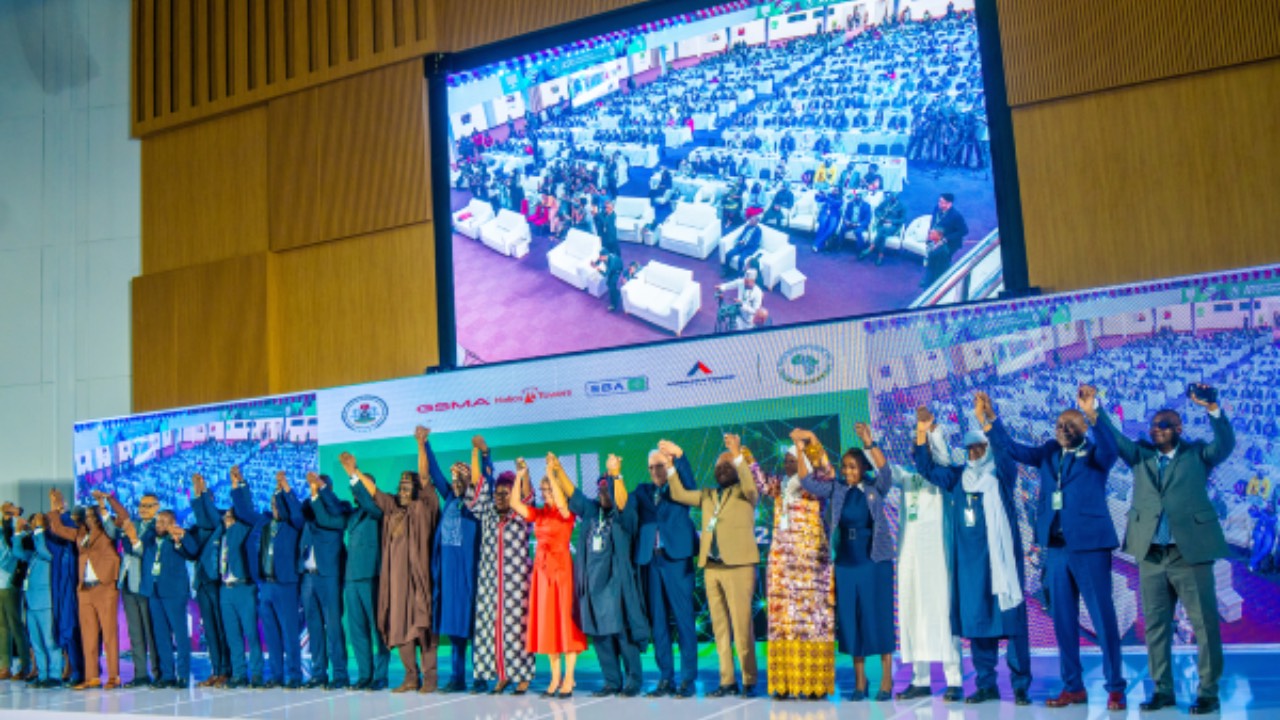
African telecommunications ministers adopted the Abuja Ministerial Declaration on Meaningful Connectivity during the African Telecommunications Union Conference of Plenipotentiaries in Abuja. The agreement commits governments to advancing digital inclusion and resilient infrastructure, while co-launching ATLAS Umoja AI, a pan-African initiative to develop AI models reflecting African languages and cultures.
The adoption of the Abuja Ministerial Declaration signals a shift toward coordinated regional policy to close Africa’s connectivity gap. According to Cyprusshippingnews, the GSMA described the declaration as an important milestone for the continent’s digital future, emphasizing the need for evidence-based policy and regional collaboration.
The declaration focuses on five core policy pillars: meaningful connectivity, digital inclusion, technology-neutral regulation, resilient digital infrastructure, and the creation of locally relevant digital services. This framework aims to move beyond simple network coverage to ensure that citizens actually find the internet useful enough to adopt.
ATLAS Umoja AI: Addressing the Language Gap
Alongside the policy framework, officials launched ATLAS Umoja AI, a project designed to build trusted, scalable AI that reflects African languages and development priorities. The initiative is backed by the governments of Benin, Kenya, Namibia, Nigeria, and Togo, alongside the GSMA and technology organizations including Awarri, Zindi, Pawa AI, and Mozisha.
The project evolves from Nigeria’s N-ATLAS initiative. TechBooky reports that the goal is to move away from fragmented efforts—often split between startups and donor-backed projects—toward a shared platform for datasets, evaluation standards, and technical capacity.
“Artificial Intelligence will be a defining technology for Africa’s future, but its benefits must be built on our own languages, cultures and knowledge systems. Nigeria is proud to have taken the first step through N-ATLAS and is equally proud to see that vision evolve into the continental ATLAS Umoja AI.”
Dr. Bosun Tijani, Honourable Minister of Communications, Innovation and Digital Economy of Nigeria
The initiative targets two primary barriers to internet adoption: digital literacy and a lack of locally relevant content. By making digital services available in the languages people speak daily, the partners aim to expand meaningful connectivity across the continent.
The Economic Cost of the “African Language Tax”
The push for local AI models is driven by a technical and economic disparity in how frontier AI systems process non-English languages. TechBooky highlights research on the African language tax,
which finds that many African languages are more expensive and slower to process because tokenizers split meanings into more pieces than they do for English.
- Higher inference costs for AI services.
- Increased latency (slower response times).
- Smaller effective context windows.
Without these local-language tools, AI remains a premium technology that primarily benefits those already connected to English-first or China-first systems, potentially leaving behind students, small businesses, and public agencies who cannot translate themselves into another digital world.
Regulatory Shifts and Connectivity Realities
The Abuja Declaration arrives as African regulators face increasingly complex ecosystems. During the ATU-GSMA African ICT Regulatory Leaders’ Forum, policymakers discussed how to move beyond traditional approaches to manage broadband expansion, satellite services, cloud computing, and artificial intelligence.
A key point of discussion involved technology-neutral licensing frameworks. By remaining neutral toward the specific technology used, regulators can better support innovation and extend connectivity to underserved rural and remote communities.
Dr. Bosun Tijani discussed how challenges faced by one regulator have often been encountered by colleagues elsewhere on the continent, raising the question of how to make the exchange of experience more deliberate, systematic, and useful.
The urgency is underscored by a significant gap in access.
Implementation and the AI for Good Global Commission
ATLAS Umoja AI is designed to complement national programs and builds on the momentum of the AI for Good Global Commission. Ministers from Nigeria, Namibia, and Togo, who serve on that commission, have committed to supporting the initiative to ensure that AI is inclusive and reflects the continent’s own sovereignty.
The success of the project now depends on execution. While the policy layer is established via the Abuja Declaration, the practical outcome will be measured by whether governments, researchers, and industry players can effectively share the datasets and expertise required to scale African language AI.
The responsibility, according to Dr. Tijani, is to ensure that no citizen—specifically children, women, and persons with disabilities—is left behind as the continent shapes its digital future.
Worth a look