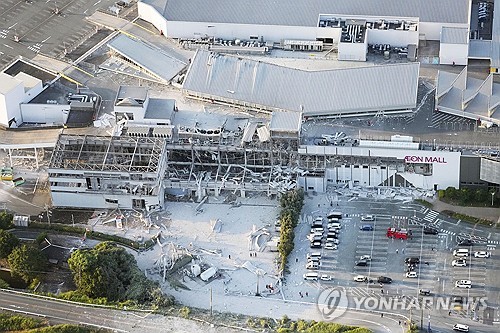
Recent seismic activity in Kumamoto Prefecture has exposed critical gaps in Japanese corporate disaster prevention systems, as secondary disasters including explosions at large shopping malls and the collapse of industrial structures followed the initial tremors. These incidents indicate that while primary structural integrity may hold, the failure of internal safety protocols and the mismanagement of hazardous materials during earthquakes create significant “secondary risks” for businesses and the public.
The vulnerability of corporate disaster preparedness in Japan is now under scrutiny by safety officials and industry analysts. According to reports from Yonhap News TV, the aftermath of the Kumamoto earthquakes revealed that many companies relied on outdated disaster manuals that did not account for the cascading effects of structural failures, such as gas leaks leading to explosions or the collapse of non-structural components in factories.
This pattern of failure suggests a systemic reliance on “hard” defenses—such as earthquake-resistant building codes—while neglecting “soft” defenses, including real-time hazardous material containment and emergency shutdown procedures for complex industrial machinery.
Secondary Disaster Risks in Retail and Industrial Zones
The most immediate evidence of these shortcomings appeared in the retail sector, where large-scale shopping malls experienced explosions following the quake. These events typically occur when seismic shaking ruptures gas lines or disrupts electrical systems, igniting leaked fuel or chemicals. According to the Cabinet Office of Japan (Disaster Management), the risk of fire and explosion remains one of the most dangerous secondary effects of urban earthquakes.
In industrial areas, the collapse of internal factory structures—such as heavy shelving, ventilation ducts, and machinery supports—blocked evacuation routes and hindered emergency response. While the main shells of the buildings often remained standing, the interior “secondary” collapses caused significant operational downtime and endangered workers. This disparity between building survival and operational survival is a primary focus for current revisions to corporate safety standards.
The Gap Between Building Codes and Operational Safety
Japan maintains some of the strictest seismic building codes in the world, yet the Kumamoto events highlight that a building remaining upright does not guarantee the safety of the people or processes inside. The “corporate disaster prevention” (kigyo bosai) framework often fails to address the dynamic nature of a disaster, such as how to manage volatile chemicals when power is lost and automated systems fail.
Industry analysts note that many companies treat disaster prevention as a compliance exercise—checking boxes for government regulations—rather than a functional operational strategy. The failure to secure heavy equipment and the lack of automated gas shut-off valves in older facilities contributed to the severity of the secondary damage. According to the Ministry of Health, Labour and Welfare, workplace safety during natural disasters requires not only structural reinforcement but also rigorous, scenario-based training for employees to handle equipment failures.
Impact on Global Supply Chains and Economic Recovery
Because Kumamoto is a critical hub for semiconductor manufacturing and automotive parts, these corporate vulnerabilities have global implications. The collapse of internal factory structures and the resulting secondary fires do not just cause local damage; they trigger “supply chain shocks.” When a single factory in Kumamoto ceases operations due to a secondary disaster, it can halt production lines for electronics and vehicles worldwide.
The economic recovery process is slowed when companies must rebuild internal infrastructure that was not properly secured, even if the building’s exterior was undamaged. This has led to calls for a shift toward “Business Continuity Planning” (BCP) that prioritizes the mitigation of secondary risks over simple structural survival.
Moving Toward Resilient Corporate Disaster Management
To address these loopholes, Japanese firms are being urged to implement more comprehensive safety audits that specifically target secondary triggers. This includes the installation of advanced seismic sensors that can automatically cut off gas and electricity before the strongest shaking hits, and the reinforcement of non-structural elements like ceiling tiles and heavy machinery mounts.
Experts suggest that the next phase of disaster prevention must involve “cross-sectoral coordination,” where shopping malls and factories share real-time data on hazardous material leaks to warn neighboring businesses and emergency services. The goal is to move from a defensive posture—hoping the building holds—to an active management posture that anticipates and neutralizes secondary threats in real-time.
The Japanese government continues to update its disaster management guidelines through the Ministry of Land, Infrastructure, Transport and Tourism, emphasizing the need for private sector entities to update their BCPs to include specific countermeasures for secondary disasters.
Official updates on revised safety standards for industrial facilities are expected as the government concludes its analysis of the Kumamoto seismic data. Readers can monitor official government portals for updated building safety mandates and corporate disaster guidelines.
Do you believe corporate safety standards in your region are sufficient for natural disasters? Share your thoughts in the comments below and share this report with your professional network.
Worth a look