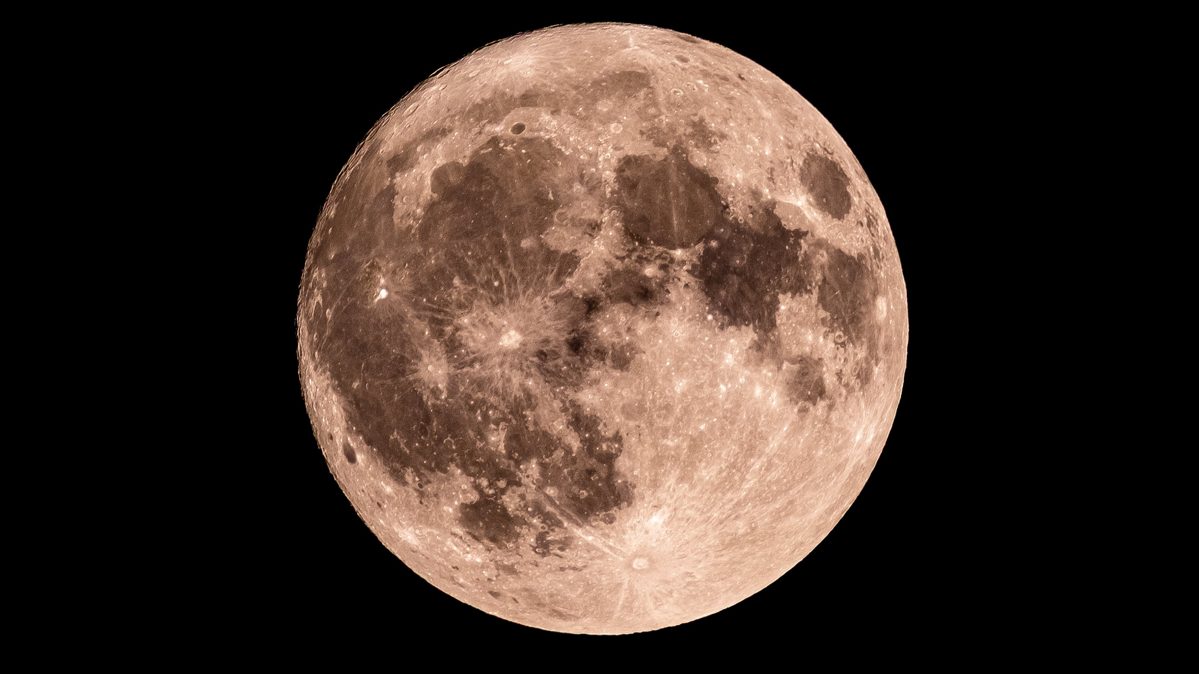
On Thursday, July 30, 2026, the Moon is in its Waning Gibbous phase, with 100% of its surface visible according to NASA’s Daily Moon Guide. While the Full Moon has passed, the lunar surface remains brightly illuminated, offering a prime window for observing craters and historical landing sites.
The current phase marks the beginning of the Moon’s transition away from full illumination. According to NASA, the lunar cycle consists of eight phases that repeat roughly every 29.5 days, driven by the changing angle between the Sun, Earth, and Moon. In the Northern Hemisphere, the Waning Gibbous phase is characterized by the Moon starting to lose light on its right side.
Lunar Features Visible on July 30
The high level of illumination tonight allows for varying degrees of detail depending on the equipment used. For those observing with the naked eye, Mare Tranquillitatis, Copernicus Crater, and the Tycho Crater are visible. Observers using binoculars can identify more specific features, including the Clavius Crater, Mare Frigoris, and Gassendi Crater.
Telescope users can access deeper detail, including the Caucasus Mountains and the landing spots for the Apollo 15 and 17 missions. This follows the recent peak of the Buck Moon, which hit peak illumination on July 29 at 9:37 a.m. CT. During that peak, observers in regions like the Florida Panhandle could see 11 distinct features with the naked eye, including the Aristarchus Plateau and the usatoday.com, a solidified lava-filled impact basin stretching 697 miles across.
“Sea of Serenity.”
NASA, via USA TODAY
This specific feature, the Mare Serenitatis, is notable for its proximity to the Apollo 17 landing site on December 17, 1972. When viewed during a full moon, bright rays of material from asteroid and meteoroid impacts, stretching from the Tycho crater, can be seen splitting this mare in half.
The Buck Moon and July’s Celestial Events
The timing of this month’s lunar cycle coincided with several other astronomical events. The Southern Delta Aquarids and Alpha Capricornids meteor showers peaked overnight on July 30 into July 31. Additionally, the Perseids meteor shower is currently ongoing, though it is not expected to peak until August.

Lunar Mechanics: Libration and the 29.5-Day Cycle
While the phases are the most noticeable monthly variation, the Moon also experiences a phenomenon known as libration. According to NASA’s Scientific Visualization Studio, libration is a “wobble” caused by the tilt and shape of the Moon’s orbit, which allows Earth to see slightly different angles of the lunar surface over a month.
This movement is distinct from the Moon’s approach and recession from Earth, known as perigee (near) and apogee (far), which can result in a diameter difference of more than 10%.
- New Moon: Invisible from Earth as the Moon is between the Sun and Earth.
- Waxing Crescent: A thin sliver of light appears on the right (Northern Hemisphere).
- First Quarter: Half of the Moon is illuminated on the right.
- Waxing Gibbous: More than half is lit, but not yet full.
- Full Moon: The entire visible face is illuminated.
- Waning Gibbous: Illumination begins to decrease on the right side.
- Third Quarter: Half of the Moon is lit on the left.
- Waning Crescent: A final thin sliver remains on the left before returning to New Moon.
Upcoming Lunar Dates for 2026
The next Full Moon is expected to occur on August 28.
| Full Moon Event | Peak Date (2026) | Note |
|---|---|---|
| Sturgeon Moon | Aug. 27 | Partial lunar eclipse |
| Harvest Moon | Sept. 26 | – |
| Hunter’s Moon | Oct. 25 | – |
| Beaver Moon | Nov. 24 | Super moon |
| Cold Moon | Dec. 23 | Super moon |
Related reading