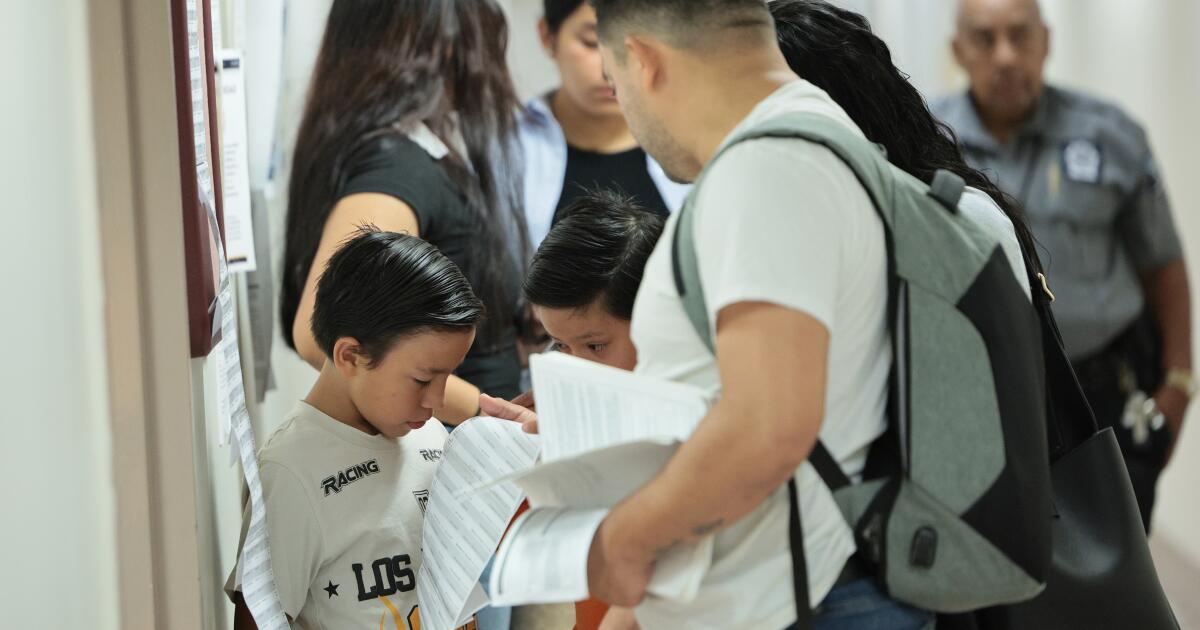
More than 24,000 immigrant children face the loss of legal representation following the expiration of a federal contract that funded nonprofit legal services. The termination affects 90 organizations across the United States, removing critical funding for attorneys and advocates who represent unaccompanied minors in immigration court.
The funding gap creates a systemic risk for children navigating the U.S. immigration system, where legal counsel is not guaranteed. According to reports on the contract’s end, the loss of these resources leaves thousands of minors to represent themselves in complex legal proceedings that determine whether they are deported or granted asylum.
The federal government provides these grants to nonprofit organizations to ensure that unaccompanied children have access to “due process,” a legal standard that is difficult to meet without professional representation. With 90 organizations now lacking this specific federal support, the capacity to handle the existing caseload of thousands of children is severely diminished.
Impact on Nonprofit Legal Networks and Case Volumes
The expiration of the contract disrupts a network of 90 nonprofit organizations that relied on federal funds to maintain staff and operational costs. These organizations provide the primary bridge between immigrant children and the legal system, often handling cases involving asylum claims, special immigrant juvenile status, and family reunification.
Legal advocates report that the scale of the crisis involves more than 24,000 children. Without these contracts, nonprofits cannot guarantee the payment of attorneys, leading to a scenario where children may appear in court without any one-on-one legal guidance. This lack of representation often leads to longer detention periods and a higher likelihood of adverse rulings in immigration court.
The funding structure for these services typically involves grants distributed to a consortium of legal providers. When these contracts expire without immediate renewal or replacement, the financial burden shifts to the nonprofits, many of which operate on thin margins and cannot absorb the cost of thousands of active cases.
Legal Consequences for Unaccompanied Minors
In the U.S. immigration system, children are not entitled to government-funded counsel in the same way criminal defendants are entitled to a public defender. Instead, they must rely on pro bono services or federally funded nonprofits. The loss of these 90 contracted organizations removes a primary pillar of this support system.
According to legal analysis of the immigration court process, children without lawyers are significantly less likely to successfully claim asylum or secure legal residency. The process requires the gathering of evidence, the filing of complex forms, and the ability to testify effectively—tasks that are nearly impossible for a child, particularly one facing language barriers or trauma.
The absence of legal representation also impacts the speed of case resolution. Without an attorney to manage filings and advocate for efficient scheduling, cases often linger in the system, extending the time children spend in government shelters or foster care. This prolongs the instability and psychological stress associated with the immigration process.
The Role of Federal Funding in Immigration Due Process
Federal contracts for legal services are designed to uphold the constitutional principle of due process. By funding nonprofit organizations, the government acknowledges that the complexity of immigration law necessitates professional intervention to ensure fair trials. The current expiration of these contracts suggests a shift or a lapse in the administrative priority of providing this specific type of assistance.
The 90 affected organizations functioned as a critical safety net. These groups often provide not only legal representation but also social services and translation, which are essential for children who arrive in the U.S. alone. The termination of funding threatens the viability of these integrated service models.
Critics of the funding lapse argue that the move undermines the legal rights of minors. Conversely, administrative shifts in federal contracting often stem from budget reallocations or changes in how the government manages the oversight of nonprofit grantees. However, the immediate result remains a deficit in legal coverage for over 24,000 individuals.
For those currently seeking assistance, official updates regarding new funding streams or alternative legal aid programs are typically posted via the Department of Justice Office for Legislative Policy or the Department of Homeland Security. Families and advocates are encouraged to monitor these agencies for announcements on contract renewals or emergency grants.
The next critical checkpoint will be the federal budget review and the potential for supplemental appropriations to restore legal services for immigrant children. Updates on these funding decisions will be reflected in upcoming congressional budget hearings and agency reports.
We invite readers to share this report and join the discussion on the impact of legal representation in the comments below.
Worth a look
- Best Fuel-Efficient Underbone Motorcycles 2026: Top Picks, Prices, and Reviews
- Canada Invests $2 Million in Education and Awareness Projects
- Baker Mayfield Feels Undervalued as Buccaneers Contract Talks Hit a Wall (time.news)
- The Congressional Review Act, Explained: How Congress Kills Federal Rules (daybreakwire.com)