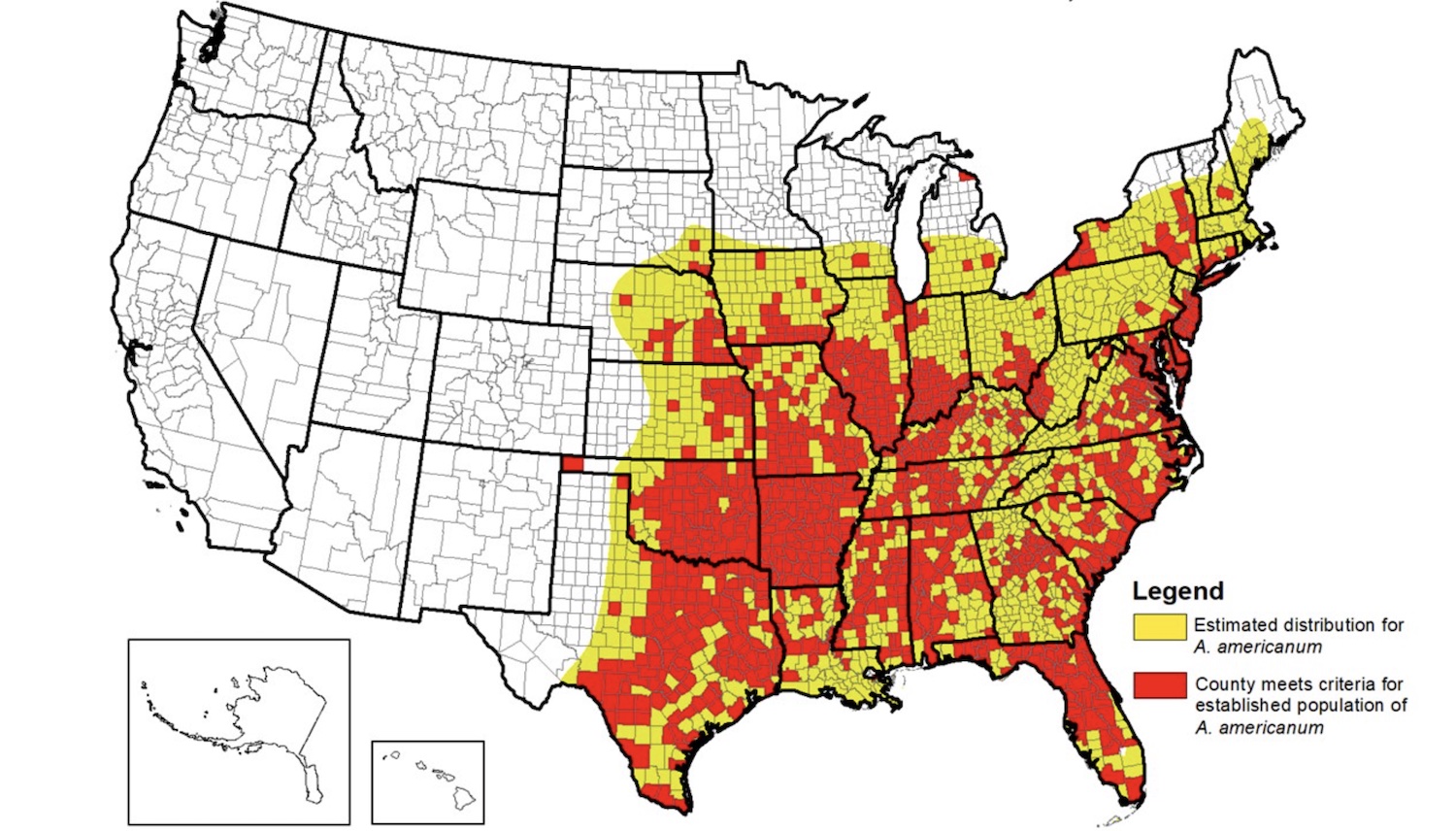
New York State has confirmed its first human case of the rare and potentially fatal Bourbon virus, discovered in a Suffolk County resident bitten by lone star ticks. Researchers warn the untreatable virus may be circulating more widely in the Northeast, often masked by symptoms that mirror more common tick-borne illnesses like Lyme disease.
State health records and published findings in The American Journal of Tropical Medicine and Hygiene reveal that 67-year-old Michael Larkin was infected while working outdoors in Shirley, New York. Larkin was bitten by two lone star ticks, a species easily recognized by a distinctive white dot on its back. Because the initial presentation closely resembled Lyme disease, medical staff initially treated him with doxycycline. That standard antibiotic approach proved ineffective against a viral pathogen, allowing the infection to run its course.
Larkin suffered through a severe five-day hospital stay characterized by high fevers, a debilitating rash, night sweats, and intense headaches before eventually making a full recovery. However, the diagnosis took five years to confirm definitively. Specialized blood analysis conducted by researchers at Stony Brook Medicine ultimately identified neutralizing antibodies against the Bourbon virus.
Why Hidden Infections Worry Researchers on Long Island
The discovery on Long Island is raising alarms among public health specialists because commercial diagnostic tests for the Bourbon virus do not exist. Clinicians suspecting the pathogen must navigate administrative hurdles by dispatching patient blood samples directly to the New York State Department of Health laboratory for specialized analysis.

Dr. Luis Marcos, director of the Tick-borne Disease Clinic at Stony Brook Medicine and lead author of the study, noted that the virus could easily escape detection across the region.
Retrospective screening of 107 patients treated for tick-borne symptoms between 2019 and 2024 uncovered two individuals with specific antibodies. One patient demonstrated an eightfold surge in antibody titers over a single month, confirming an acute infection. First identified in Bourbon County, Kansas, in 2014, the virus has accounted for only a handful of confirmed human cases nationwide, though two of those historical cases resulted in fatalities.
Expanding Tick Populations and the Lack of Treatment Options
Public health experts emphasize that medical arsenals remain entirely unequipped for this pathogen. There are no commercial vaccines, specific antiviral medications, or established treatments to combat the virus. Clinicians managing hospitalized patients must rely strictly on supportive care, administering intravenous fluids for dehydration alongside palliative medications to control pain and fever.

Contributing to the broader exposure risk, the lone star tick’s geographic range has expanded aggressively up the East Coast, fueled by dense populations of white-tailed deer and increasingly mild winters that lengthen active feeding seasons. Beyond carrying the Bourbon virus, these aggressive ticks are vectors for ehrlichiosis, tularemia, and alpha-gal syndrome—an immune condition that triggers a lifelong allergy to red meat and dairy products.
Legislative Response and Local Surveillance Initiatives
In the absence of commercial diagnostics or vaccines, health authorities recommend strict preventative measures for anyone working outdoors in wooded, brushy, or grassy environments.